
Rana Foroohar
Associate Editor & Global Business Columnist, Financial Times | CNN Global Economic Analyst | Bestselling Author


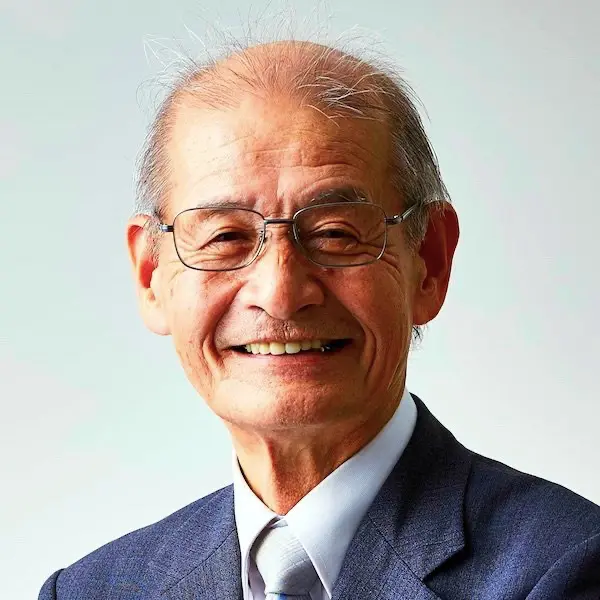
2019 Nobel Laureate in Chemistry | Inventor of the Lithium-Ion Battery | Honorary Fellow, Asahi Kasei | President, LIBTEC
Akira Yoshino invented the lithium-ion battery in 1985, the technology that now powers every smartphone, laptop, and electric vehicle on earth. A 2019 Nobel Laureate in Chemistry and President of LIBTEC, he remains at the frontier of next-generation energy storage. His keynotes connect that origin story to the decarbonization challenges defining our era.
Want to book Akira Yoshino as a speaker for your event? Please provide the info below and we’ll get in touch within 24h:
Science speaker Akira Yoshino is one of the most consequential inventors of the modern era, the Japanese chemist whose 1985 breakthrough gave the world its first commercially viable lithium-ion battery, the technology that now underpins virtually every rechargeable device on the planet, from smartphones to electric vehicles and grid-scale storage. Born in Suita, Japan, he studied petrochemistry at Kyoto University before joining Asahi Kasei Corporation in 1972, where he spent his entire industrial career. He earned his doctorate from Osaka University in 2005, has been a professor at Meijo University since 2017, holds the title of Honorary Fellow at Asahi Kasei, and serves as President of the Lithium Ion Battery Technology and Evaluation Center (LIBTEC).
Yoshino’s defining invention came from scientific intuition and persistence. In 1982, while searching for the right anode material, he encountered a paper by American chemist John Goodenough describing lithium cobalt oxide as a promising cathode. Pairing that cathode with a carbon-based anode, Yoshino built a prototype that was both stable and rechargeable, a configuration he patented in 1985. Sony commercialized the technology in 1991, and within a decade the lithium-ion battery had become the defining energy storage technology of the consumer electronics age. Yoshino contributed further critical innovations along the way, from the aluminum foil current collector that enabled high cell voltage at low cost to the functional separator that halted thermal runaway.
In 2019, the Royal Swedish Academy of Sciences awarded Yoshino the Nobel Prize in Chemistry, jointly with John B. Goodenough and M. Stanley Whittingham, for the development of lithium-ion batteries. The prize recognized not just a technical achievement but a technology that had quietly rewired modern civilization. Yoshino has long argued that its greatest contribution lies ahead, in integrating renewable energy at scale and accelerating electric mobility. He also serves as director of the Global Zero Emission Research Center at Japan’s National Institute of Advanced Industrial Science and Technology (AIST), where that conviction guides his work on next-generation and solid-state batteries.
His accolades span decades, including the Global Energy Prize, the European Inventor Award, the Charles Stark Draper Prize, and the Japan Prize. He continues to lecture internationally and remains one of the most authoritative voices on energy storage, electrification, and sustainability in the world.
As a speaker, Akira Yoshino brings the depth of a Nobel laureate and the clarity of an engineer who built his discovery with his own hands. His keynotes connect the origin story of the lithium-ion battery to the defining challenges of the energy transition: decarbonization, EV adoption, grid resilience, and the rise of solid-state batteries. For organizations in energy, mobility, sustainability, or deep technology, booking Yoshino means access to the scientist who helped power the world we live in.
Yoshino traces the full arc of the lithium-ion battery, from his 1982 insight in a Kyoto laboratory to a technology that now underpins the global economy. This is not a history lecture. It is a masterclass in what genuine invention requires, how scientific curiosity navigates dead ends and unexpected breakthroughs, and why the most transformative technologies are often built incrementally rather than in a single flash of genius. For innovation teams, technology leaders, and anyone building at the frontier, it is both an origin story and a provocation.
As the world accelerates its shift away from fossil fuels, energy storage has become the central constraint and the central opportunity. Yoshino makes the case that lithium-ion batteries and their successors are not peripheral to the energy transition but foundational to it, enabling renewable integration, electrifying transportation, and reshaping the economics of energy at every scale. Drawing on his current work at LIBTEC on solid-state batteries, he offers a clear-eyed roadmap for where the technology is headed and what it means for industry, policy, and investment.
Based on his Distinguished Lecture series, Yoshino explores how advanced battery technology will shape society over the coming decades, from AI-enabled electric vehicles and shared autonomous mobility to decentralized energy systems and circular battery economies. He argues that the most important advances lie not in incremental improvements to existing cells but in rethinking the entire battery ecosystem: materials, recycling, manufacturing, and the integration of AI into battery management and design. A sweeping, evidence-based vision delivered by the scientist who started it all.
The lithium-ion battery was not the product of a grand strategy. It emerged from curiosity, persistence, and the willingness to follow an unexpected lead. In this more personal keynote, Yoshino reflects on the conditions that made his invention possible: a culture of patient research, the freedom to pursue problems without guaranteed outcomes, and the importance of what he calls a good sense of smell, the instinct to detect where the world is heading before it arrives. Relevant for any organization serious about building a genuine innovation culture rather than performing one.
Associate Editor & Global Business Columnist, Financial Times | CNN Global Economic Analyst | Bestselling Author

Synthetic Biologist & Futurist | Co-founder, Genome Project-write | President, Humane Genomics | Co-author, The Genesis Machine
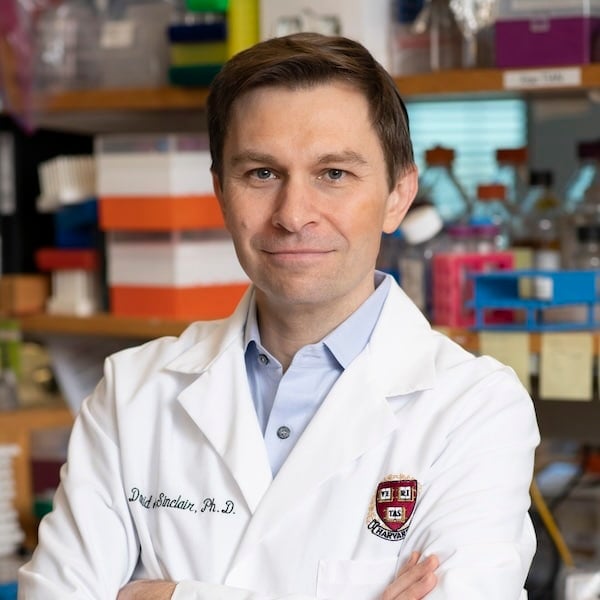
World's Foremost Authority on Human Longevity | Professor of Genetics, Harvard Medical School | Co-Founder, Life Biosciences | Bestselling Author of 'Lifespan'

Former Federal Minister of Finance of Germany | Former Co-CEO of Goldman Sachs Germany & Austria | Ex-Chancellery State Secretary & G7/G20 Sherpa | Economist


© 2026 Aurum Speakers Bureau. All Rights Reserved

| Basic Data Protection Information | |
|---|---|
| Data controller | AURUM SPEAKERS BUREAU S.L. |
| Address | Parc Audiovisual de Catalunya 1, Oficina S11, 08225 Terrassa, Spain |
| Purposes | We will use your data to respond to your requests and deliver our services to you. |
| Marketing | We will only send you marketing correspondence if you have given your prior consent, which you can do by ticking the box for that purpose. |
| Lawful basis | We will only process your data if you have given your prior consent, which you can do by ticking the box for that purpose. |
| Recipients | Generally, only our members of staff who have been duly authorised may access the data that you have provided. |
| Your Rights | You have the right to know what information we hold about you, to rectify it and to erase it, as explained in the additional information available on our website. |
| Additional Information | For more information, please see our "PRIVACY POLICY". |