
Diego Forlan
Head Coach of the Uruguay National Team (Interim) & U-20 Team | 2010 FIFA World Cup Golden Ball Winner | 2x European Golden Shoe | Uruguayan Football Legend


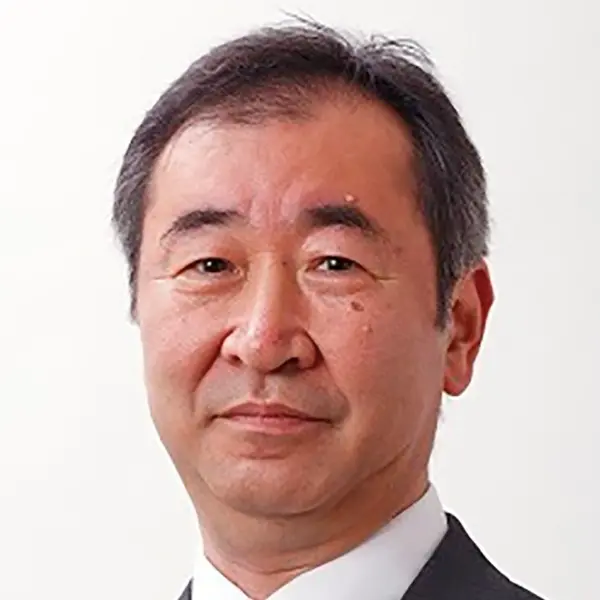
2015 Nobel Laureate in Physics | Distinguished University Professor, University of Tokyo | Pioneer of Neutrino Oscillation & Gravitational Wave Research
Takaaki Kajita is the 2015 Nobel Laureate in Physics whose discovery that neutrinos have mass rewrote the Standard Model of particle physics. A Distinguished University Professor at the University of Tokyo, he now leads KAGRA, Japan's gravitational wave observatory. His talks offer audiences rare insight into scientific breakthroughs, intellectual courage, and the long-term payoff of fundamental research.
Want to book Takaaki Kajita as a speaker for your event? Please provide the info below and we’ll get in touch within 24h:
Nobel Prize speaker Takaaki Kajita is a 2015 Nobel Laureate in Physics whose discovery of neutrino oscillations permanently altered the course of particle physics and forced a fundamental revision of the Standard Model. Distinguished University Professor at the University of Tokyo and longtime principal investigator at its Institute for Cosmic Ray Research (ICRR), Kajita is one of the most consequential experimental physicists of his generation.
Kajita is best known for leading the Super-Kamiokande team that, in 1998, produced the first definitive evidence that atmospheric neutrinos oscillate, switching between flavors as they travel. This proved that neutrinos, long assumed to be massless, carry a small but nonzero mass. The finding resolved the decades-old Solar Neutrino Problem and opened a new chapter in fundamental physics. When he presented the results at the International Conference on Neutrino Physics and Astrophysics in Takayama, the scientific audience rose to its feet in a standing ovation.
Kajita’s academic journey began at Saitama University, where he graduated in 1981, and continued at the University of Tokyo, where he earned his doctorate in 1986 under future Nobel Laureate Masatoshi Koshiba. He joined the ICRR in 1988 and spent two decades building on the Kamiokande legacy before serving as ICRR Director from 2008 to 2022. He was elected a member of the Japan Academy in 2019 and an International Member of the U.S. National Academy of Sciences in 2022.
With neutrino physics having reached a landmark conclusion, Kajita made a bold pivot around 2008 toward gravitational wave research, a field that would itself be crowned with a Nobel Prize in 2017. He has since served as principal investigator of KAGRA (Kamioka Gravitational Wave Detector), Japan’s large-scale underground interferometer with 3-km arms, designed to detect the spacetime ripples generated by cataclysmic events such as black hole and neutron star mergers. KAGRA operates in collaboration with the global LIGO-Virgo network and represents a strategic investment in the future of multi-messenger astronomy. At the same Kamioka site, the next-generation Hyper-Kamiokande detector is now taking shape as successor to Super-Kamiokande, extending the neutrino legacy Kajita helped define. Beyond the laboratory, he served as the 25th President of the Science Council of Japan from 2020 to 2023, advocating for evidence-based policymaking and international scientific collaboration, and chaired the IUPAP Commission on Astroparticle Physics from 2021 to 2024.
As a speaker, Takaaki Kajita brings the rare clarity of a Nobel Prize-winning scientist who has lived through not one but two frontier-defining research programs. His talks connect the deepest questions of physics, from the nature of matter to the structure of the universe and the fabric of spacetime, to broader themes of scientific curiosity, long-term commitment, and the value of pursuing fundamental knowledge. Senior audiences from academia, government, and the corporate world gain a profound perspective on how patient, rigorous science produces breakthroughs that reshape industries and worldviews, and why investing in basic research is a bet on humanity’s future.
The story of how a single experiment changed everything in physics. Kajita recounts the methodical, years-long investigation at Super-Kamiokande that led to the 1998 discovery of neutrino oscillation and the proof that neutrinos carry mass, overturning a core assumption of the Standard Model. Far beyond scientific history, this talk is a masterclass in how to pursue a problem with rigor and patience, stay open to unexpected results, and communicate a paradigm-shifting discovery to the world.
Two decades after his Nobel-winning work, Kajita turned his attention to a new frontier: detecting gravitational waves, the ripples in spacetime first predicted by Einstein. As principal investigator of KAGRA, Japan's underground gravitational wave detector, he offers audiences a front-row view of multi-messenger astronomy, the science of observing the cosmos through multiple channels simultaneously. This keynote explores what gravitational wave research may reveal about black holes, neutron stars, and the origins of heavy elements like gold.
Drawing on a career that spans two Nobel-caliber research fields, Kajita reflects on what drives scientific progress: deep curiosity, tolerance for uncertainty, and the willingness to ask questions whose answers are not guaranteed. This keynote is designed for leaders, policymakers, and innovators who want to cultivate cultures of genuine inquiry, and understand why investing in fundamental knowledge, even without immediate application, is one of the highest-leverage decisions an organization or society can make.
From his role as President of the Science Council of Japan to his decades at the frontier of experimental physics, Kajita speaks to the relationship between science and society: how evidence-based thinking can inform better policy, how international collaboration accelerates discovery, and why the long arc of scientific research consistently delivers solutions to humanity's greatest challenges.
Head Coach of the Uruguay National Team (Interim) & U-20 Team | 2010 FIFA World Cup Golden Ball Winner | 2x European Golden Shoe | Uruguayan Football Legend

Former Chief Marketing Officer of Nike | Bestselling Author of Emotion by Design | Founder of Modern Arena | Fast Company Most Creative People in Business

Ret. U.S. Navy Four-Star Admiral & Navy SEAL | Former SOCOM Commander | #1 NYT Bestselling Author | Leadership & Crisis
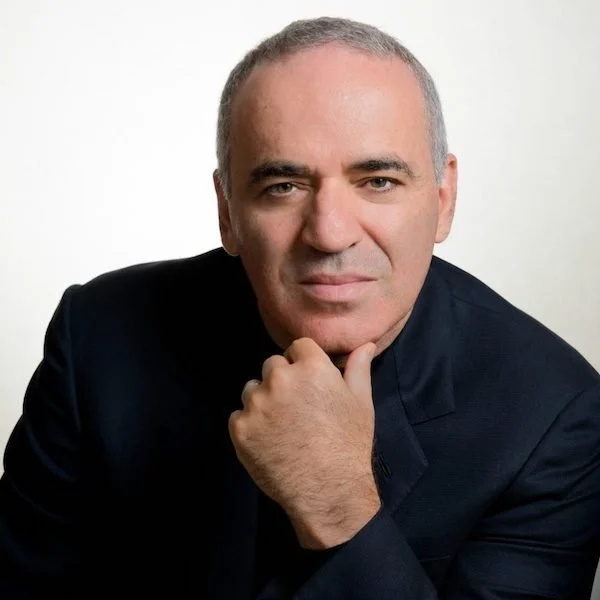
Youngest-Ever World Chess Champion | Expert on AI & Human-Machine Collaboration | Founder & Chairman, Renew Democracy Initiative | Bestselling Author of Deep Thinking


© 2026 Aurum Speakers Bureau. All Rights Reserved

| Basic Data Protection Information | |
|---|---|
| Data controller | AURUM SPEAKERS BUREAU S.L. |
| Address | Parc Audiovisual de Catalunya 1, Oficina S11, 08225 Terrassa, Spain |
| Purposes | We will use your data to respond to your requests and deliver our services to you. |
| Marketing | We will only send you marketing correspondence if you have given your prior consent, which you can do by ticking the box for that purpose. |
| Lawful basis | We will only process your data if you have given your prior consent, which you can do by ticking the box for that purpose. |
| Recipients | Generally, only our members of staff who have been duly authorised may access the data that you have provided. |
| Your Rights | You have the right to know what information we hold about you, to rectify it and to erase it, as explained in the additional information available on our website. |
| Additional Information | For more information, please see our "PRIVACY POLICY". |