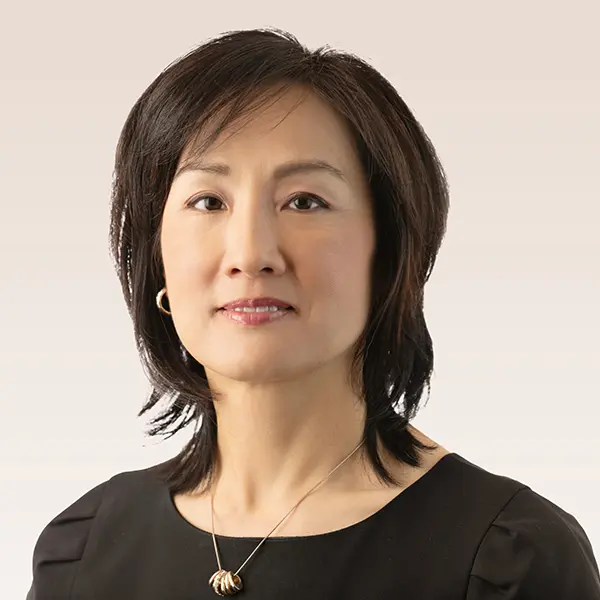
Michelle K. Lee
AI Strategist | Advisor to Anthropic | Former VP, Amazon Web Services | Google Executive | Former U.S. Under Secretary of Commerce | Founder & CEO, Obsidian Strategies


TED Prize Winner | Creator of the Hole in the Wall & SOLE | Pioneer of Self-Organised Learning | Professor Emeritus, NIIT University
Sugata Mitra proved that children can teach themselves almost anything, given a computer, an internet connection, and the freedom to be curious. TED Prize winner, creator of the SOLE methodology, and one of the world's most original thinkers on learning, he challenges audiences to reimagine education, talent, and human potential at a moment when AI is making those questions impossible to ignore.
Want to book Sugata Mitra as a speaker for your event? Please provide the info below and we’ll get in touch within 24h:
Sugata Mitra is the education researcher who changed how the world thinks about learning. A physicist by training and an innovator by instinct, he spent decades bridging cognitive science, educational technology, and human curiosity, and in doing so produced one of the most celebrated experiments in the history of education. Today he is Professor Emeritus at NIIT University, India, having retired in 2019 as Professor of Educational Technology at Newcastle University in the UK, where he also held a visiting position at the MIT Media Lab.
Education speaker Sugata Mitra is best known for the Hole in the Wall experiment, launched in 1999 when he and his colleagues embedded an internet-connected computer in a wall bordering a slum in New Delhi and left it for local children to discover. With no instructions, no teacher, and no guidance, the children taught themselves, and each other, how to use it within hours. Replicated across India and beyond with consistently remarkable results, the experiment introduced the concept of Minimally Invasive Education and demonstrated that children are innately capable of self-directed learning when given access, freedom, and a reason to be curious. The story inspired the novel that became the Oscar-winning film Slumdog Millionaire.
Building on these findings, Mitra developed the Self-Organised Learning Environment (SOLE), a structured approach in which small groups of children collaborate around big questions using internet access, with minimal adult intervention. SOLEs are now used in schools and learning programs worldwide. He also created the Granny Cloud, a global network of volunteer mediators, many of them retired teachers, who connect with children in remote areas via video to offer encouragement and stimulus rather than formal instruction. In 2013, Mitra won the inaugural one-million-dollar TED Prize, which he used to establish the School in the Cloud: a network of physical learning labs across India and the UK and an online platform that has supported thousands of SOLE sessions worldwide. He received the Brock Prize in 2022.
Mitra’s ideas have never been more relevant. As generative AI reshapes what knowledge means, how information is accessed, and which skills actually matter, his long-standing argument that rote memorization is obsolete and that learning to learn is everything has moved from provocative to urgent. He continues to explore the implications of generative AI for self-organised learning, speaking at global education forums on how tools like large language models are accelerating and validating the SOLE model. His work has contributed to the education of more than a million young people, among them some of the world’s most disadvantaged children.
As a speaker, Sugata Mitra is one of the most thought-provoking voices on any stage. He does not simply describe the future of education; he challenges audiences to question the assumptions on which modern schooling was built, and offers a vision of learning that is more human, more equitable, and more aligned with how curiosity actually works. Leaders in education, technology, HR, and corporate learning book him to spark fundamental conversations about how people learn, how organizations should develop talent, and what the arrival of AI means for the skills that truly matter.
In this landmark talk, Mitra recounts the experiment that changed how the world thinks about learning — and draws out its deepest implications for education, leadership, and human development. When children in a Delhi slum taught themselves to use a computer with no instruction, no teacher, and no guidance, they didn't just reveal something about technology. They revealed something fundamental about human curiosity. Mitra walks audiences through the original experiment, its replications across the globe, and what two decades of follow-on research have confirmed: that given the right environment, people of any age are capable of far more than formal systems typically allow.
This keynote goes beyond the theory and into the methodology that schools, universities, and organizations around the world are now adopting. Mitra explains how Self-Organised Learning Environments work, why they produce results that surprise even seasoned educators, and how the principles behind them apply far beyond the classroom — to onboarding, corporate learning, leadership development, and team performance. Audiences leave with a practical framework for designing learning experiences that build genuine capability rather than surface compliance.
For decades, Mitra argued that memorizing facts is the wrong goal for education — that learning to learn matters infinitely more. Generative AI has made that argument impossible to dismiss. In this forward-looking keynote, Mitra explores what the arrival of AI means for schools, universities, and organizations: which skills become redundant, which become critical, and how the SOLE model he pioneered turns out to be precisely the kind of learning environment the AI age demands. A provocation and a roadmap for leaders grappling with the most consequential shift in how knowledge works since the printing press.
Mitra's $1 million TED Prize wish was to build a School in the Cloud — a place where children anywhere in the world could tap into the collective knowledge of humanity and learn from each other. In this keynote, he shares what that vision has become: a global network of learning labs, a community of volunteer mediators, and over 16,000 SOLE sessions involving children from some of the world's most underserved communities. Beyond the inspiring story, he draws out the strategic lessons for any organization asking how to build learning cultures that are genuinely inclusive, scalable, and fit for an uncertain future.
AI Strategist | Advisor to Anthropic | Former VP, Amazon Web Services | Google Executive | Former U.S. Under Secretary of Commerce | Founder & CEO, Obsidian Strategies
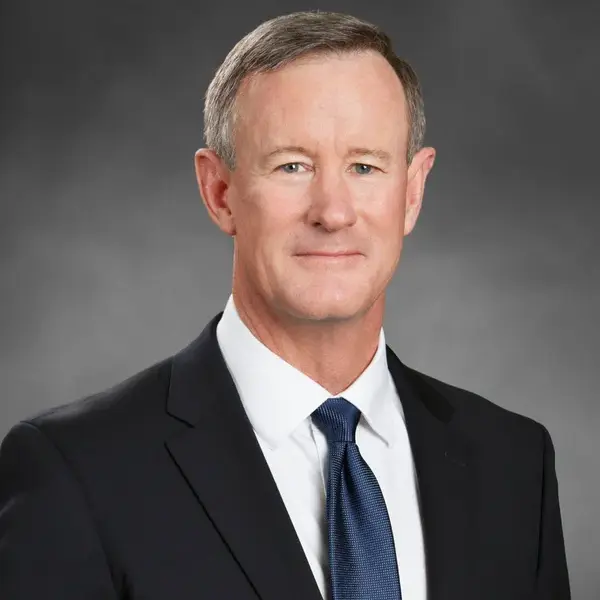
Ret. U.S. Navy Four-Star Admiral & Navy SEAL | Former SOCOM Commander | #1 NYT Bestselling Author | Leadership & Crisis

CEO of Cardone Capital | #1 Sales Trainer | Bestselling Author of The 10X Rule | Real Estate Investor | Motivational Speaker
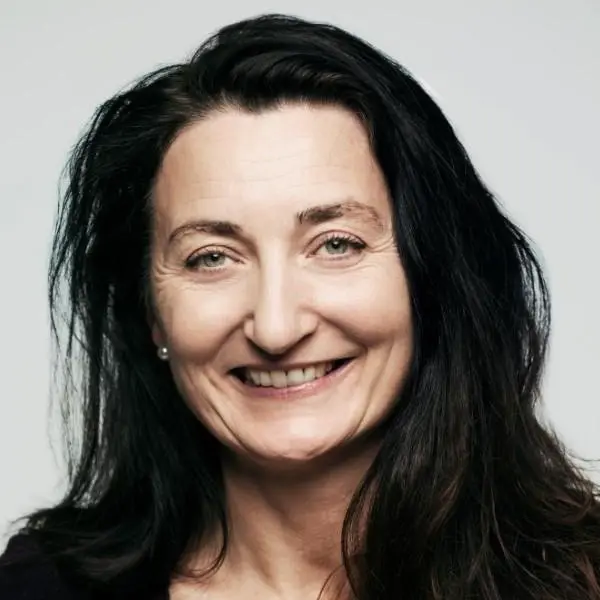
2014 Nobel Laureate in Physiology or Medicine | Professor of Neuroscience, NTNU | Co-discoverer of Grid Cells | Brain Navigation & Memory


© 2026 Aurum Speakers Bureau. All Rights Reserved

| Basic Data Protection Information | |
|---|---|
| Data controller | AURUM SPEAKERS BUREAU S.L. |
| Address | Parc Audiovisual de Catalunya 1, Oficina S11, 08225 Terrassa, Spain |
| Purposes | We will use your data to respond to your requests and deliver our services to you. |
| Marketing | We will only send you marketing correspondence if you have given your prior consent, which you can do by ticking the box for that purpose. |
| Lawful basis | We will only process your data if you have given your prior consent, which you can do by ticking the box for that purpose. |
| Recipients | Generally, only our members of staff who have been duly authorised may access the data that you have provided. |
| Your Rights | You have the right to know what information we hold about you, to rectify it and to erase it, as explained in the additional information available on our website. |
| Additional Information | For more information, please see our "PRIVACY POLICY". |