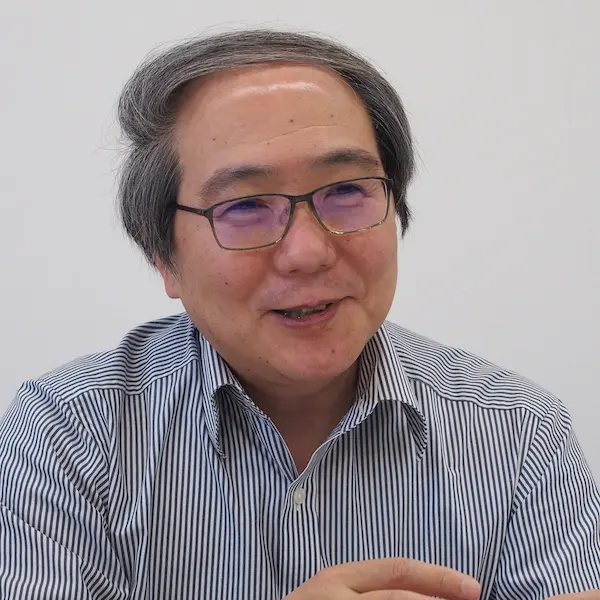
Ryoji Kanno
Pioneer of the All-Solid-State Battery | Inventor of the LGPS Solid Electrolyte | Institute Professor & Director, Research Center for All-Solid-State Batteries, Science Tokyo


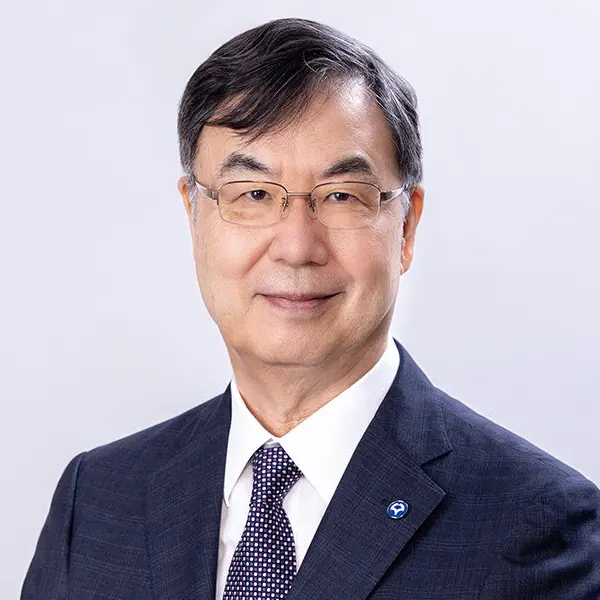
2025 Nobel Laureate in Physiology or Medicine | Discoverer of Regulatory T Cells | Distinguished Professor, Osaka University IFReC
The scientist who discovered regulatory T cells, the immune system's built-in peacekeepers, Shimon Sakaguchi upended decades of scientific consensus in 1995 and launched a field now driving cancer immunotherapy, autoimmune treatment, and transplant medicine worldwide. His talks offer audiences a rare inside view of how transformative science is born, sustained against skepticism, and ultimately translated into medicine that changes lives.
Want to book Shimon Sakaguchi as a speaker for your event? Please provide the info below and we’ll get in touch within 24h:
Shimon Sakaguchi is a 2025 Nobel Laureate in Physiology or Medicine and the founding father of regulatory T cell biology, one of the most consequential fields in modern immunology. A Distinguished Professor at the Immunology Frontier Research Center (IFReC) at Osaka University and Professor Emeritus of Kyoto University, Sakaguchi holds an MD and PhD from Kyoto University and conducted formative postdoctoral research at Johns Hopkins University and Stanford University as a Lucille P. Markey Scholar. He later served as Assistant Professor of Immunology at the Scripps Research Institute before returning to Japan, where he has led landmark research programs for more than three decades.
Nobel Prize speaker Shimon Sakaguchi is best known for a 1995 discovery that reshaped immunological science: the identification of regulatory T cells (Tregs), a previously unknown class of immune cells whose sole function is to prevent the immune system from attacking the body’s own tissues. At a time when the scientific consensus held that immune tolerance was maintained exclusively through the elimination of harmful cells in the thymus, Sakaguchi challenged the prevailing view and demonstrated that a second, peripheral layer of immune control existed. His paper showing that a specific subset of CD4+ T cells marked by the CD25 receptor actively suppressed autoimmune responses is now regarded as one of the most cited and transformative publications in the history of immunology. In 2003, his laboratory proved that FOXP3, the gene co-discovered by Mary Brunkow and Fred Ramsdell, encodes the master transcription factor governing Treg identity and function, completing the molecular picture of peripheral immune tolerance.
Sakaguchi’s recognition extends across the most prestigious honors in the life sciences. He is a recipient of the William B. Coley Award, the Canada Gairdner International Award, the Crafoord Prize in Polyarthritis, the Paul Ehrlich and Ludwig Darmstaedter Prize, and the Robert Koch Prize, among many others. He was elected a Foreign Member of the National Academy of Sciences of the USA and received the Order of Culture, the highest accolade bestowed upon scholars in Japan. His scientific output has not slowed since the Nobel announcement: his laboratory has demonstrated a breakthrough technique for converting disease-causing T cells into regulatory T cells without genome editing, a potential path to treating autoimmune diseases including ALS, arthritis, and inflammatory conditions. He also advises Coya Therapeutics, a clinical-stage biotech developing Treg-activating biologics for ALS and other neurodegenerative diseases.
As a speaker, Shimon Sakaguchi offers audiences something rare: the direct perspective of the scientist who discovered the immune system’s internal peacekeepers, told across a lifetime of inquiry that ran counter to scientific consensus before transforming it. His talks illuminate how immune tolerance works, what happens when it fails, and how the regulatory T cell field is now reshaping cancer immunotherapy, autoimmune treatment, and transplant medicine worldwide. For scientific, medical, biotech, and innovation audiences, Sakaguchi embodies the power of intellectual courage and long-horizon thinking in science.
Sakaguchi takes audiences inside the intellectual journey that led to his landmark 1995 discovery — a finding initially met with skepticism that went on to redefine the entire field of immunology. From early observations in thymectomized mice to a Nobel Prize three decades later, this keynote traces how a single well-designed experiment, pursued with conviction against prevailing consensus, became the foundation for a new scientific discipline and hundreds of clinical trials worldwide.
An in-depth exploration of how failures in peripheral immune tolerance underlie a vast range of human diseases — from arthritis and multiple sclerosis to diabetes, inflammatory bowel disease, and cancer. Sakaguchi maps the therapeutic landscape his discoveries have opened: boosting Treg activity to treat autoimmunity and prevent transplant rejection; suppressing it to unleash immune attacks on tumors. This talk is designed for medical, biotech, and pharma audiences seeking a rigorous yet accessible view of where immune regulation medicine is headed.
Drawing on his laboratory's most recent breakthroughs — including techniques for converting autoreactive T cells into regulatory T cells without genome editing — Sakaguchi presents the cutting edge of translational immunology. This forward-looking keynote explores how the next generation of Treg-based therapies could address conditions from ALS to rheumatoid arthritis, and what it will take to bring these approaches safely into routine clinical practice.
A broader reflection on the nature of discovery and the culture of science, drawn from a career spent working on a hypothesis many colleagues once considered either wrong or irrelevant. Sakaguchi speaks to the conditions — intellectual independence, rigorous methodology, institutional patience — that allow paradigm-shifting science to survive long enough to prove itself. A powerful keynote for research institutions, innovation leadership forums, and any organization trying to build cultures where transformative ideas can flourish.
Pioneer of the All-Solid-State Battery | Inventor of the LGPS Solid Electrolyte | Institute Professor & Director, Research Center for All-Solid-State Batteries, Science Tokyo

National Geographic Fellow | Five-Time NYT Bestselling Author | Founder of Blue Zones | Emmy-Winning Netflix Host | Longevity & Happiness Researcher
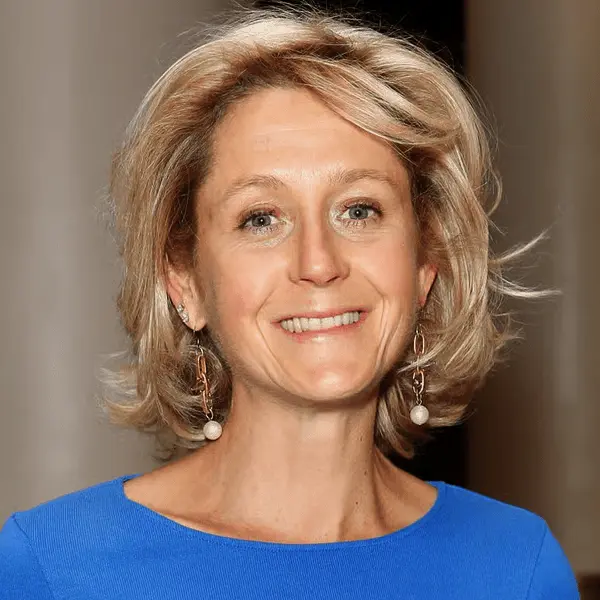
Co-Founder, Lastminute.com | Crossbench Peer, House of Lords | Co-Chair, UK Government Technology Innovation Panel | UK's First Digital Champion
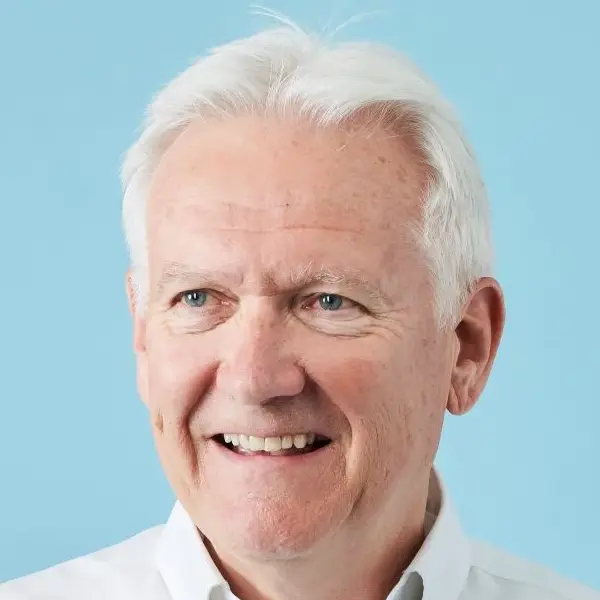
Former CEO of Amazon UK | Former Chairman of ASOS | Former President of the CBI | Chair, Trainline plc | Digital Transformation & Leadership


© 2026 Aurum Speakers Bureau. All Rights Reserved

| Basic Data Protection Information | |
|---|---|
| Data controller | AURUM SPEAKERS BUREAU S.L. |
| Address | Parc Audiovisual de Catalunya 1, Oficina S11, 08225 Terrassa, Spain |
| Purposes | We will use your data to respond to your requests and deliver our services to you. |
| Marketing | We will only send you marketing correspondence if you have given your prior consent, which you can do by ticking the box for that purpose. |
| Lawful basis | We will only process your data if you have given your prior consent, which you can do by ticking the box for that purpose. |
| Recipients | Generally, only our members of staff who have been duly authorised may access the data that you have provided. |
| Your Rights | You have the right to know what information we hold about you, to rectify it and to erase it, as explained in the additional information available on our website. |
| Additional Information | For more information, please see our "PRIVACY POLICY". |