Margie Warrell
Bestselling Author of The Courage Gap | Former Korn Ferry Senior Partner | Global Leadership Advisor to Fortune 500 Executives | Courage Expert


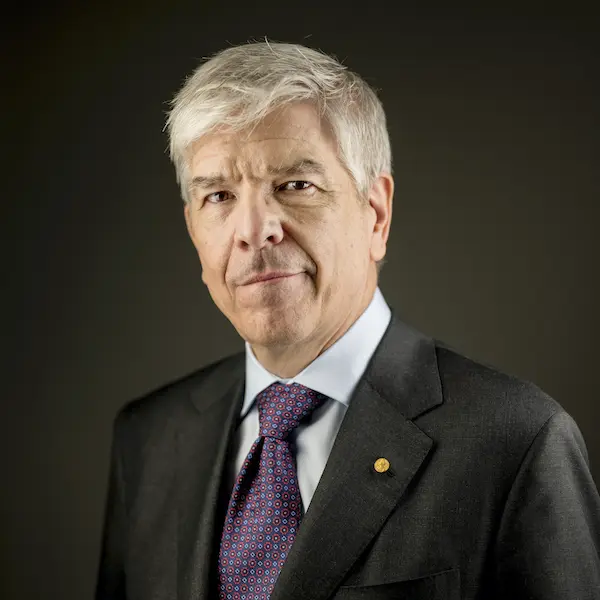
2018 Nobel Laureate in Economics | Seidner University Professor, Boston College | Pioneer of Endogenous Growth Theory | Urbanization & Innovation Expert
Few economists have reshaped their field as profoundly as Paul Romer. His Nobel Prize-winning work proved that ideas, not just capital, drive lasting economic growth. Now Seidner University Professor at Boston College, Romer brings audiences a rare perspective on innovation, urbanization, AI, and the policies that unlock prosperity. Leaders seeking clarity on the forces shaping the global economy find in Romer a keynote speaker of unmatched authority.
Want to book Paul Romer as a speaker for your event? Please provide the info below and we’ll get in touch within 24h:
A Nobel Laureate and policy entrepreneur, economics speaker Paul Romer has fundamentally changed how the world understands economic growth. As a speaker, Paul Romer draws on decades of pioneering research and high-level policy experience to illuminate the forces that shape prosperity in the modern era.
Romer’s groundbreaking work on endogenous growth theory showed that technological innovation, driven by purposeful investment in research and ideas, is the central engine of sustained economic expansion. This insight, that economies grow because people deliberately create new knowledge, earned him the 2018 Nobel Prize in Economics, shared with William Nordhaus. The Royal Swedish Academy of Sciences cited Romer specifically for “integrating technological innovations into long-run macroeconomic analysis,” a contribution that continues to guide policymakers and business leaders worldwide.
Romer’s influence extends well beyond academia. He served as Chief Economist of the World Bank, where he championed data transparency and evidence-based development policy. At New York University, he founded the Marron Institute of Urban Management, focused on helping cities improve health, safety, and mobility during an era of rapid global urbanization. He also launched the Charter Cities Initiative, an effort to ensure historically marginalized populations share in the benefits of urban growth.
Now the Seidner University Professor at Boston College’s Carroll School of Management, Romer leads the Center for the Economics of Ideas, where his recent work examines how artificial intelligence reshapes productivity and the cultural foundations that allow democracies and economies to thrive. A conviction that coding literacy is essential to modern institutions led him to teach “Digital Self-Defense with Python.” A Fellow of the American Academy of Arts and Sciences and a research associate at the National Bureau of Economic Research, Romer remains one of the most cited economists of his generation.
As a speaker, Paul Romer combines intellectual rigor with accessible storytelling, giving audiences the frameworks they need to think clearly about innovation, growth, and the policy choices that determine whether progress reaches everyone.
In this foundational keynote, Romer draws on the research that earned him the Nobel Prize to explain why ideas, not just physical capital or labor, are the primary engine of economic growth. He shows how deliberate investment in research, education, and knowledge creation produces increasing returns that compound over generations. The talk gives leaders and policymakers the intellectual framework to understand why some economies prosper while others stagnate, and what strategic choices drive sustained progress.
This century presents a once-in-a-species opportunity as billions of people move into cities. Drawing on his work founding NYU's Marron Institute and the Charter Cities Initiative, Romer makes the case that cities are humanity's most powerful engines of innovation, economic mobility, and shared prosperity. He explores how city-scale development can redefine what is possible, addressing critical issues including migration, infrastructure, technological adoption, and inclusive governance.
Romer weaves together his work as an economist, policy advisor, and former World Bank Chief Economist to address the most important macroeconomic trends and challenges confronting global leaders. He examines the rise of nationalism, shifts in trade policy, the role of institutions in fostering cooperation, and how governments can improve the lives of their citizens despite mounting complexity. The result is a compelling, clear-eyed assessment of the opportunities hidden within current challenges.
Drawing on four decades of studying how technology transforms economies, Romer offers a grounded perspective on artificial intelligence and its implications for growth, employment, and institutional design. He moves past industry hype to examine the structural economic and governance questions that will determine whether AI's benefits are widely shared or narrowly concentrated. The talk equips leaders with the analytical tools to think clearly about technology policy, innovation incentives, and the future of work.
In this intellectually rigorous keynote, Romer explains the theory that revolutionized modern economics. He shows how market-driven research and development generates new ideas that fuel sustained growth, why well-designed government policies, including public R&D investment and intellectual property protection, are necessary to foster innovation, and how these principles apply to the most pressing economic challenges of the present day.
Bestselling Author of The Courage Gap | Former Korn Ferry Senior Partner | Global Leadership Advisor to Fortune 500 Executives | Courage Expert

Former Federal Minister of Finance of Germany | Former Co-CEO of Goldman Sachs Germany & Austria | Ex-Chancellery State Secretary & G7/G20 Sherpa | Economist

2018 Nobel Laureate in Chemistry | Linus Pauling Professor, Caltech | Pioneer of Directed Evolution | Board Member, Alphabet & Illumina

Head of Growth, Parallel Studios ($100M Raised) | Co-Founder, Surf (Acq. by Datacy) | Bestselling Author, The Young Entrepreneur | 4x TEDx Speaker | Angel Investor & Chairman, League of Innovators


© 2026 Aurum Speakers Bureau. All Rights Reserved

| Basic Data Protection Information | |
|---|---|
| Data controller | AURUM SPEAKERS BUREAU S.L. |
| Address | Parc Audiovisual de Catalunya 1, Oficina S11, 08225 Terrassa, Spain |
| Purposes | We will use your data to respond to your requests and deliver our services to you. |
| Marketing | We will only send you marketing correspondence if you have given your prior consent, which you can do by ticking the box for that purpose. |
| Lawful basis | We will only process your data if you have given your prior consent, which you can do by ticking the box for that purpose. |
| Recipients | Generally, only our members of staff who have been duly authorised may access the data that you have provided. |
| Your Rights | You have the right to know what information we hold about you, to rectify it and to erase it, as explained in the additional information available on our website. |
| Additional Information | For more information, please see our "PRIVACY POLICY". |