
Tasha Eurich
Organizational Psychologist & World's Leading Self-Awareness Coach | New York Times Best-Selling Author of Shatterproof & Insight | Thinkers50 & 100 Coaches



World's Leading Neuroethics Scholar | Duke Law Professor | Author, The Battle for Your Brain | UNESCO Neurotechnology Ethics Co-Chair
Nita Farahany is the world's foremost authority on what happens when AI meets the human brain, and why the choices made now will define freedom for generations. A Duke Law professor, Obama-appointed bioethics commissioner, and author of The Battle for Your Brain, she helped shape the first global standard on neurotechnology ethics and has addressed Congress and Davos. Her keynotes leave senior audiences with frameworks to act, not just reasons to worry.
Want to book Nita Farahany as a speaker for your event? Please provide the info below and we’ll get in touch within 24h:
Nita Farahany is the world’s foremost authority on the ethical, legal, and societal implications of neurotechnology and artificial intelligence, the scholar who coined the concept of cognitive liberty and has spent two decades making the case that mental privacy is the defining rights frontier of our era. She is the Robinson O. Everett Distinguished Professor of Law & Philosophy at Duke Law School, Founding Director of the Duke Initiative for Science & Society, and Faculty Chair of the Duke MA in Bioethics & Science Policy.
AI speaker Nita Farahany holds one of the most unusual academic pedigrees in public life: a Bachelor’s in Genetics from Dartmouth, a Master’s in Biology from Harvard, and both a JD and PhD in Philosophy from Duke, credentials that let her move fluently between the laboratory, the courtroom, and the policy chamber. She clerked for Judge Judith W. Rogers of the U.S. Court of Appeals for the D.C. Circuit, taught at Vanderbilt Law, and was the Leah Kaplan Visiting Professor of Human Rights at Stanford Law before joining Duke. President Obama appointed her to the Presidential Commission for the Study of Bioethical Issues, where she served for seven years.
Her book The Battle for Your Brain: Defending Your Right to Think Freely in the Age of Neurotechnology became an international landmark, not merely a bestseller but a policy text that has shaped legal frameworks across multiple jurisdictions, informed congressional testimony, and propelled a global conversation on mental privacy that intensifies as brain-sensing wearables and generative AI converge. She has been elected to the American Law Institute, named a Fellow of the American Association for the Advancement of Science, and recognized among the Vox Future Perfect 50 as one of the thinkers most shaping the future.
Farahany served as U.S. delegate and elected co-chair of the UNESCO expert group whose work produced the first global standard on the ethics of neurotechnology, a Recommendation adopted by UNESCO’s member states to safeguard mental privacy worldwide. She also chairs the Uniform Law Commission study committee on mental privacy, advises the NIH BRAIN Initiative and DARPA on the ethical, legal, and social implications of their research, sits on the World Economic Forum Global Future Council on Frontier Risks, and is a past president of the International Neuroethics Society. Her Davos keynote on brain transparency reached global leaders and drew millions of views.
As a speaker, Nita Farahany commands rooms that span C-suites, legislatures, and scientific institutions because she offers something rare: a synthesis of technical depth, legal precision, and moral urgency. She has addressed TED, the World Economic Forum, the Aspen Ideas Festival, and U.S. judicial conferences. Audiences leave not just informed but activated, with a clear grasp of what neurotechnology and AI mean for their organizations, their people, and their own minds, and what must be decided now, before the window to act narrows.
Brain-sensing technology has left the realm of science fiction. Wearable EEGs are already deployed in workplaces across Asia and Europe, AI systems can infer emotion, attention, and intent from physiological signals, and the generative tools reshaping knowledge work are beginning to touch our cognitive processes in ways we scarcely understand. Farahany lays out this terrain with precision: the genuine medical and productivity breakthroughs alongside the risks of mental surveillance, cognitive warfare, and the erosion of the last truly private space we possess. Audiences leave with a clear framework for what cognitive liberty means for their organizations and what protecting it will require.
From fatigue-detection headbands in mining operations to tools that read emotional states during video calls, neurotechnology is entering the enterprise faster than most HR and legal teams realize. Farahany examines the real tradeoffs: the legitimate safety and productivity gains set against the morale, creativity, and trust costs of monitoring mental states without consent. She offers a framework for adopting these tools in ways that motivate rather than police, building the employee trust that makes innovation possible in the first place.
What does it mean to think freely when AI can augment, replicate, and increasingly anticipate our cognition? Farahany reframes the generative AI debate, moving past automation anxiety to show how human relational intelligence, mental agility, and self-awareness become the premium skills of an AI-augmented world. Drawing on neuroscience and law, she shows audiences how to treat AI as a genuine cognitive partner while protecting the qualities of human thought no algorithm can reproduce.
Privacy law was built for a world in which thoughts stayed safely inside the skull. That world is ending. Farahany sets out why cognitive liberty, the right to mental self-determination, is fast becoming the most consequential human rights question of the coming decade, and what governments, corporations, and individuals must do to establish guardrails before the technology outpaces any meaningful response. Built for policy, legal, and senior executive audiences who need not just the risks but the architecture of a solution.
Organizational Psychologist & World's Leading Self-Awareness Coach | New York Times Best-Selling Author of Shatterproof & Insight | Thinkers50 & 100 Coaches

2010 Nobel Laureate in Economics | Institute Professor Emeritus, MIT | Architect of Social Security Reform | Taxation & Labor Market Expert

Former Global Head of DEI, Google | Executive Coach & Culture Strategist | Former DEI Leader, Pfizer, Sanofi & Bristol-Myers Squibb | MS, New School
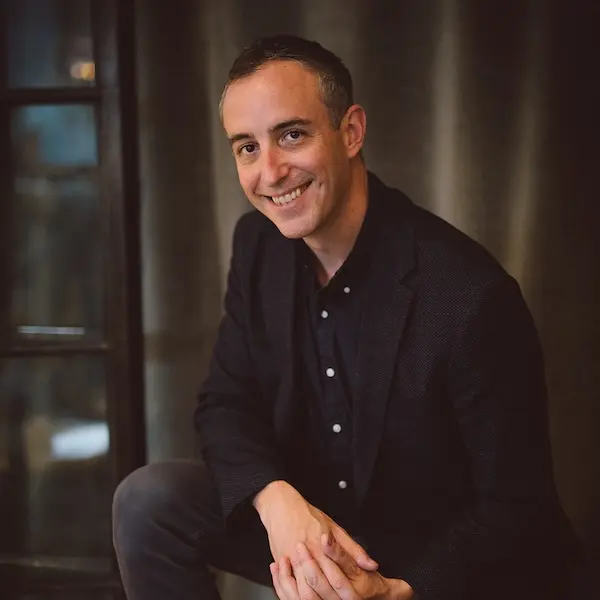
Former Co-Owner of Eleven Madison Park, #1 Restaurant in the World | New York Times Bestselling Author, Unreasonable Hospitality | Founder, Welcome Conference


© 2026 Aurum Speakers Bureau. All Rights Reserved

| Basic Data Protection Information | |
|---|---|
| Data controller | AURUM SPEAKERS BUREAU S.L. |
| Address | Parc Audiovisual de Catalunya 1, Oficina S11, 08225 Terrassa, Spain |
| Purposes | We will use your data to respond to your requests and deliver our services to you. |
| Marketing | We will only send you marketing correspondence if you have given your prior consent, which you can do by ticking the box for that purpose. |
| Lawful basis | We will only process your data if you have given your prior consent, which you can do by ticking the box for that purpose. |
| Recipients | Generally, only our members of staff who have been duly authorised may access the data that you have provided. |
| Your Rights | You have the right to know what information we hold about you, to rectify it and to erase it, as explained in the additional information available on our website. |
| Additional Information | For more information, please see our "PRIVACY POLICY". |