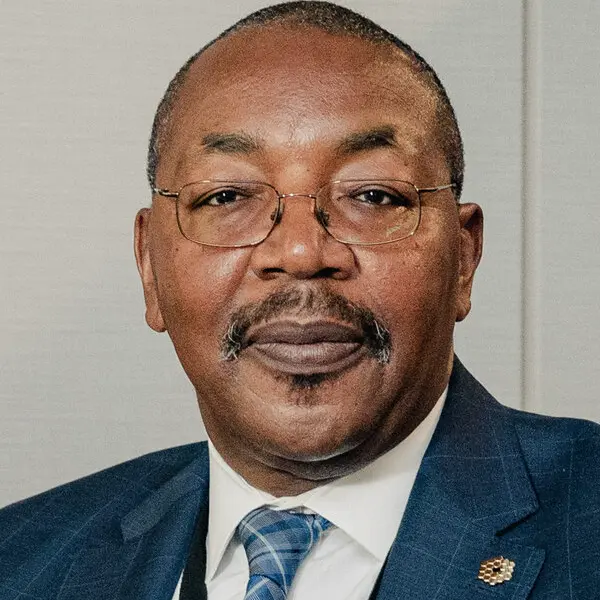
Gregory Robinson
Former Director, NASA James Webb Space Telescope | TIME100 Most Influential People 2022 | Columbia University Faculty

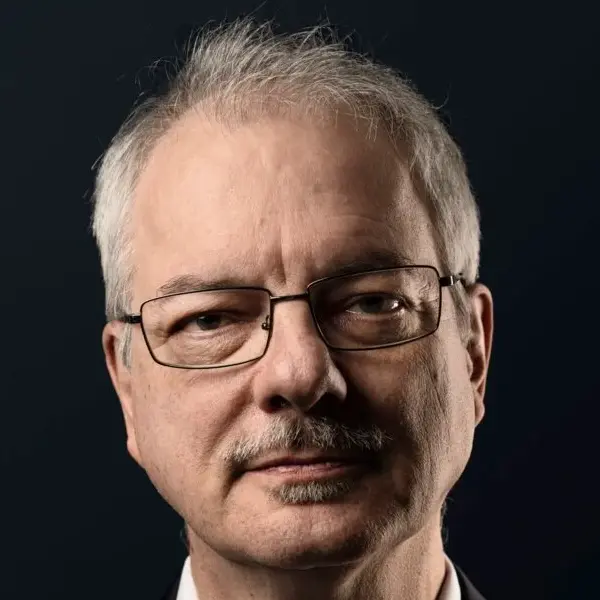
2022 Nobel Laureate in Chemistry | Co-Inventor of Click Chemistry | Professor, University of Copenhagen | Pioneer of Combinatorial Chemistry
Morten Meldal co-invented click chemistry — one of the most widely used chemical tools in modern science — and received the 2022 Nobel Prize in Chemistry for it. As a Professor at the University of Copenhagen and a lifelong pioneer of combinatorial chemistry, he brings to every audience the rare perspective of a working scientist who turned an unexpected lab observation into a global breakthrough.
Want to book Morten Meldal as a speaker for your event? Please provide the info below and we’ll get in touch within 24h:
Morten Meldal is a 2022 Nobel Laureate in Chemistry and one of the most consequential chemists of the past half-century. A Professor at the University of Copenhagen, he is co-inventor of copper-catalysed azide-alkyne cycloaddition, the foundational reaction at the heart of what the scientific world now calls click chemistry, a discovery that has transformed drug discovery, materials science, genomics, and biomedical research on a global scale.
Nobel Prize speaker Morten Meldal trained as a chemical engineer at the Technical University of Denmark, where he later completed his PhD in carbohydrate chemistry. What followed was a career defined by restless invention: at Carlsberg Laboratory, where he spent nearly two decades, he developed combinatorial chemistry techniques that were decades ahead of their time, including novel PEG-based resins, multiple-column peptide synthesizers of his own design, and one-bead-two-compound library approaches that opened entirely new paths to enzyme inhibitor discovery. These were not incremental advances; they were foundational technologies that changed how chemists think about building molecules at scale.
The click chemistry breakthrough came in 2000, when Meldal’s team at the Solid Phase Organic Chemistry Center at Carlsberg observed that copper could catalyse a specific reaction between azides and alkynes with extraordinary speed, selectivity, and efficiency, independently of the work being done simultaneously by K. Barry Sharpless in the United States. Their publication established the copper-catalysed azide-alkyne cycloaddition (CuAAC) as a new chemical tool of remarkable practical power: modular, robust, and functional in the biological environments where researchers most needed it. Today, the reaction underpins the development of targeted cancer therapies, diagnostic imaging agents, DNA mapping technologies, and advanced materials.
Meldal was awarded the Nobel Prize in Chemistry alongside Carolyn Bertozzi and K. Barry Sharpless, the latter becoming only the fifth person to win the Nobel Prize twice, for the development of click chemistry and bioorthogonal chemistry. The Royal Swedish Academy cited click chemistry’s ability to snap molecular building blocks together quickly and efficiently as a breakthrough that has made the construction of complex molecules vastly more accessible across science, medicine, and industry.
Beyond his Nobel-recognized work, Meldal has founded multiple biotech companies commercializing advances from his lab, and continues to pioneer research into functional microproteins, sustainable peptide synthesis, and next-generation combinatorial chemistries as Director of the Center for Evolutionary Chemical Biology at the University of Copenhagen. He was later honored with the Hans Christian Ørsted Award, one of Denmark’s most prestigious science distinctions, for his work on click chemistry and his gift for communicating science to the public. As a speaker, Morten Meldal brings to the stage the rare perspective of a working scientist who lived the full arc of a transformative discovery, from the serendipitous moment in the lab to the global applications reshaping medicine. His talks connect the logic of scientific curiosity to the practical realities of innovation, and challenge audiences to think differently about how breakthroughs actually happen: not through grand strategy, but through rigorous observation, creative thinking, and the willingness to follow an unexpected result wherever it leads.
The story of click chemistry is not what most people expect from a Nobel Prize-winning discovery. In this keynote, Meldal recounts the sequence of observations, failures, and insights that led his team at Carlsberg Laboratory to discover the copper-catalysed azide-alkyne cycloaddition — and explains why the reaction has since become indispensable across drug development, diagnostics, materials science, and genomics. A masterclass in how transformative science actually happens, and what leaders and innovators can learn from it.
Targeted therapies, precision diagnostics, and next-generation drug delivery systems all depend on the ability to build complex molecules with high specificity and efficiency. Meldal maps the current frontier of click chemistry's applications in medicine — from cancer immunotherapy to antibody-drug conjugates — and shares his perspective on where the field is heading as quantum chemistry and AI-assisted molecular design open new frontiers. A forward-looking session for audiences in healthcare, biotech, and pharmaceutical innovation.
Meldal's career spans the design of hand-built laboratory instruments, the founding of multiple biotech companies, decades of work that went largely unrecognized before a Nobel Prize changed everything overnight. In this reflective keynote, he distills the mindsets, habits, and institutional conditions that allowed him to sustain deep scientific curiosity across half a century — and argues that organizations in any sector can learn from the culture that makes breakthrough science possible: tolerance for unexpected results, freedom to follow ideas, and the discipline to observe before concluding.
From PEG-based resins to functional microproteins, Meldal has spent his career developing the tools that make complex molecular construction tractable. This keynote examines the frontier of materials innovation enabled by click chemistry and combinatorial approaches — including biodegradable materials, smart drug delivery architectures, and molecular machines — and considers what the convergence of chemistry, biology, and computational design will produce in the decades ahead.
Former Director, NASA James Webb Space Telescope | TIME100 Most Influential People 2022 | Columbia University Faculty
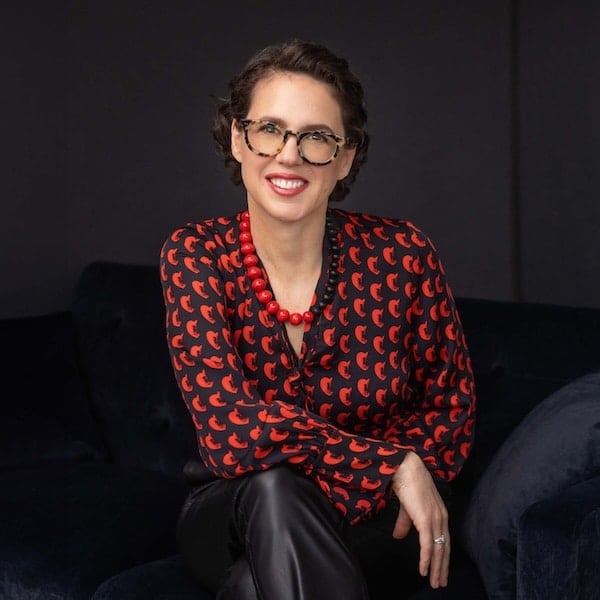
Workplace Conflict & Communication Expert | Contributing Editor, Harvard Business Review | Bestselling Author of 'Getting Along' | Former Co-Host, Women at Work
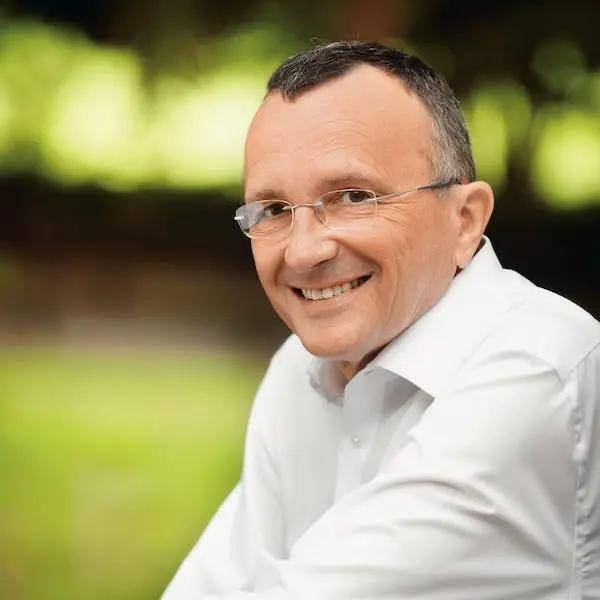
Co-Creator of the Business Model Canvas | Thinkers50 Strategy Award Winner | Bestselling Author of Business Model Generation | Professor Emeritus, University of Lausanne
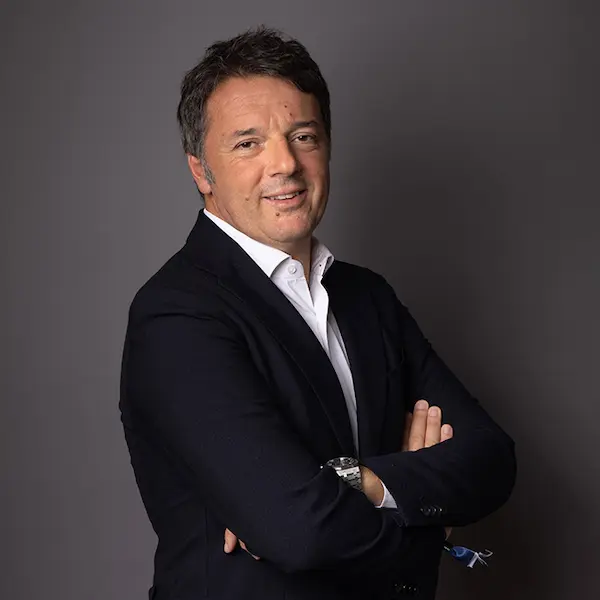
Former Prime Minister of Italy (2014-2016) & the Youngest in Its History | Former Mayor of Florence | Strategic Counsellor, Tony Blair Institute | Leadership & Europe Expert


© 2026 Aurum Speakers Bureau. All Rights Reserved

| Basic Data Protection Information | |
|---|---|
| Data controller | AURUM SPEAKERS BUREAU S.L. |
| Address | Parc Audiovisual de Catalunya 1, Oficina S11, 08225 Terrassa, Spain |
| Purposes | We will use your data to respond to your requests and deliver our services to you. |
| Marketing | We will only send you marketing correspondence if you have given your prior consent, which you can do by ticking the box for that purpose. |
| Lawful basis | We will only process your data if you have given your prior consent, which you can do by ticking the box for that purpose. |
| Recipients | Generally, only our members of staff who have been duly authorised may access the data that you have provided. |
| Your Rights | You have the right to know what information we hold about you, to rectify it and to erase it, as explained in the additional information available on our website. |
| Additional Information | For more information, please see our "PRIVACY POLICY". |