
Eva Dong
Global AI Strategist | Lead of AI Value Realization at Google Cloud | Former Senior AI Expert at McKinsey | Expert on AI ROI & Enterprise Transformation



2020 Nobel Laureate in Physiology or Medicine | Discoverer of Hepatitis C Virus | Li Ka Shing Professor of Virology, University of Alberta
Sir Michael Houghton spent seven years screening hundreds of millions of DNA clones before discovering the hepatitis C virus in 1989 — a breakthrough that transformed global blood safety and led to treatments curing over 95% of patients. The 2020 Nobel Laureate in Physiology or Medicine is now leading the world's most advanced effort to develop an HCV vaccine at the University of Alberta. On stage, he brings one of science's great persistence stories to life with depth, clarity, and a passion for the work still ahead.
Want to book Michael Houghton as a speaker for your event? Please provide the info below and we’ll get in touch within 24h:
Sir Michael Houghton is one of the most consequential virologists of his era — a British-born scientist whose relentless seven-year hunt for an invisible enemy led to the 1989 discovery of the hepatitis C virus, one of the most significant breakthroughs in the history of infectious disease. Born in 1949 into a working-class family in the United Kingdom, he won a scholarship to the University of East Anglia and went on to complete his PhD in biochemistry at King’s College London. What followed was a career defined by an extraordinary willingness to pursue scientific problems that others considered intractable — and to stay with them long enough to solve them.
Science speaker Sir Michael Houghton is best known for the discovery he achieved at Chiron Corporation in Emeryville, California, where he and colleagues Qui-Lim Choo, George Kuo, and Daniel Bradley undertook what he has described as “brute force” molecular biology — screening hundreds of millions of DNA clones over seven grueling years, trying at least 30 different approaches, before identifying a single positive match that proved to be a previously unknown RNA virus. That virus, named hepatitis C, was the hidden cause of the chronic liver disease that had been baffling clinicians since Harvey Alter’s NIH studies of the 1970s. The discovery enabled blood screening tests that within years virtually eliminated transfusion-transmitted hepatitis C worldwide, and laid the scientific foundation for antiviral treatments that today cure over 95% of infected patients. Houghton also co-discovered the hepatitis D genome in 1986 — a second landmark contribution that further transformed the understanding of viral liver disease.
In a gesture that speaks to the depth of his principles, Houghton declined the 2013 Canada Gairdner International Award — one of science’s most prestigious prizes — because his co-discoverers had not been included. He joined the University of Alberta in 2010 as Li Ka Shing Professor of Virology and Director of the Li Ka Shing Applied Virology Institute, where he has spent the subsequent years pursuing a challenge that eluded him even after the Nobel: an effective vaccine against hepatitis C. Having conducted four clinical trials in three countries, his team published the first evidence for an efficacious HCV vaccine as early as 1994. As of 2024, a clinical trial of his latest adjuvanted recombinant vaccine candidate — designed to be effective across all global strains of the virus — has been funded and initiated at the University of Alberta, representing the most advanced HCV vaccine effort in the world.
As a Nobel Prize speaker, Sir Michael Houghton brings a rare combination of scientific depth, personal humility, and genuine passion for the unfinished work still ahead. His keynotes move fluidly between the extraordinary story of HCV’s discovery — with all its frustration, persistence, and eventual triumph — and the urgent present-tense questions of pandemic preparedness, vaccine development, and what it takes to build the research infrastructure capable of responding to the next viral threat. For healthcare, pharmaceutical, and scientific audiences, he is among the most credible and compelling voices working at the frontier of virology today.
In this signature keynote, Houghton takes audiences inside the most grueling and consequential scientific hunt of his career — the seven-year effort at Chiron Corporation that eventually yielded the first-ever clone of the hepatitis C virus. From the frustration of repeated dead ends, to the audacious molecular strategy that finally worked, to the moment of confirmation that changed the field forever, this is a firsthand account of what scientific persistence at its most extreme actually looks like — and what it ultimately makes possible.
Discovering a virus is only half the battle. In this forward-looking keynote, Houghton traces the three-decade effort to develop an effective vaccine against hepatitis C — a challenge he has pursued longer than almost anyone in the field, having conducted four clinical trials across three countries and published the first evidence of vaccine efficacy as early as 1994. With a new vaccine candidate now in clinical trials at the University of Alberta, he offers a compelling account of what it takes to solve a problem across an entire career, and why the global elimination of hepatitis C remains within reach.
The discovery and treatment of hepatitis C offer a model for what the world can achieve when basic science, diagnostic development, and antiviral drug discovery work in concert. In this policy-oriented keynote, Houghton draws on that history — and on his experience during COVID-19 — to examine what genuine pandemic preparedness requires: manufacturing infrastructure, sustained research funding, cross-sector collaboration, and the political will to invest before the crisis arrives. A challenging and evidence-rich talk for healthcare leaders, policymakers, and anyone concerned with the architecture of global health security.
What separates scientific work that transforms medicine from work that merely advances it? In this reflective keynote, Houghton explores the human and institutional dimensions of breakthrough science — the role of team culture and collaborative honesty, the importance of following a question wherever it leads regardless of the timeline, the ethical responsibilities that come with recognition, and what the story of hepatitis C reveals about the conditions under which the most important discoveries actually happen. A deeply personal and intellectually honest talk for scientists, research leaders, and anyone who believes that how we do science matters as much as what we discover.
Global AI Strategist | Lead of AI Value Realization at Google Cloud | Former Senior AI Expert at McKinsey | Expert on AI ROI & Enterprise Transformation

Former U.S. Ambassador to Japan & Australia | Bestselling Author & Attorney | Honorary President, JFK Library Foundation | Daughter of President John F. Kennedy
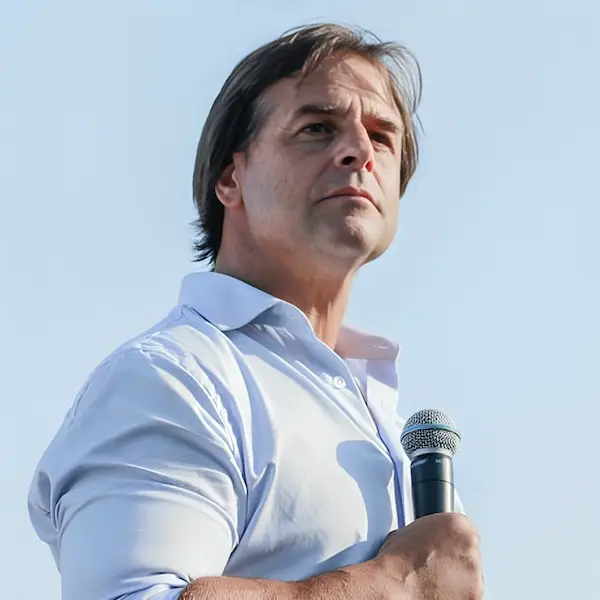
42nd President of Uruguay (2020–2025) | National Party Leader | Youngest President Since 1985 | Voice on Democracy, Reform & Crisis Leadership
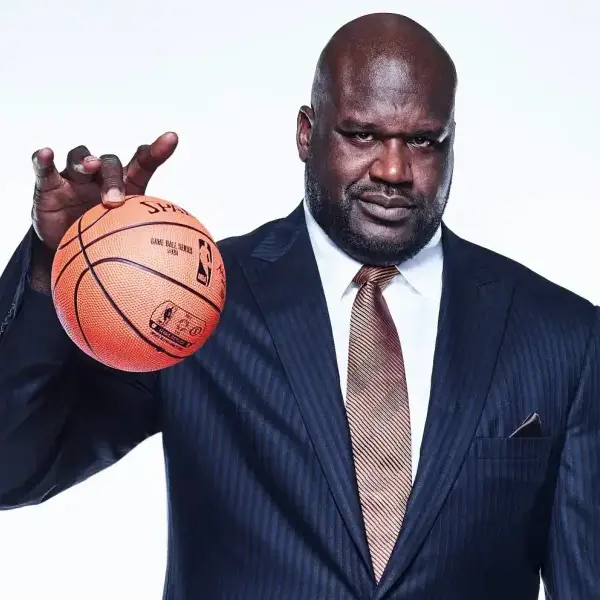
NBA Hall of Famer & 4x NBA Champion | 15x All-Star & 3x Finals MVP | Ed.D., Barry University | Entrepreneur & Founder, Big Chicken | $500M Business Empire


© 2026 Aurum Speakers Bureau. All Rights Reserved

| Basic Data Protection Information | |
|---|---|
| Data controller | AURUM SPEAKERS BUREAU S.L. |
| Address | Parc Audiovisual de Catalunya 1, Oficina S11, 08225 Terrassa, Spain |
| Purposes | We will use your data to respond to your requests and deliver our services to you. |
| Marketing | We will only send you marketing correspondence if you have given your prior consent, which you can do by ticking the box for that purpose. |
| Lawful basis | We will only process your data if you have given your prior consent, which you can do by ticking the box for that purpose. |
| Recipients | Generally, only our members of staff who have been duly authorised may access the data that you have provided. |
| Your Rights | You have the right to know what information we hold about you, to rectify it and to erase it, as explained in the additional information available on our website. |
| Additional Information | For more information, please see our "PRIVACY POLICY". |