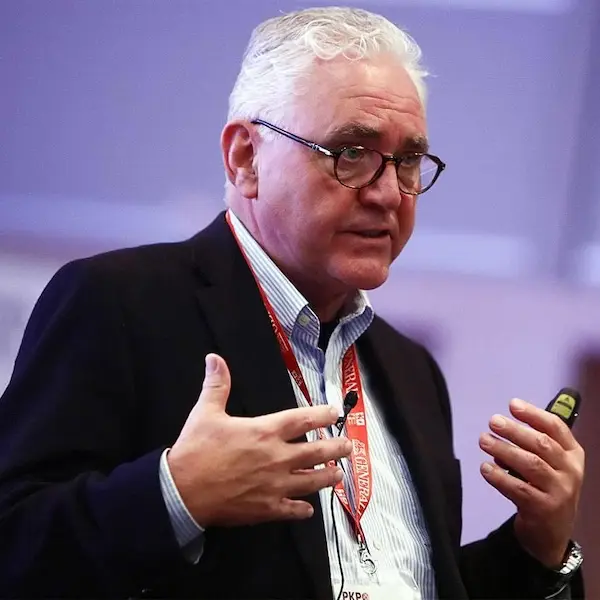
Christian Majgaard
Former Head of Global Branding, Marketing & Innovation at the LEGO Group | Chairman of Nord Modules & Rosa Danica | Branding & Strategy Author


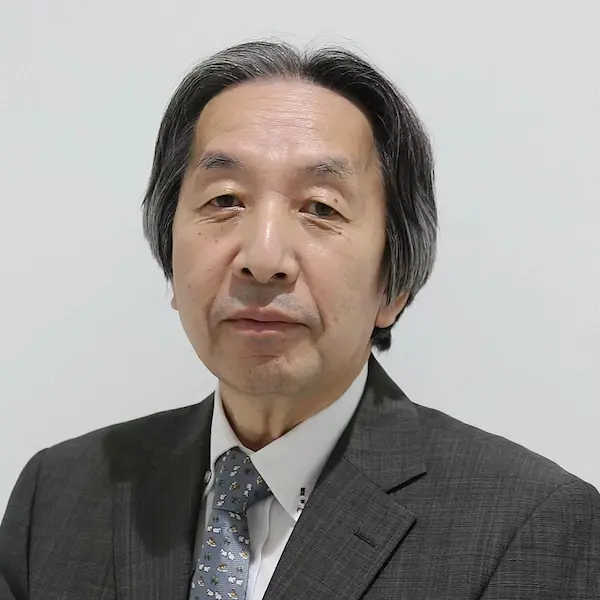
Inventor of the QR Code | Chief Engineer, Denso Wave | European Inventor Award & Imperial Prize Honoree | On Innovation, Problem-Finding & Open Technology
Masahiro Hara invented the QR Code, one of the most-used technologies on earth, now powering billions of daily payments, tickets, menus, and supply chains. Created in 1994 to track auto parts and released as an open standard, his code reshaped how the world connects the physical and digital. A multiple-award-winning Denso Wave chief engineer, Hara shares a rare firsthand story of how real innovation is born from persistence and finding the right problem.
Want to book Masahiro Hara as a speaker for your event? Please provide the info below and we’ll get in touch within 24h:
Masahiro Hara is the Japanese engineer who invented the QR Code, one of the most widely used technologies on earth. First developed in 1994 while he was an engineer at Denso, his two-dimensional code has since become an invisible backbone of modern life, powering everything from manufacturing and logistics to billions of mobile payments, event ticketing, marketing, and healthcare around the world.
Technology speaker Masahiro Hara created the QR Code to solve a very practical problem. Traditional barcodes could hold only about twenty characters and had to be scanned many times to track a single box of automotive parts, slowing factories down. Hara set out to design a code that could carry far more information and be read quickly from any direction. His breakthrough was the distinctive square “finder patterns” placed in three corners, derived from an exhaustive study of the black-and-white ratios least likely to appear in everyday printed matter, allowing scanners to instantly recognize a code’s position and orientation. The result could store several hundred times more data than a barcode while remaining fast and reliable.
One of the most consequential decisions in the QR Code’s history was to keep it open. Hara and Denso Wave retained the patents but chose not to charge royalties, releasing the code as an open standard so it could spread freely. That choice, much like the path taken by technologies such as Wi-Fi and Bluetooth, is widely credited with the QR Code’s global adoption. Hara’s contribution has been recognized with some of the world’s most prestigious honors, including the European Inventor Award, Japan’s Imperial Prize and Japan Academy Prize, the IEEE Milestone and Corporate Innovation Awards, and an industry Lifetime Achievement Award. He continues to work as Chief Engineer at Denso Wave, where he keeps refining the technology, from rectangular and secure QR Codes to ideas for color codes that could one day hold short videos or medical images.
As a speaker, Masahiro Hara offers a rare, firsthand account of how a world-changing innovation is actually born, not from a flash of genius but from persistence, hands-on problem-finding, and a willingness to act before overthinking. He shares his conviction that the key to innovation is the ability to identify the right problem rather than simply to solve one, and reflects on open standards, the long arc of technology adoption, and how everyday tools can quietly reshape the world. Audiences leave inspired by the human story behind a symbol they encounter every day.
Masahiro Hara takes audiences inside the creation of one of the world's most ubiquitous technologies, from the factory-floor problem that sparked it to the breakthrough insight behind its distinctive design. It is an honest, human account of trial, error, and persistence that demystifies how genuine innovation actually happens.
Hara believes innovation depends less on the ability to solve problems than on the ability to find the right ones. Drawing on a career of hands-on engineering, he shares why going to where the work actually happens, and acting before overthinking, is the shortest route to meaningful breakthroughs.
Denso Wave could have locked the QR Code behind licensing fees. Instead, they made it an open standard. Hara reflects on that decision and what it reveals about adoption, generosity, and long-term impact, offering lessons for any organization weighing short-term profit against widespread value.
More than three decades on, Hara is still innovating, from rectangular and secure codes to color codes that could carry video or medical images. He explores where the technology is heading, its growing role in healthcare and disaster response, and why the most powerful tools are often the ones we stop noticing.
Former Head of Global Branding, Marketing & Innovation at the LEGO Group | Chairman of Nord Modules & Rosa Danica | Branding & Strategy Author

Nobel Prize Winner in Economics 2010 | Regius Professor at LSE | Co-Chair, Institute for the Future of Work | Authority on AI, Labor Markets & Productivity

Former Lead FBI International Kidnapping Negotiator | Bestselling Author of Never Split the Difference | Founder & CEO, The Black Swan Group | World's #1 Negotiation Coach
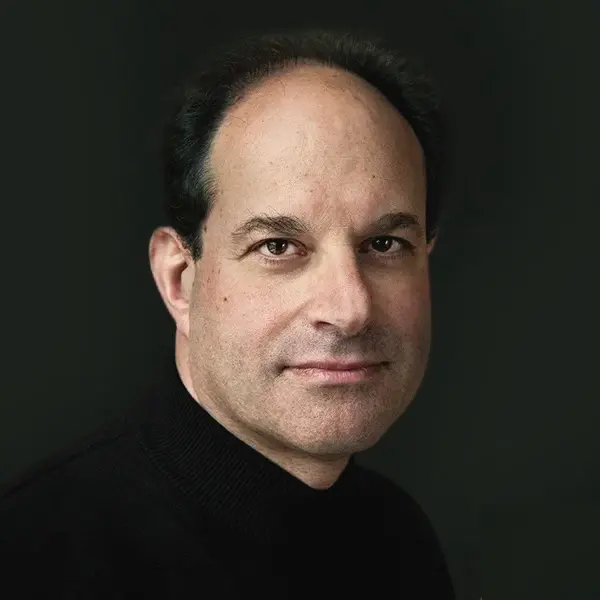
Nobel Prize in Physiology or Medicine 2021 | Pioneer of Pain & Sensory Science | Chair of Physiology at UCSF | Global Science Keynote Speaker


© 2026 Aurum Speakers Bureau. All Rights Reserved

| Basic Data Protection Information | |
|---|---|
| Data controller | AURUM SPEAKERS BUREAU S.L. |
| Address | Parc Audiovisual de Catalunya 1, Oficina S11, 08225 Terrassa, Spain |
| Purposes | We will use your data to respond to your requests and deliver our services to you. |
| Marketing | We will only send you marketing correspondence if you have given your prior consent, which you can do by ticking the box for that purpose. |
| Lawful basis | We will only process your data if you have given your prior consent, which you can do by ticking the box for that purpose. |
| Recipients | Generally, only our members of staff who have been duly authorised may access the data that you have provided. |
| Your Rights | You have the right to know what information we hold about you, to rectify it and to erase it, as explained in the additional information available on our website. |
| Additional Information | For more information, please see our "PRIVACY POLICY". |