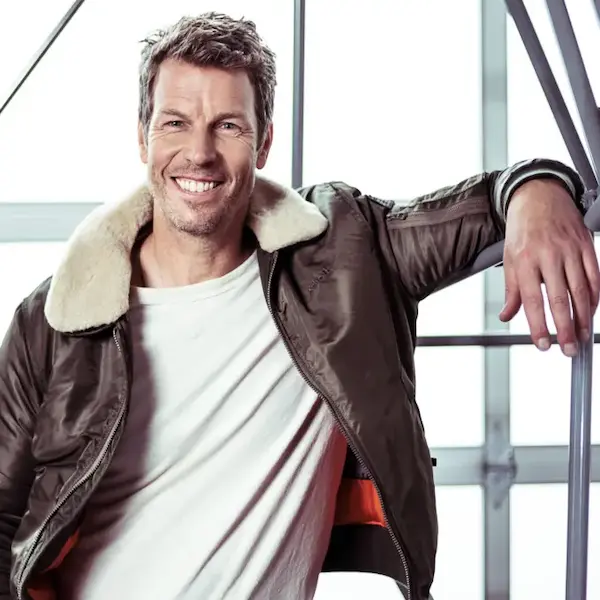
Monty Moran
Former Co-CEO of Chipotle Mexican Grill (2009–2016) | Bestselling Author & Leadership Expert | Pilot, Filmmaker & Founder of Old Tale Productions


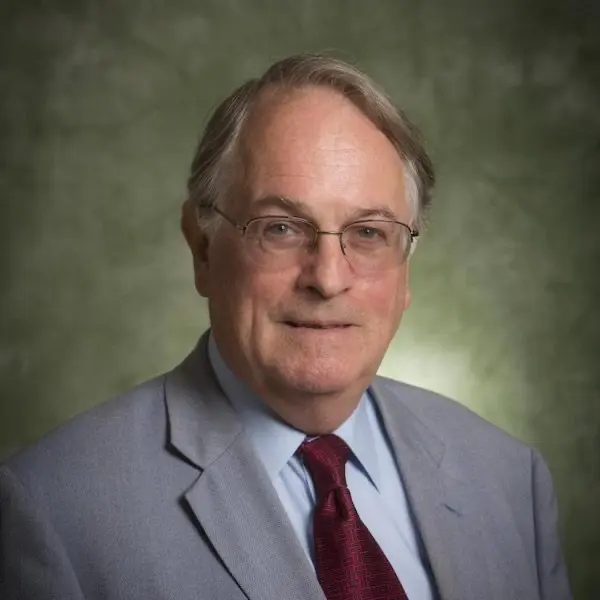
2019 Nobel Laureate in Chemistry | Knight Bachelor, King Charles III | Founding Father of the Lithium-Ion Battery | Distinguished Professor, Binghamton University
Sir Stanley Whittingham invented the intercalation electrode in the 1970s — the discovery that made every lithium-ion battery on earth possible. Nobel Laureate, Knight Bachelor, and Chief Innovation Officer of the NSF Upstate New York Energy Storage Engine, he is now leading a $113 million effort to rebuild America's battery industry. The defining voice on energy storage, clean technology, and the future of domestic manufacturing.
Want to book M. Stanley Whittingham as a speaker for your event? Please provide the info below and we’ll get in touch within 24h:
Sir M. Stanley Whittingham is the founding father of the lithium-ion battery, the British-American chemist whose discovery of intercalation electrodes at Exxon Research in the early 1970s laid the foundation for a technology that now powers billions of devices worldwide. Born in Nottingham, England, he earned his BA, MA, and DPhil at Oxford before a postdoctoral fellowship at Stanford. After sixteen years in the energy industry at Exxon and Schlumberger, where he received the original patent on rechargeable lithium batteries, he joined Binghamton University in 1988 and built one of the world’s foremost battery research programs. Today, science speaker M. Stanley Whittingham remains the most authoritative living voice on energy storage.
Whittingham shared the 2019 Nobel Prize in Chemistry with John B. Goodenough and Akira Yoshino for the development of lithium-ion batteries. His contribution, the discovery that lithium ions could be reversibly inserted into and extracted from a titanium disulfide host, established the intercalation chemistry principle on which every modern lithium-ion cell still depends. The Nobel Committee credited their work with having laid the foundation of a wireless, fossil fuel-free society. In 2023, he received the VinFuture Grand Prize, a $3 million award recognizing how solar energy paired with lithium storage is helping overcome climate change.
In 2024, King Charles III named Whittingham a Knight Bachelor for his services to research in chemistry, entitling him to be known as Sir Stanley Whittingham. His other distinctions include election to the National Academy of Engineering, Fellowship of the Royal Society, and the Carnegie Corporation’s Great Immigrants Award. In a mark of his field-defining stature, the Electrochemical Society established the M. Stanley Whittingham Mid-Career Award, presented to leading researchers in energy storage.
Far from resting on those laurels, Whittingham has spent the years since his Nobel working to rebuild America’s battery industry. He leads the $113 million Battery-NY initiative and serves as Chief Innovation Officer of the NSF Upstate New York Energy Storage Engine, one of ten inaugural Regional Innovation Engines designated by the National Science Foundation. Under his leadership, Binghamton University became the only institution in the country to secure all three major federal battery designations. His mission: to bring lithium battery manufacturing back to the United States after decades of offshoring to Asia.
As a speaker, Sir Stanley Whittingham offers what no other voice on energy can replicate: the perspective of the scientist who started it all, still in the laboratory and still fighting for the clean energy future his invention made possible. His keynotes connect more than fifty years of battery science to the strategic questions facing industry, government, and investors today, from next-generation battery chemistries to why domestic manufacturing is now a matter of national security as much as economic opportunity.
Whittingham traces the full arc of the technology he invented — from a titanium disulfide experiment at Exxon in the early 1970s to a global industry that underpins the entire digital and electric economy. This is not a retrospective: it is a masterclass in how fundamental scientific curiosity, industrial partnership, and patient iteration produce technologies that reshape civilization. Along the way, Whittingham addresses what the battery's history teaches about the conditions under which transformative innovation actually happens — and what those conditions require from organizations and governments today.
Today's lithium-ion batteries achieve only around 25% of their theoretical energy density. The gap between where the technology is and where it needs to go — for long-range EVs, grid-scale renewable storage, and portable power at scale — represents one of the most consequential engineering challenges of our time. Drawing on his current laboratory research at NECCES and his leadership of the NSF Energy Storage Engine, Whittingham maps the frontier: next-generation cathode materials, advanced electrolytes, solid-state architectures, and multi-electron intercalation reactions. A rigorous, forward-looking perspective from the scientist who defined the field.
Lithium-ion batteries were invented in the West and manufactured in Asia for decades — a supply chain concentration that now represents a serious economic and national security vulnerability. Whittingham, who has spent years working to reverse this pattern through Battery-NY, the NSF Energy Storage Engine, and federal hub designations, makes the strategic and policy case for rebuilding domestic battery manufacturing capacity. He addresses what it will actually take — in materials, workforce, capital, and policy design — to establish the United States as a genuine global competitor in the technology that will define the clean energy economy.
How does a scientist at an oil company end up inventing the technology that may ultimately replace oil? Whittingham's career is a case study in following scientific intuition across institutional boundaries, persisting through commercial failure, and living long enough to see a fifty-year-old discovery become the foundation of a multi-trillion-dollar global industry. This keynote draws on his personal experience to explore what genuine scientific innovation requires — intellectual freedom, institutional patience, cross-disciplinary collaboration, and the willingness to pursue questions that have no guaranteed commercial answer. Essential for research organizations, universities, and corporate R&D leaders.
Former Co-CEO of Chipotle Mexican Grill (2009–2016) | Bestselling Author & Leadership Expert | Pilot, Filmmaker & Founder of Old Tale Productions
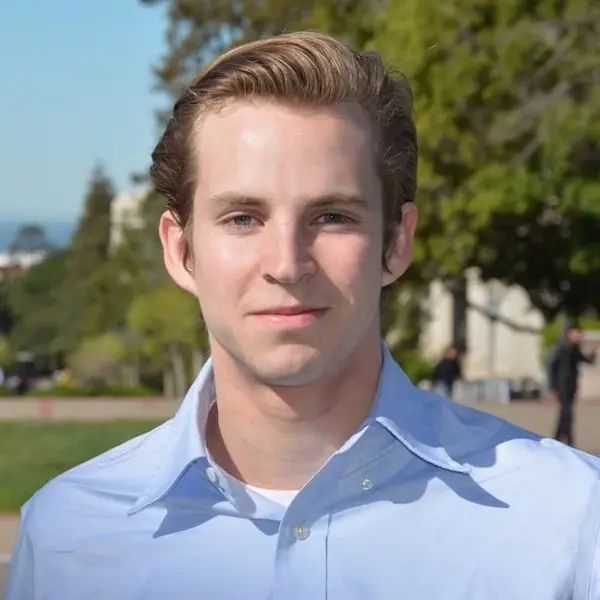
Cognitive Neuroscientist | Co-Founder, Becoming Superhuman | Lecturer, UC Berkeley Haas School of Business | Productivity & Performance Expert
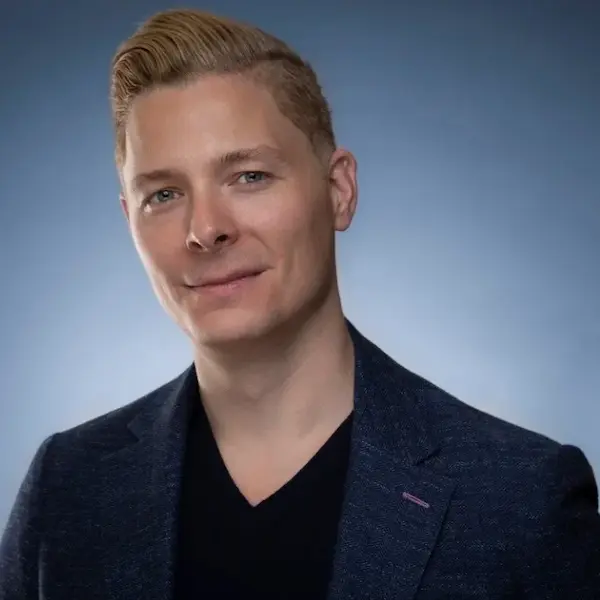
CEO & Chief Futurist, Signal and Cipher | Gonzo Futurist & Synthetic Media Pioneer | AI, Future of Work & Workforce Transformation
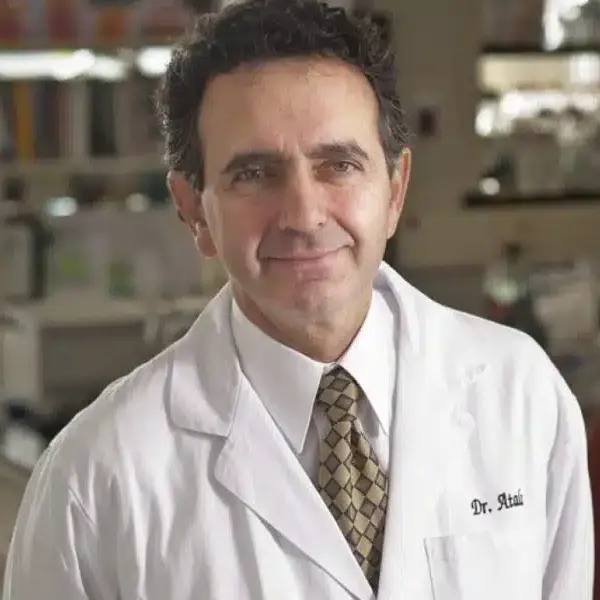
Founding Director, Wake Forest Institute for Regenerative Medicine | Inventor of the First 3D Bioprinter | Chair, ACS Board of Regents | 800+ Publications | 250+ Patents


© 2026 Aurum Speakers Bureau. All Rights Reserved

| Basic Data Protection Information | |
|---|---|
| Data controller | AURUM SPEAKERS BUREAU S.L. |
| Address | Parc Audiovisual de Catalunya 1, Oficina S11, 08225 Terrassa, Spain |
| Purposes | We will use your data to respond to your requests and deliver our services to you. |
| Marketing | We will only send you marketing correspondence if you have given your prior consent, which you can do by ticking the box for that purpose. |
| Lawful basis | We will only process your data if you have given your prior consent, which you can do by ticking the box for that purpose. |
| Recipients | Generally, only our members of staff who have been duly authorised may access the data that you have provided. |
| Your Rights | You have the right to know what information we hold about you, to rectify it and to erase it, as explained in the additional information available on our website. |
| Additional Information | For more information, please see our "PRIVACY POLICY". |