
Vicente del Bosque
FIFA World Cup & Euro Champion Manager | Spain National Team Coach 2008–2016 | Real Madrid UCL Winner | Leadership & Team Excellence


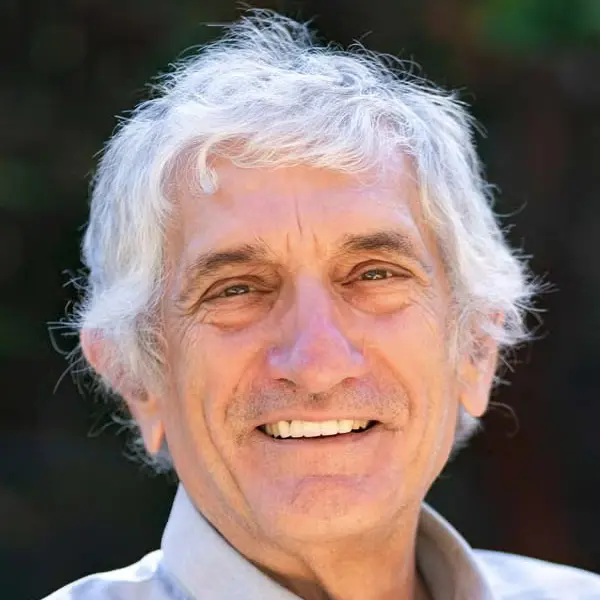
2025 Nobel Laureate in Physics | Professor, UC Santa Barbara | Co-Founder & CTO, Qolab | Quantum Computing & Superconducting Qubits Pioneer
Few scientists have done more to turn quantum mechanics into quantum machines than John Martinis. The 2025 Nobel Laureate in Physics led Google's team to achieve quantum supremacy in 2019 and now leads Qolab, his quantum hardware startup. His talks give senior audiences calibrated, evidence-based insight into quantum computing's real timeline and strategic implications.
Want to book John Martinis as a speaker for your event? Please provide the info below and we’ll get in touch within 24h:
John M. Martinis is a 2025 Nobel Laureate in Physics whose groundbreaking experiments in the 1980s proved that the strange laws of quantum mechanics do not belong exclusively to the subatomic world — they can be harnessed in human-scale electronic circuits. A Professor of Physics at the University of California, Santa Barbara, and co-founder and Chief Technology Officer of Qolab, Martinis stands at the intersection of fundamental science and practical engineering in a way few physicists ever achieve.
Nobel Prize speaker John Martinis is best known for his doctoral work with John Clarke and Michel Devoret at UC Berkeley in 1984–1985, where the trio built a superconducting electronic circuit cooled to near absolute zero and demonstrated macroscopic quantum tunneling and energy quantization. Using a precisely engineered Josephson junction — two superconductors separated by a thin insulating layer — they showed that a large ensemble of electrons could behave as a single quantum particle, crossing an energy barrier it classically could not surmount. This experiment was recognized with the 2025 Nobel Prize in Physics by the Royal Swedish Academy of Sciences as the foundational discovery behind superconducting qubits, launching an entirely new field of quantum hardware.
After his doctorate, Martinis held postdoctoral positions at the Commissariat à l’Énergie Atomique in France and at the National Institute of Standards and Technology in Boulder, Colorado, where he advanced the physics of SQUIDs and quantum devices. Joining UCSB in 2004, he held the Susan and Bruce Worster Chair in Experimental Physics and led a group that produced Science magazine’s 2010 Breakthrough of the Year for the first demonstration of quantum ground state in a mechanical oscillator. In 2014, Google Quantum AI recruited Martinis and his team in a landmark deal to build a functional quantum computer. The outcome was the Sycamore processor — a 53-qubit system that, in 2019, completed a computational task in 200 seconds that would take a classical supercomputer an estimated 10,000 years. Published in Nature, this was the first experimental realization of quantum supremacy.
After departing Google in 2020, Martinis co-founded Qolab in 2022, a quantum hardware startup focused on achieving something even more ambitious than supremacy: building a commercially useful quantum computer. His strategy centers on manufacturing quality, system engineering, and deep industry collaboration — disciplines he argues are as critical as the physics itself. His focus area is quantum chemistry: using quantum hardware to simulate molecular behavior, potentially unlocking breakthroughs in medicine, materials science, and clean energy.
As a speaker, John Martinis brings the rare authority of a scientist who has both written the foundational theory and led the teams that built the machines. He translates quantum mechanics — one of the least intuitive fields in science — into clear, compelling narratives about what this technology can and cannot do, on what timeline, and why it matters for industries from finance and pharmaceuticals to cybersecurity and national security. Senior audiences gain not just understanding, but calibrated judgment: how to think about quantum risk, quantum opportunity, and the gap between hype and hardware reality.
Martinis traces the arc from the foundational 1984 experiments that won the Nobel Prize to the current frontier of quantum hardware development. He explains what superconducting qubits are, why they are the most mature quantum computing platform, and what the engineering and manufacturing challenges still stand between today's prototypes and genuinely useful quantum computers. Audiences leave with a grounded, non-hype view of the timeline, the milestones that matter, and the decisions organizations should begin making now.
Drawing on his direct experience leading the Google Sycamore team, Martinis breaks down what quantum supremacy actually demonstrated, what it did not prove, and what it means for the long-term trajectory of quantum computing. He addresses the gap between supremacy and utility, explains the engineering discipline required to close it, and gives audiences — including those in finance, pharma, and cybersecurity — a realistic map of when quantum advantages will begin to matter for their industries.
Quantum computers, once sufficiently powerful, will be capable of breaking the encryption that secures today's financial systems, communications, and critical infrastructure. Martinis explains the physics behind this threat without sensationalism, outlines the realistic timeline, and presents what organizations can and should do to prepare — from post-quantum cryptography migration strategies to understanding which assets are most at risk. A critical talk for financial institutions, governments, and enterprise technology leaders.
A candid, practical session on what it takes to translate frontier science into functioning technology — and then into viable business. Martinis reflects on leading quantum hardware at Google, the decisions and disputes that shaped that experience, and the different challenges of founding an independent deep-tech startup with a collaborative, horizontal model. He shares frameworks for scientific leadership, the tension between research rigor and commercial urgency, and how to build the right team at the right time for hard technology problems.
FIFA World Cup & Euro Champion Manager | Spain National Team Coach 2008–2016 | Real Madrid UCL Winner | Leadership & Team Excellence

Former Americas Editor, The Economist | Author of Forgotten Continent, Brazil & Spain (Yale) | Visiting Professor, LSE | Leading Latin America Analyst

Former SVP of Apple Retail & CEO of Burberry | Lead Independent Director, Ralph Lauren | Chair, Save the Children International | Airbnb & WPP Board Member | DBE

Three-Time CEO & Founder of Mitchell Communications Group (Sold to Dentsu) | Executive Coach & Leadership Strategist | Author of Leading Through the Turn


© 2026 Aurum Speakers Bureau. All Rights Reserved

| Basic Data Protection Information | |
|---|---|
| Data controller | AURUM SPEAKERS BUREAU S.L. |
| Address | Parc Audiovisual de Catalunya 1, Oficina S11, 08225 Terrassa, Spain |
| Purposes | We will use your data to respond to your requests and deliver our services to you. |
| Marketing | We will only send you marketing correspondence if you have given your prior consent, which you can do by ticking the box for that purpose. |
| Lawful basis | We will only process your data if you have given your prior consent, which you can do by ticking the box for that purpose. |
| Recipients | Generally, only our members of staff who have been duly authorised may access the data that you have provided. |
| Your Rights | You have the right to know what information we hold about you, to rectify it and to erase it, as explained in the additional information available on our website. |
| Additional Information | For more information, please see our "PRIVACY POLICY". |