
Carly Fiorina
First Woman to Lead a Fortune 20 Company | Former CEO, Hewlett-Packard | Chair, Colonial Williamsburg Foundation


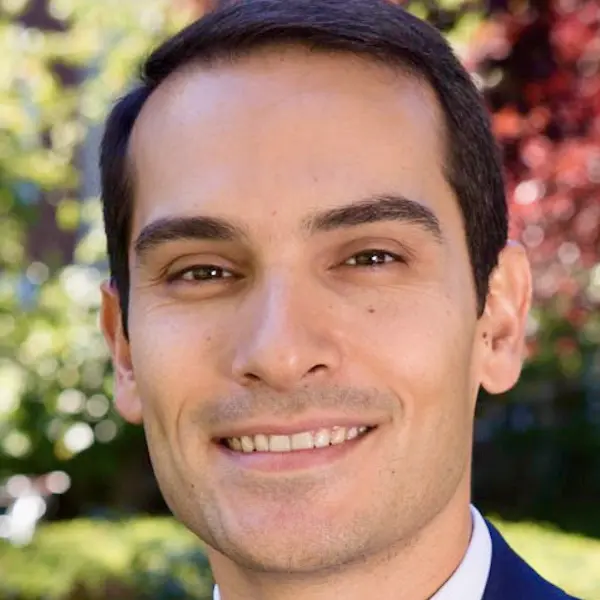
Charles M. Williams Professor, Harvard Business School | Pioneer of ESG Strategy | Named One of the Most Influential People in ESG Investing by Barron's
George Serafeim is the Harvard Business School professor who helped build ESG into a rigorous academic and business discipline. Named by Barron's as one of the most influential people in ESG investing and cited nearly 49,000 times on Google Scholar, he co-leads HBS's Climate and Sustainability Impact Lab and advises Fortune 500 boards on turning sustainability from compliance exercise into competitive strategy.
Want to book George Serafeim as a speaker for your event? Please provide the info below and we’ll get in touch within 24h:
George Serafeim is the Charles M. Williams Professor of Business Administration at Harvard Business School — one of the youngest faculty members to receive tenure at the institution — and a leading architect of how the world understands, measures, and acts on environmental, social, and governance (ESG) issues in business. His research helped lay the empirical foundations of the ESG field at a time when non-financial metrics were considered irrelevant by most of the investment community, and the Financial Times has described his work as a turning point for companies and investment managers in integrating ESG into business and investment strategy.
Sustainability speaker George Serafeim co-founded KKS Advisors in 2013, a consultancy that applies rigorous academic research to help organizations build effective ESG strategies, working directly with boards, C-suites, and institutional investors across more than 60 countries. He also co-founded Richmond Global Sciences, a technology firm that translates his Impact-Weighted Accounts methodology into an AI-assisted platform, enabling investors and corporates to quantify the real social and environmental impacts of thousands of companies. Serafeim has furthermore been named by Barron’s as one of the most influential people in ESG investing and ranks among the top ten most cited business authors on the Social Science Research Network, with nearly 49,000 citations on Google Scholar. His research has been published in the Strategic Management Journal, the Journal of Finance, and the Harvard Business Review, and he has presented his findings at the World Economic Forum in Davos, the Aspen Ideas Festival, White House business leadership conferences, the U.S. Securities and Exchange Commission, and the European Commission.
Serafeim currently co-leads the Climate and Sustainability Impact Lab within Harvard’s Digital, Data, and Design Institute, where his research applies generative AI and data science to analyze the diffusion and business consequences of transformative technologies — from electric vehicles and battery storage to circular economy solutions. He teaches the MBA course “Risks, Opportunities, and Investments in an Era of Climate Change” (ROICC), and previously co-taught “Reimagining Capitalism: Business and Big Problems,” which received both the Aspen Institute’s Ideas Worth Teaching Award and the Grand Page Prize. He created the Impact-Weighted Accounts Project at HBS — the most rigorous methodology to date for quantifying how companies create or erode value for society — and co-founded the International Foundation for Valuing Impacts. He also serves on the board of Liberty Mutual, a Fortune 100 company, and chairs Greece’s Corporate Governance Council. His book, Purpose + Profit: How Business Can Lift Up the World (HarperCollins, 2022), translates two decades of research into an executive framework for building purpose-driven organizations that deliver measurable financial and social returns.
As a speaker, George Serafeim brings something rare to the stage: the intellectual depth of a Harvard researcher combined with the operational fluency of a board director and practitioner. His talks go well beyond the ESG compliance conversation — challenging senior audiences to rethink business strategy through the lens of impact, competitive differentiation, and long-term value creation. Executives and investors leave with a concrete analytical framework for navigating the intersection of sustainability, AI, and financial performance in a period of accelerating transition.
Drawing directly on his book and two decades of field research across more than 60 countries, Serafeim shows how the world's highest-performing companies are generating superior financial returns precisely because they have integrated environmental and social performance into their core business models — not despite it. This keynote dismantles the false trade-off between doing good and doing well, and gives executives a practical framework for identifying which ESG issues are financially material for their industry, allocating resources accordingly, and measuring outcomes rather than effort.
Serafeim's most current research sits at the intersection of sustainability and artificial intelligence — using generative AI and large-scale data analysis to identify the companies best positioned to profit from the climate transition. This forward-looking keynote explores how AI is transforming ESG analytics, which sectors face the steepest transition risks and where the largest opportunities lie, and how executives and investors can use emerging data tools to make faster, better-informed strategic decisions. An essential session for boards, investment committees, and innovation leaders.
Based on the Aspen Institute award-winning HBS course he designed, this keynote challenges leaders to think at the systems level — asking not just how to manage ESG risk, but how to build business models that address structural challenges in climate, health, inequality, and urban development at scale. Serafeim presents a framework for how companies can move from compliance, through efficiency, to genuine innovation — and why the organizations that make that leap are consistently outperforming peers on both impact and shareholder returns.
For decades, balance sheets have failed to capture what companies truly cost — and create — for society. Serafeim presents the methodologies developed through Harvard's Impact-Weighted Accounts Project, which quantify a company's environmental footprint, product impact, and employment practices in financial terms. This session gives CFOs, investors, and strategy teams the tools to integrate impact into valuation, reporting, and capital allocation decisions — and explains why regulators, institutional investors, and major corporates are rapidly moving in this direction.
Employees have a powerful role when it comes to influencing how their company treats people and the environment. It is not enough for organizations to achieve revenue goals. They must protect valuable resources, people and the planet. A company can still profit while operating with purpose and employees can act as stewards with their own actions – and by holding their organizations accountable. The good news is that firms have an incentive to “do good” because strategically implementing environmental, social and governance (ESG) initiatives creates value. In addition, investors, boards and regulators are increasingly measuring the value of a company based on ESG performance. In this presentation, Harvard Business School Professor George Serafeim, one of the world’s foremost authorities on ESG investing, outlines ways purpose-driven employees can play a vital role in helping their company boost ESG performance in the ongoing “race to the top” so they can profit while serving society.
First Woman to Lead a Fortune 20 Company | Former CEO, Hewlett-Packard | Chair, Colonial Williamsburg Foundation
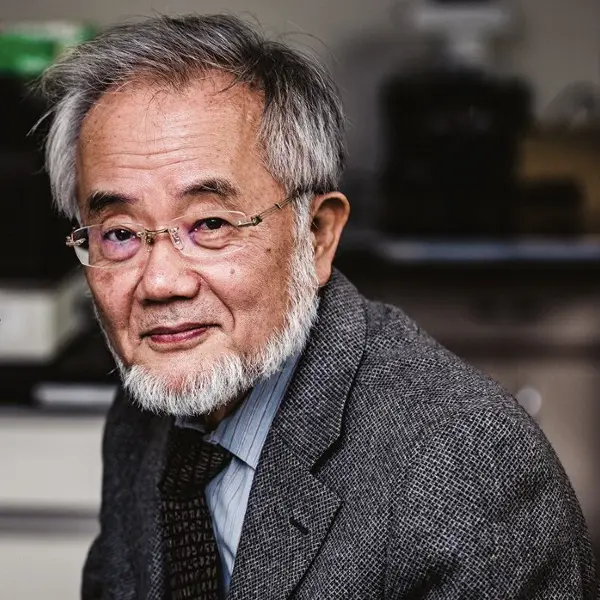
2016 Nobel Laureate in Physiology or Medicine | Discoverer of Autophagy Mechanisms | Honorary Professor, Institute of Science Tokyo

Practice Head of Geoeconomics at Eurasia Group | Leading Expert on Politics, Economics & Global Markets | Former Bank of England & IMF Economist | Macro Strategist
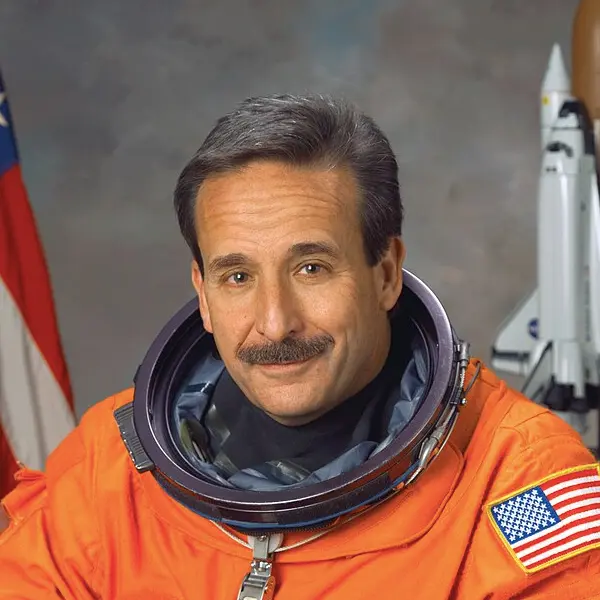
NASA Astronaut | Columbia Return-to-Flight Mission Specialist | Leadership, Innovation & Safety Culture Expert


© 2026 Aurum Speakers Bureau. All Rights Reserved

| Basic Data Protection Information | |
|---|---|
| Data controller | AURUM SPEAKERS BUREAU S.L. |
| Address | Parc Audiovisual de Catalunya 1, Oficina S11, 08225 Terrassa, Spain |
| Purposes | We will use your data to respond to your requests and deliver our services to you. |
| Marketing | We will only send you marketing correspondence if you have given your prior consent, which you can do by ticking the box for that purpose. |
| Lawful basis | We will only process your data if you have given your prior consent, which you can do by ticking the box for that purpose. |
| Recipients | Generally, only our members of staff who have been duly authorised may access the data that you have provided. |
| Your Rights | You have the right to know what information we hold about you, to rectify it and to erase it, as explained in the additional information available on our website. |
| Additional Information | For more information, please see our "PRIVACY POLICY". |