
Kurt Wüthrich
2002 Nobel Laureate in Chemistry | Professor of Biophysics, ETH Zürich & Scripps Research | Pioneer of NMR Spectroscopy for Biological Macromolecules



2018 Nobel Laureate in Chemistry | Pioneer of Phage Display | Curators Distinguished Professor Emeritus, University of Missouri | Member, National Academy of Sciences
George P. Smith won the 2018 Nobel Prize in Chemistry for inventing phage display — a technique that enabled the development of Humira, the world's best-selling drug, and transformed how humanity discovers antibody therapies for cancer, autoimmune disease, and beyond. His work is one of the most commercially consequential discoveries in the history of modern medicine.
Want to book George P. Smith as a speaker for your event? Please provide the info below and we’ll get in touch within 24h:
George P. Smith is one of the most consequential scientists of the modern era — an American biochemist whose foundational invention transformed drug discovery and earned him the 2018 Nobel Prize in Chemistry. He is the Curators Distinguished Professor Emeritus of Biological Sciences at the University of Missouri, where he spent a forty-year career before retiring in 2015, and a member of the United States National Academy of Sciences. In 2023, he became the inaugural recipient of the Mizzou Medal of Distinction, the university’s most prestigious service award.
Nobel Prize speaker George P. Smith is best known as the inventor of phage display — a technique he developed in 1985 while on sabbatical at Duke University that would quietly become one of the most powerful and widely used tools in the history of biological science. Phage display works by inserting foreign DNA into bacteriophages — viruses that infect bacteria — so that the resulting proteins are expressed on the phage’s outer surface. This allows researchers to create vast libraries of protein variants, screen them for specific binding properties, and evolve proteins with precisely targeted functions through repeated cycles of selection and amplification. The method essentially applies the logic of Darwinian evolution to molecular engineering: rather than designing proteins from first principles, it lets them evolve toward a desired function.
Smith completed his undergraduate studies at Haverford College in Pennsylvania and received his doctorate in bacteriology and immunology from Harvard University in 1970. After a postdoctoral period at the University of Wisconsin-Madison, he joined the University of Missouri, where he would remain for four decades. His early work at Duke in the 1983–84 academic year laid the groundwork for phage display, and his landmark 1985 paper established the technique that would bear fruit across multiple scientific disciplines for the next four decades.
The commercial and medical impact of phage display is staggering. The technique was extended by Sir Gregory Winter at the MRC Laboratory of Molecular Biology in Cambridge to produce fully human therapeutic antibodies — work for which Winter shared the 2018 Nobel with Smith. This application pathway led directly to the development of adalimumab, marketed as Humira by AbbVie, the first fully human monoclonal antibody approved by the FDA. Approved in 2002 for rheumatoid arthritis and later for inflammatory bowel disease, psoriasis, and other chronic inflammatory conditions, Humira became the best-selling drug in pharmaceutical history. Phage display has since been used to develop Benlysta for lupus, Portrazza for cancer, and dozens of additional approved therapies — representing hundreds of billions of dollars in medicines that would not exist without Smith’s original insight.
As a speaker, George P. Smith offers audiences a rare and deeply humanizing perspective on how fundamental science creates the medicines that save and transform lives. His talks trace the journey from a solitary researcher’s insight — developed not at a major research university but during a sabbatical visit, decades before anyone could anticipate the applications — to one of the most globally significant platforms in biotechnology. For audiences in pharmaceuticals, biotechnology, life sciences, research institutions, and any organization committed to understanding how transformative innovation actually happens, Smith is a uniquely authoritative and inspiring voice.
In 1985, during a sabbatical visit at Duke University, George P. Smith made an observation that would take decades to reach its full implications — and ultimately yield the best-selling drug in pharmaceutical history. In this keynote, Smith tells the story of phage display from the inside: the scientific reasoning, the early skepticism, the unexpected applications, and the Nobel recognition that arrived thirty-three years later. More than a biography of a technique, it is a meditation on how fundamental science actually works — how curiosity-driven research without obvious applications creates the foundations that transformative products are eventually built upon. An essential keynote for pharmaceutical, biotech, research, and innovation leadership audiences.
Life's diversity is the product of four billion years of random mutation and natural selection. Smith's insight was that the same process — accelerated and directed by the scientist — could be used to engineer proteins with precisely targeted functions, producing molecules that no rational design process could have conceived. In this keynote, he explores the principles and practice of directed evolution, what it has already made possible in drug discovery and industrial biotechnology, and where the field is heading as new display technologies, AI-assisted screening, and synthetic biology expand the toolkit. A scientifically rich and conceptually fascinating keynote for life sciences, biotech, and innovation audiences.
The journey from a laboratory technique to an FDA-approved drug is measured not in months but in decades — and it passes through basic research, applied science, commercial development, clinical trials, regulatory approval, and global manufacturing. Smith's phage display traversed every one of these stages, from its invention in 1985 to Humira's approval in 2002 to the Nobel Prize in 2018. In this keynote, he maps that journey from a scientist's perspective: what it requires, where it breaks down, and what it reveals about the relationship between academic science, pharmaceutical industry, and the patients who ultimately benefit. A thoughtful and surprisingly personal keynote for healthcare, pharma, biotech, and research policy audiences.
Great scientific breakthroughs do not emerge from strategic planning or hypothesis-driven project management alone — they emerge from cultures that tolerate uncertainty, reward curiosity, and give researchers the space to pursue questions that may not pay off for decades. Smith reflects on forty years at the University of Missouri, the conditions that enabled his Nobel Prize-winning work, and what institutions — universities, companies, and research organizations — must protect and nurture if they want to remain capable of fundamental discovery. An honest, reflective keynote for research institutions, innovation leaders, and any organization grappling with how to build cultures that generate genuinely new ideas rather than incremental improvements on existing ones.
2002 Nobel Laureate in Chemistry | Professor of Biophysics, ETH Zürich & Scripps Research | Pioneer of NMR Spectroscopy for Biological Macromolecules

World Authority on Trust | Bestselling Author of The Speed of Trust & Trust & Inspire | Former CEO, Covey Leadership Center | FranklinCovey
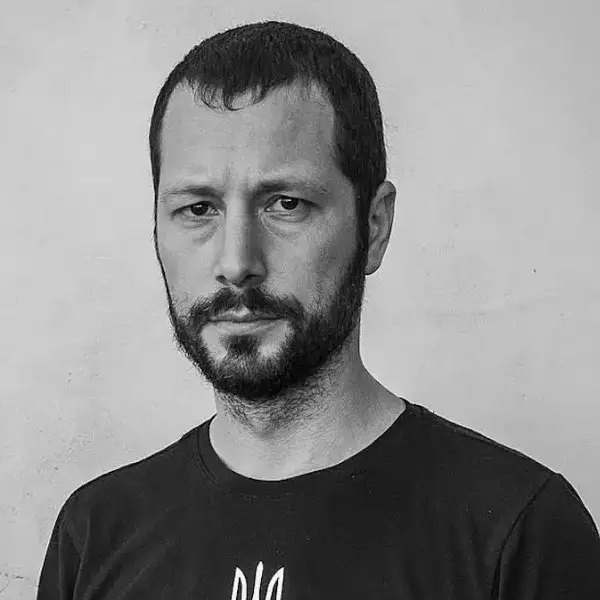
Academy Award Winner, Best Documentary (2024) | BAFTA Winner | Pulitzer Prize Winner | Director, 20 Days in Mariupol & 2000 Meters to Andriivka | 2x Sundance | AP

Co-Creator of Skype | Co-Founder & Chairman, NORNORM (backed by IKEA) | Serial Entrepreneur | Author & Lecturer, Stanford & Stockholm School of Economics


© 2026 Aurum Speakers Bureau. All Rights Reserved

| Basic Data Protection Information | |
|---|---|
| Data controller | AURUM SPEAKERS BUREAU S.L. |
| Address | Parc Audiovisual de Catalunya 1, Oficina S11, 08225 Terrassa, Spain |
| Purposes | We will use your data to respond to your requests and deliver our services to you. |
| Marketing | We will only send you marketing correspondence if you have given your prior consent, which you can do by ticking the box for that purpose. |
| Lawful basis | We will only process your data if you have given your prior consent, which you can do by ticking the box for that purpose. |
| Recipients | Generally, only our members of staff who have been duly authorised may access the data that you have provided. |
| Your Rights | You have the right to know what information we hold about you, to rectify it and to erase it, as explained in the additional information available on our website. |
| Additional Information | For more information, please see our "PRIVACY POLICY". |