
Lindsay Goffman
Co-Founder & CEO of Refundly | Founder of Gratitude Productions | Executive Producer of "The Good Doctor" & "The Company You Keep" | Hollywood-to-Tech Reinvention Story


2024 Nobel Laureate in Physics | The 'Godfather of AI' | Turing Award Winner | University Professor Emeritus, University of Toronto | Pioneer of Deep Learning
Known as the 'Godfather of AI,' Geoffrey Hinton is the 2024 Nobel Laureate in Physics and a Turing Award winner whose work underpins modern AI. After a decade at Google, he stepped away in 2023 to speak freely about the risks of rapid, unregulated AI, and is now a leading voice on its promise and dangers. On stage, Hinton offers the rare perspective of the scientist who helped build modern AI, helping audiences understand where it is truly heading.
Want to book Geoffrey Hinton as a speaker for your event? Please provide the info below and we’ll get in touch within 24h:
AI speaker Geoffrey Hinton, widely known as the “Godfather of AI,” is the 2024 Nobel Laureate in Physics and one of the most important voices on the future of artificial intelligence. His foundational work on neural networks underpins almost every modern AI system, and after decades advancing the field, he is now among its most thoughtful and influential critics.
Hinton received the 2024 Nobel Prize in Physics, shared with John Hopfield, for foundational discoveries that enable machine learning with artificial neural networks. He was one of the researchers who introduced the backpropagation algorithm in the 1980s, and in 2012, with two of his students, he built the breakthrough image-recognition system that helped launch the deep learning revolution now reshaping business and society. His other contributions include Boltzmann machines, distributed representations, and advances that transformed speech recognition and computer vision.
For a decade, Hinton split his time between the University of Toronto and Google, where he served as a Vice President and Engineering Fellow. In 2023, he left Google so he could speak freely about the risks of rapid, unregulated AI. While he remains clear about the technology’s enormous benefits, he argues that society is at a critical inflection point and must think carefully about how to keep advanced AI safe, from misinformation and job disruption to longer-term existential concerns.
Hinton earned his PhD in artificial intelligence from the University of Edinburgh and is now University Professor Emeritus at the University of Toronto, as well as Chief Scientific Adviser at the Vector Institute. A fellow of the Royal Society and a foreign member of the US National Academy of Engineering, his many honors include the Turing Award, often called the Nobel Prize of computing, along with the Rumelhart Prize, the IEEE Frank Rosenblatt Medal, and recognition among Time’s 100 Most Influential People in AI.
As a speaker, Geoffrey Hinton offers something almost no one else can: the perspective of the scientist who helped create modern AI, speaking candidly about where it is heading. He helps senior audiences understand how these systems actually work, separate real breakthroughs from hype, and grapple with the profound choices AI poses for business, governance, and humanity. Few voices carry more authority on the most important technology of our time.
In his signature talk, Geoffrey Hinton lays out both sides of the AI revolution he helped create. He explains, in clear and accessible terms, how today's systems learn and why they are advancing so quickly, then turns to the harder questions: the risks of misinformation, job disruption, and machines that may one day exceed human capabilities. Audiences leave with a grounded, first-hand understanding of where AI stands and what responsible progress should look like.
Few people can explain artificial intelligence like the scientist who helped invent it. Hinton walks audiences through the ideas behind neural networks, from backpropagation to the breakthroughs that launched the deep learning era, and argues that modern systems do far more than mimic language; they learn to understand it. It's a rare chance to grasp the technology reshaping every industry, explained by the mind behind much of it.
Having stepped away from Google to speak freely, Hinton offers a candid look at the long-term risks of advanced AI. He explores what it means to build systems that could one day rival or surpass human intelligence, why he believes society is at a critical inflection point, and what governments, companies, and researchers can do now to steer the technology safely. A sober, essential conversation for leaders shaping the AI era.
Hinton examines how artificial intelligence will reshape economies, organizations, and daily life over the coming years. Drawing on his unrivaled vantage point, he discusses which capabilities are advancing fastest, how leaders should prepare their organizations, and how to capture AI's benefits while managing its disruption. Audiences gain a clear-eyed view of the opportunities and responsibilities that come with the most powerful technology of our time.
Co-Founder & CEO of Refundly | Founder of Gratitude Productions | Executive Producer of "The Good Doctor" & "The Company You Keep" | Hollywood-to-Tech Reinvention Story
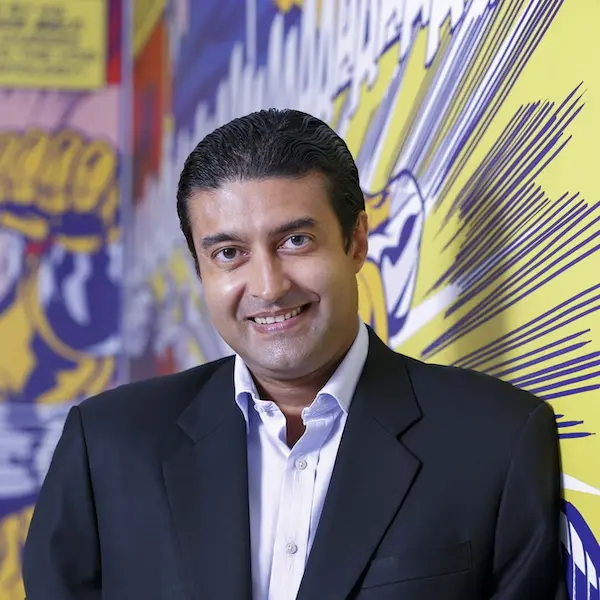
AI & Technology Professor, Columbia Business School | Award-Winning Creator & Entrepreneur | Founder & CEO of FaiBLE & Graphic India | Co-Creator of Spider-Man: India
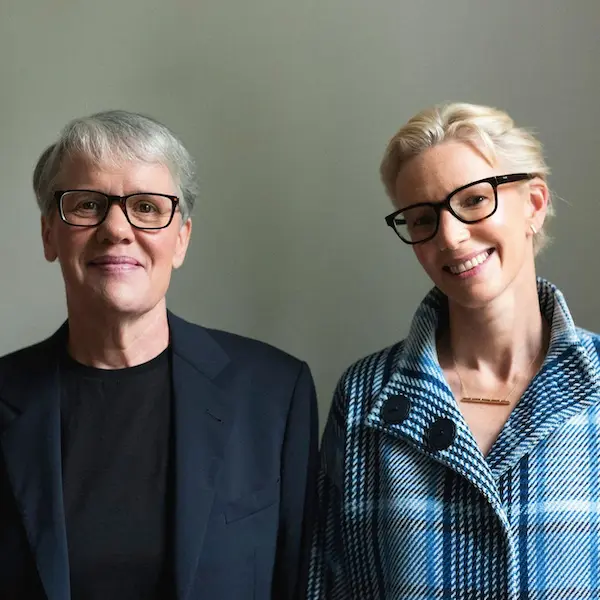
Harvard-Trained Leadership Duo | Co-Authors of Move Fast & Fix Things | Co-Hosts of the Fixable Podcast | Experts on Trust, Change & Solving Hard Problems

2018 Nobel Laureate in Chemistry | Linus Pauling Professor, Caltech | Pioneer of Directed Evolution | Board Member, Alphabet & Illumina


© 2026 Aurum Speakers Bureau. All Rights Reserved

| Basic Data Protection Information | |
|---|---|
| Data controller | AURUM SPEAKERS BUREAU S.L. |
| Address | Parc Audiovisual de Catalunya 1, Oficina S11, 08225 Terrassa, Spain |
| Purposes | We will use your data to respond to your requests and deliver our services to you. |
| Marketing | We will only send you marketing correspondence if you have given your prior consent, which you can do by ticking the box for that purpose. |
| Lawful basis | We will only process your data if you have given your prior consent, which you can do by ticking the box for that purpose. |
| Recipients | Generally, only our members of staff who have been duly authorised may access the data that you have provided. |
| Your Rights | You have the right to know what information we hold about you, to rectify it and to erase it, as explained in the additional information available on our website. |
| Additional Information | For more information, please see our "PRIVACY POLICY". |