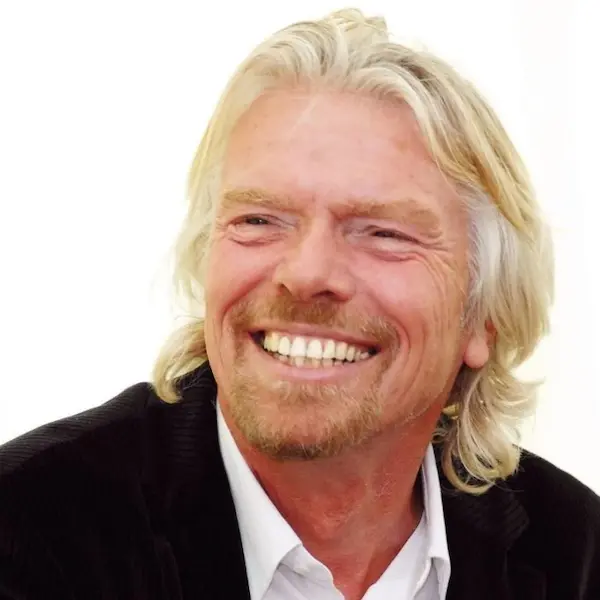
Richard Branson
Founder, Virgin Group | Entrepreneur Behind 400+ Companies in 8 Sectors | Philanthropist, Adventurer & Bestselling Author

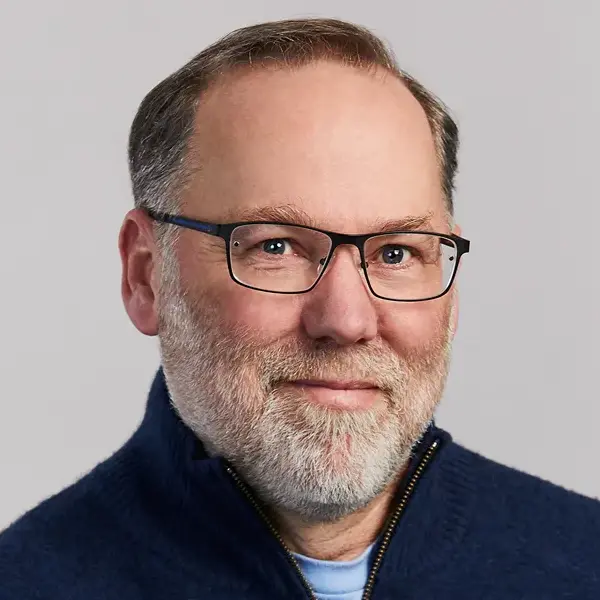
2025 Nobel Laureate in Physiology or Medicine | Co-Discoverer of FOXP3 | Co-Founder & SAB Chair, Sonoma Biotherapeutics
A 2025 Nobel Laureate in Physiology or Medicine, Fred Ramsdell co-discovered FOXP3, the gene that unlocked the immune system's self-regulation mechanism, opening the path to modern cancer immunotherapy, autoimmune treatment, and transplant medicine. With 30+ years translating discovery science into clinical therapies, he offers audiences an unmatched inside view of how fundamental research becomes transformative medicine.
Want to book Fred Ramsdell as a speaker for your event? Please provide the info below and we’ll get in touch within 24h:
Fred Ramsdell is a 2025 Nobel Laureate in Physiology or Medicine and one of the world’s foremost molecular immunologists, whose decades-long career bridging basic science and biotechnology produced one of the most consequential genetic discoveries in the history of medicine. Trained at UC San Diego and UCLA, where he earned his PhD in microbiology and immunology in 1987 under the mentorship of Sidney Golub, speaker Fred Ramsdell went on to a fellowship at the National Institutes of Health before embarking on an industry research career that would span more than three decades across some of the most influential biotech institutions in the United States.
Nobel Prize speaker Fred Ramsdell is best known for co-discovering FOXP3, the master transcription factor governing the development and function of regulatory T cells, the immune system’s primary mechanism for preventing attacks on the body’s own tissues. Working alongside Mary Brunkow at Darwin Molecular and later Celltech in Bothell, Washington, Ramsdell led the immunology program that identified a critical mutation in the “scurfy” mouse strain, tracing it to a previously unknown gene they named FOXP3. Their three landmark papers in Nature Genetics in 2001 established FOXP3 as the molecular key to immune self-tolerance and demonstrated that mutations in the human equivalent cause IPEX syndrome, a devastating and often fatal autoimmune disorder. The discoveries directly enabled Shimon Sakaguchi’s subsequent proof that FOXP3 governs the regulatory T cells he had identified in 1995, completing a body of work that launched an entirely new field in immunology.
Ramsdell’s career is distinguished not only by the depth of his foundational discoveries but by his sustained commitment to turning them into therapies. Following Celltech, he held research leadership roles at ZymoGenetics and Novo Nordisk, where he helped establish the company’s Inflammation Research Center in Seattle. He then served as Chief Scientific Officer at the Parker Institute for Cancer Immunotherapy, building and advancing multiple oncology research programs from the ground up. He is a co-founder of Sonoma Biotherapeutics, a clinical-stage biotech developing engineered Treg cell therapies for serious autoimmune and inflammatory diseases, where he serves as Scientific Advisory Board Chair. In 2017, he shared the Crafoord Prize, one of science’s most prestigious honors, alongside Shimon Sakaguchi and Alexander Rudensky for their work on regulatory T cells. His Nobel-recognized research has helped catalyze more than 200 active clinical trials worldwide across cancer, autoimmunity, and transplantation.
As a speaker, Fred Ramsdell brings to the stage a career-long perspective on how rigorous basic science becomes world-changing medicine. From the early puzzle of a mutant mouse strain to a Nobel Prize announced while he was off the grid hiking in the Rockies, his story is one of deep intellectual curiosity, resilience, and the extraordinary long-term payoff of foundational research. Audiences in biotech, pharma, healthcare, and innovation leadership gain a rare inside view of how discovery actually happens, and why investing in fundamental science remains the most powerful lever for human health.
Ramsdell takes audiences inside the multi-year scientific investigation that led to the discovery of FOXP3 and the molecular basis of immune self-tolerance. From a puzzling mouse strain in a Seattle biotech lab to Nobel-recognized findings fueling hundreds of clinical trials globally, this keynote combines rigorous science with a compelling human story about curiosity, persistence, and the unexpected path from basic discovery to medical breakthrough.
Drawing on his career spanning the Parker Institute for Cancer Immunotherapy and Sonoma Biotherapeutics, Ramsdell explores the clinical frontier of regulatory T cell science. This talk maps the therapeutic landscape being reshaped by FOXP3 and Treg biology, from engineered cell therapies for autoimmune disease to checkpoint strategies in oncology, offering biotech, pharma, and healthcare leaders a substantive view of where immune tolerance medicine is headed.
A career-spanning reflection on what it takes to convert foundational science into transformative medicine. Ramsdell draws on his journey from NIH fellow to Nobel Laureate to make the case for patient, curiosity-driven research investment, and for the organizational cultures that allow breakthrough science to flourish over decades. A powerful keynote for innovation leadership, R&D strategy, and corporate culture forums.
Grounded in his hands-on experience at Immunex, ZymoGenetics, Novo Nordisk, the Parker Institute, and Sonoma Biotherapeutics, Ramsdell examines what it actually takes to move a discovery from the lab bench to the clinic. This talk addresses the strategic, scientific, and organizational challenges of biotech translation, offering practical insight for life sciences executives, investors, and R&D leaders navigating similar journeys.
Founder, Virgin Group | Entrepreneur Behind 400+ Companies in 8 Sectors | Philanthropist, Adventurer & Bestselling Author
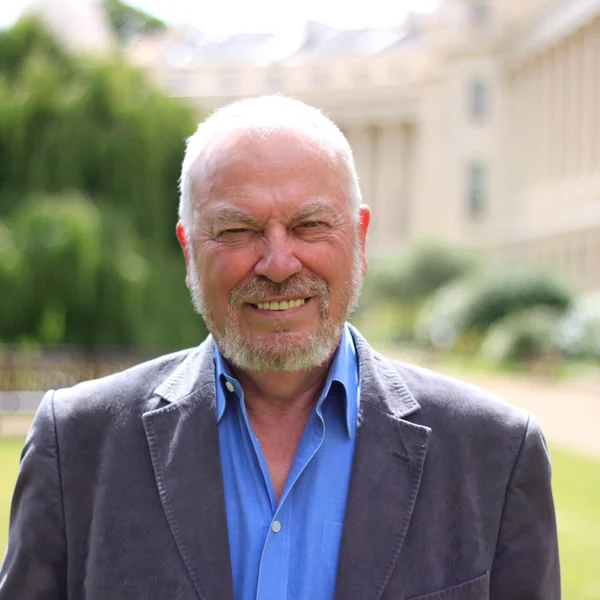
Emeritus Professor, London Business School | Pioneer of Evolutionary Psychology in Business | Bestselling Author, Unique You & Family Wars
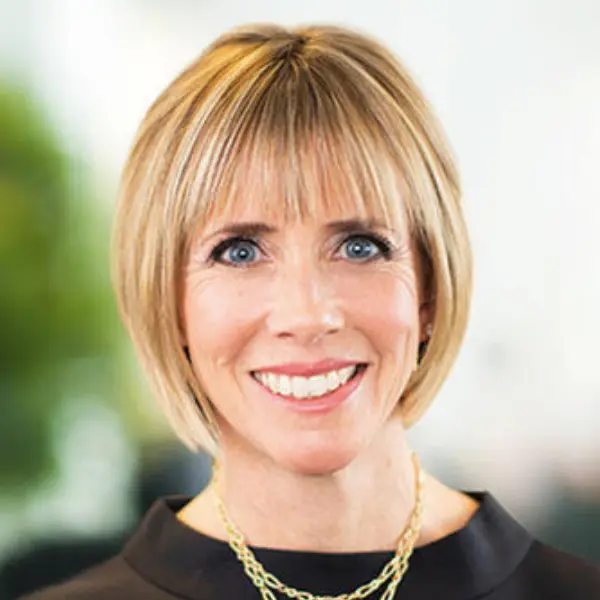
Award-Winning Journalist & Event MC | Executive Editor, Hub Culture | Bloomberg TV Correspondent | Yale & UCLA | Communication Coach

2020 Nobel Laureate in Physiology or Medicine | Discoverer of Hepatitis C Virus | Senior Scholar, NIH Clinical Center


© 2026 Aurum Speakers Bureau. All Rights Reserved

| Basic Data Protection Information | |
|---|---|
| Data controller | AURUM SPEAKERS BUREAU S.L. |
| Address | Parc Audiovisual de Catalunya 1, Oficina S11, 08225 Terrassa, Spain |
| Purposes | We will use your data to respond to your requests and deliver our services to you. |
| Marketing | We will only send you marketing correspondence if you have given your prior consent, which you can do by ticking the box for that purpose. |
| Lawful basis | We will only process your data if you have given your prior consent, which you can do by ticking the box for that purpose. |
| Recipients | Generally, only our members of staff who have been duly authorised may access the data that you have provided. |
| Your Rights | You have the right to know what information we hold about you, to rectify it and to erase it, as explained in the additional information available on our website. |
| Additional Information | For more information, please see our "PRIVACY POLICY". |