
Jesse Israel
Founder of The Big Quiet | 5x Audible Bestseller | Human Performance & Mindful Leadership Expert

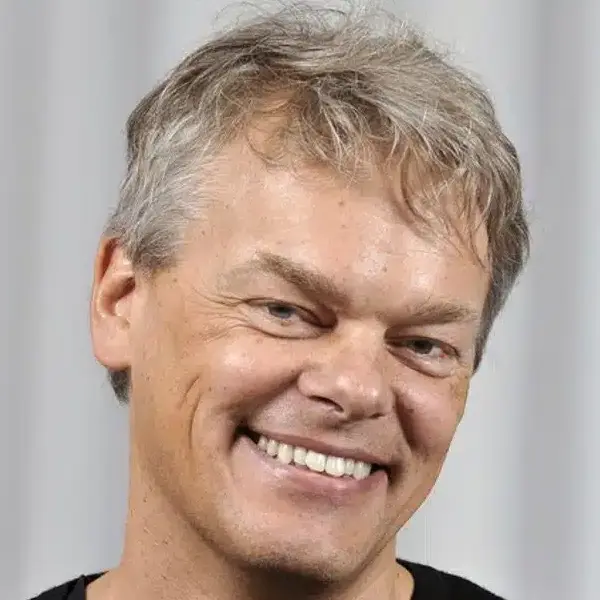
2014 Nobel Laureate in Physiology or Medicine | Founding Director, Kavli Institute for Systems Neuroscience, NTNU | Grid Cells, Memory & the Brain's GPS
Edvard Moser discovered the grid cells that form the brain's internal GPS, earning the 2014 Nobel Prize and reshaping our understanding of memory, cognition, and Alzheimer's. As Founding Director of the Kavli Institute for Systems Neuroscience at NTNU, he leads research with direct implications for how organizations approach learning, decision-making, and cognitive performance.
Want to book Edvard Moser as a speaker for your event? Please provide the info below and we’ll get in touch within 24h:
Edvard Moser is a Nobel Prize-winning neuroscientist whose discovery of the brain’s internal positioning system has fundamentally changed how science understands memory, spatial reasoning, and the neural architecture of cognition. Science speaker Edvard Moser is Professor of Neuroscience and Founding Director of the Kavli Institute for Systems Neuroscience at the Norwegian University of Science and Technology (NTNU) in Trondheim, where he co-leads one of the world’s most celebrated brain research centers alongside his longtime scientific partner May-Britt Moser.
Moser is best known for his discovery, alongside May-Britt Moser and John O’Keefe, of grid cells: a type of neuron in the entorhinal cortex that fires in precise hexagonal patterns as an animal moves through space. Together with O’Keefe’s earlier discovery of place cells, grid cells revealed the existence of a biological GPS embedded in the mammalian brain, a coordinate system that lets us navigate physical space, encode location in memory, and form the cognitive maps that underlie learning itself. For this work, Moser received the 2014 Nobel Prize in Physiology or Medicine, among the highest honors in science.
The implications reach far beyond navigation. Grid cells and place cells are among the first neural systems to degrade in Alzheimer’s disease, which is why disorientation and spatial memory loss are early hallmarks of the condition. Moser’s laboratory at the Kavli Institute for Systems Neuroscience continues to investigate how these circuits are built, how they break down, and what they reveal about broader principles of brain computation. Recent work from his group has shown how the brain segments continuous experience into distinct events, and how grid cells sweep ahead of an animal to probe the space in front of it, findings with direct relevance to neurodegenerative disease, cognitive aging, and brain-inspired artificial intelligence.
Beyond the Nobel, Moser has been recognized with the Kavli Prize in Neuroscience, the Perl Prize, and the Louisa Gross Horwitz Prize, among numerous international distinctions. He also co-directs the Centre for Algorithms in the Cortex at NTNU, and he is one of the most highly cited neuroscientists in the world. His work has helped establish NTNU as a global hub for systems neuroscience research.
As a speaker, Edvard Moser brings rare scientific depth to audiences who seldom encounter world-class research presented with such clarity and relevance. His keynotes translate breakthrough discoveries about the brain into practical insight for business leaders, technologists, and healthcare professionals, covering the neuroscience of decision-making and learning as well as what artificial intelligence can borrow from biological navigation systems. Audiences leave with a richer understanding of how the brain builds knowledge, why memory is more dynamic than intuition suggests, and what cognitive science means for how we design organizations, train talent, and build resilient teams.
Drawing on his Nobel Prize-winning discovery of grid cells, Moser explores how the brain builds its internal map of the world and what that means for how humans learn, form memories, and make sense of complex environments. He reveals the elegant neural architecture beneath navigation and cognition, including recent findings from his lab on how the brain bookmarks continuous experience into distinct, memorable events. The result is a new lens for organizational learning, talent development, and the design of high-performance teams.
Spatial memory is among the first casualties of Alzheimer's disease, and understanding why means going deep into the circuits Moser has spent his career mapping. This session examines what neuroscience now knows about how cognitive decline begins, what early warning signs look like at the neural level, and where the most promising research directions lie. Essential for audiences in healthcare, insurance, aging services, and any organization thinking seriously about cognitive resilience in an aging workforce.
Grid cells and place cells do far more than help us navigate; they increasingly inspire a new generation of AI architectures built to reason about space, context, and sequence. Moser explores the interface between systems neuroscience and artificial intelligence, examining what biological neural circuits can teach machine learning researchers and why brain-inspired computation may be the key to AI that generalizes, adapts, and reasons more like humans do.
How the brain encodes information, directs attention, and makes decisions under uncertainty has profound implications for leadership, strategy, and organizational design. Moser draws on systems neuroscience to illuminate the biological basis of high-stakes decision-making, the neural cost of cognitive overload, and what organizations can do to create conditions that support rather than undermine optimal human performance.
Founder of The Big Quiet | 5x Audible Bestseller | Human Performance & Mindful Leadership Expert

Director, América Móvil, Fundación Telmex & Claro Sports | Chairman, Sitios Latinoamérica | Author, El Negociador | Former Shark, Shark Tank México

Bestselling Author of Getting Things Done & Team | Founder of David Allen Company | World's Leading Authority on Personal & Organizational Productivity
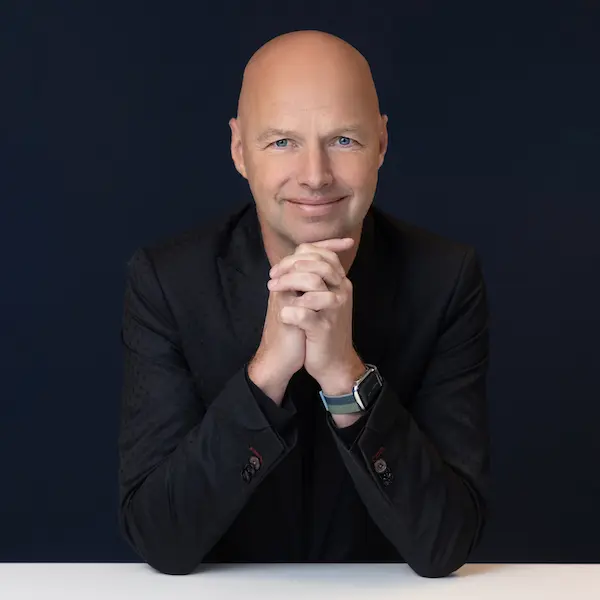
AI & Robotics Pioneer | Founder of Google X, Waymo, Udacity & Dulo | Godfather of the Self-Driving Car | Former Director, Stanford AI Lab


© 2026 Aurum Speakers Bureau. All Rights Reserved

| Basic Data Protection Information | |
|---|---|
| Data controller | AURUM SPEAKERS BUREAU S.L. |
| Address | Parc Audiovisual de Catalunya 1, Oficina S11, 08225 Terrassa, Spain |
| Purposes | We will use your data to respond to your requests and deliver our services to you. |
| Marketing | We will only send you marketing correspondence if you have given your prior consent, which you can do by ticking the box for that purpose. |
| Lawful basis | We will only process your data if you have given your prior consent, which you can do by ticking the box for that purpose. |
| Recipients | Generally, only our members of staff who have been duly authorised may access the data that you have provided. |
| Your Rights | You have the right to know what information we hold about you, to rectify it and to erase it, as explained in the additional information available on our website. |
| Additional Information | For more information, please see our "PRIVACY POLICY". |