
Earvin “Magic” Johnson
Presidential Medal of Freedom Recipient | 5x NBA Champion | Chairman & CEO, Magic Johnson Enterprises | Owner, LA Dodgers & Washington Commanders


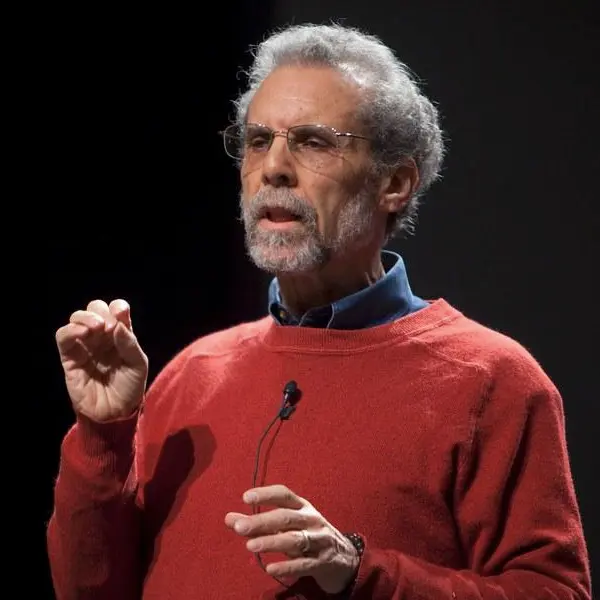
Psychologist & Author of Emotional Intelligence | Five-Time NYT Bestseller | Harvard PhD | Ranked Top 10 Business Thinker, WSJ
Daniel Goleman introduced the concept of emotional intelligence to the world in 1995, and three decades later the idea is more relevant than ever. A Harvard-trained psychologist, five-time New York Times bestselling author, and twice Pulitzer-nominated science journalist, he shows leaders how self-awareness, empathy, and social skill drive performance far more reliably than IQ alone.
Want to book Daniel Goleman as a speaker for your event? Please provide the info below and we’ll get in touch within 24h:
Few ideas in the history of psychology have traveled as far, or changed as many organizations, as emotional intelligence. Daniel Goleman put the concept on the map with his 1995 book Emotional Intelligence: Why It Can Matter More Than IQ, which spent a year and a half on the New York Times bestseller list, has been translated into more than 40 languages, and was named one of the 25 most influential business management books of all time by TIME magazine. Harvard Business Review called his work a “revolutionary, paradigm-shattering idea” and selected his article “What Makes a Leader” as one of ten essential reads in the publication’s history. Ranked among the top ten most influential business thinkers in the world by the Wall Street Journal, Goleman has spent three decades translating brain science into practical frameworks for leadership, learning, and organizational performance.
Emotional intelligence speaker Daniel Goleman earned his Ph.D. in clinical psychology at Harvard, where he also studied consciousness and Asian contemplative practices on a pre-doctoral fellowship. He later joined The New York Times as a science journalist, covering psychology and neuroscience for twelve years and earning two Pulitzer Prize nominations for his reporting. That dual formation — rigorous empirical scientist and gifted communicator — is precisely what made Emotional Intelligence land so widely. The book did not invent the term, but Goleman synthesized decades of research into a framework that leaders, educators, and clinicians could actually use: four core competencies (self-awareness, self-management, social awareness, and relationship management) that predict performance more reliably than IQ across virtually every professional domain.
Goleman has since built one of the most coherent bodies of work in applied psychology. Working with Emotional Intelligence (1998) brought the framework into the workplace. Primal Leadership (2001, with Richard Boyatzis and Annie McKee) established the emotional intelligence case for leadership effectiveness and remains a standard text in business schools worldwide. Social Intelligence (2006) explored the neuroscience of human connection. Focus (2013) applied attention research to performance and productivity. His most recent book, Optimal: How to Sustain Personal and Organizational Excellence Every Day (2024, with Cary Cherniss), synthesizes more than thirty years of research to answer a question that obsesses modern organizations: not how to achieve peak performance occasionally, but how to sustain it. He co-founded the Collaborative for Academic, Social, and Emotional Learning (CASEL) in 1993 and co-chairs the Consortium for Research on Emotional Intelligence in Organizations at Rutgers University. He has received the American Psychological Association’s Lifetime Achievement Award and Harvard University’s Centennial Medal.
As a psychology speaker, Daniel Goleman is one of the most sought-after voices in the world on leadership, performance, and human behavior. His keynotes bring together the latest findings from neuroscience, organizational psychology, and contemplative science in a form that senior audiences find both intellectually rigorous and immediately applicable. Whether addressing the role of self-awareness in strategic decision-making, the neuroscience of empathy in team dynamics, or the evidence for mindfulness in sustaining high performance without burnout, Goleman consistently delivers the kind of insight that changes how leaders think about themselves and the people they lead.
Based on thirty years of research and his landmark books, Goleman lays out the four competencies of emotional intelligence — self-awareness, self-management, social awareness, and relationship management — and demonstrates why they predict leadership effectiveness, team performance, and organizational outcomes more powerfully than technical skill or IQ. Drawing on the latest neuroscience, he shows not only why EI matters but how it can be developed at any stage of a career, and what specific behaviors distinguish emotionally intelligent leaders from those who underperform despite high cognitive ability.
Great leadership is not primarily about strategy or vision — it is about emotion. Goleman draws on his work with Richard Boyatzis and Annie McKee to show how a leader's emotional state is literally contagious, shaping the mood of every person they interact with and, through them, the culture of the entire organization. He presents the six leadership styles identified in his research and the contexts in which each excels, giving senior leaders a practical framework for expanding their repertoire and improving performance at every level of their organization.
Based on his most recent book (2024), Goleman presents the research behind what he calls the "optimal state": a condition of high engagement, creativity, and productivity that goes beyond the occasional peak experience. He and co-author Cary Cherniss have synthesized findings from hundreds of organizations to show how emotional intelligence holds the key to having more good days, building more resilient teams, and creating organizational cultures where sustained excellence becomes the norm rather than the exception.
In an era of relentless distraction, the ability to direct and sustain attention has become one of the scarcest and most valuable capabilities a leader can possess. Goleman draws on neuroscience and cognitive psychology to explain the three forms of focus — inner, other, and outer — and shows why leaders who have mastered all three make better decisions, build stronger relationships, and achieve better results. This keynote addresses concentration, mindfulness, systems thinking, and the relationship between focused attention and genuine empathy.
Presidential Medal of Freedom Recipient | 5x NBA Champion | Chairman & CEO, Magic Johnson Enterprises | Owner, LA Dodgers & Washington Commanders
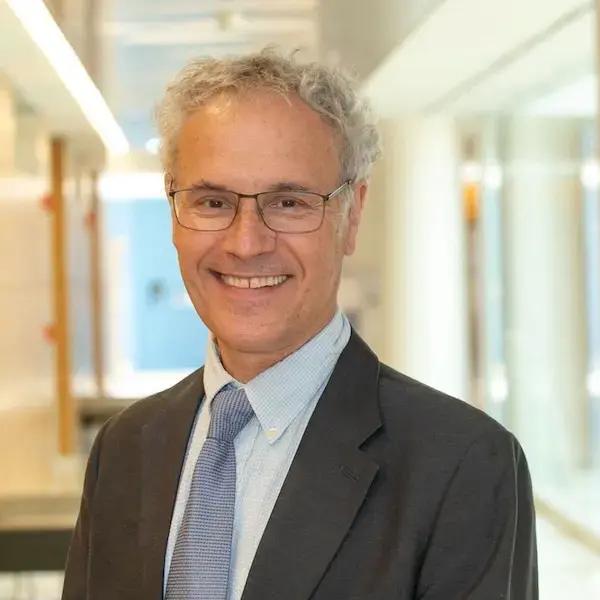
2024 Nobel Laureate in Physiology or Medicine | Discoverer of microRNA | Silverman Professor of Natural Science, UMass Chan Medical School

World's Leading Trust Expert | Oxford Trust Fellow & Thinkers50 Top 30 | 3x Bestselling Author | TED Speaker, 5M+ Views

Creator of Fan-Driven Growth® | Disney Chairman Iberia & VP Southern Europe | CBO Atlético de Madrid | Global Executive & Keynote Speaker


© 2026 Aurum Speakers Bureau. All Rights Reserved

| Basic Data Protection Information | |
|---|---|
| Data controller | AURUM SPEAKERS BUREAU S.L. |
| Address | Parc Audiovisual de Catalunya 1, Oficina S11, 08225 Terrassa, Spain |
| Purposes | We will use your data to respond to your requests and deliver our services to you. |
| Marketing | We will only send you marketing correspondence if you have given your prior consent, which you can do by ticking the box for that purpose. |
| Lawful basis | We will only process your data if you have given your prior consent, which you can do by ticking the box for that purpose. |
| Recipients | Generally, only our members of staff who have been duly authorised may access the data that you have provided. |
| Your Rights | You have the right to know what information we hold about you, to rectify it and to erase it, as explained in the additional information available on our website. |
| Additional Information | For more information, please see our "PRIVACY POLICY". |