
Alex Osterwalder
Inventor of the Business Model Canvas | Co-founder of Strategyzer | Bestselling Author | Thinkers50 Top 10 Management Thinker



Founder & Creative Director, BIG – Bjarke Ingels Group | TED Speaker | Pioneer of Hedonistic Sustainability & Utopian Pragmatism
Bjarke Ingels is the world's most inventive architect — the mind behind CopenHill, the LEGO House, and a 1,000 km² city in Bhutan. Founder of BIG, he coined "hedonistic sustainability": the idea that the greenest buildings can also be the most joyful. His TED talks and keynotes inspire leaders to reimagine what cities, organizations, and the future can look like.
Want to book Bjarke Ingels as a speaker for your event? Please provide the info below and we’ll get in touch within 24h:
Bjarke Ingels is one of the most celebrated architects alive — the Danish visionary behind some of the world’s most iconic and audacious buildings, and the founder of BIG – Bjarke Ingels Group, a global practice with studios in Copenhagen, New York, London, and Barcelona. Born in 1974, Ingels studied at the Royal Danish Academy of Fine Arts before completing postgraduate work at the Barcelona School of Architecture. He founded PLOT Architects in 2001 before establishing BIG in 2006, growing it into a firm of over 500 professionals working across architecture, urbanism, interior design, and product design.
Keynote speaker Bjarke Ingels built his reputation on a deceptively simple proposition: that buildings should be simultaneously useful, beautiful, and sustainable — and that these goals need not conflict. He coined the term “hedonistic sustainability” to describe an approach where ecological responsibility and human pleasure reinforce each other. His “utopian pragmatism” philosophy insists that the most ambitious ideas can and should be buildable. These frameworks have not only shaped BIG’s global portfolio but have become touchstones for architects, urban planners, and innovation leaders worldwide.
His landmark projects span scales, geographies, and typologies. CopenHill in Copenhagen — a waste-to-energy plant with a ski slope and hiking trail on its roof — is perhaps the defining example of his philosophy made physical: infrastructure that doubles as public amenity. The VIA 57 West residential tower in New York redefines the Manhattan skyline with a distinctive pyramidal silhouette. The LEGO House in Billund, Denmark, brings one of the world’s most recognizable brands to architectural life. The BIG U, a $335 million flood-resilience initiative for Lower Manhattan, transformed defensive infrastructure into a network of public waterfront spaces following Hurricane Sandy.
BIG’s recent work pushes even further. The Gelephu Mindfulness City masterplan in Bhutan — a 1,000+ km² new city designed around the principles of Gross National Happiness — won the prestigious Future Project of the Year at the World Architecture Festival 2025 and a 2025 Holcim Award for Sustainable Construction. The Suzhou Museum of Contemporary Art, nearing completion in China, reinterprets the classical garden tradition at a 60,000-square-meter scale. And in November 2025, BIG won the international competition to design the new Hamburg State Opera, one of Europe’s most significant cultural commissions of the decade.
As a TED speaker, Bjarke Ingels has delivered multiple talks on the platform, covering hedonistic sustainability, floating cities, the future of human habitation, and what it would take to live on Mars. His on-stage presence combines the visual dynamism of BIG’s projects with a philosophical depth and humor that makes complex ideas feel urgent and achievable. Senior leaders, urban planners, technology executives, and sustainability strategists consistently leave his talks with a transformed understanding of what bold, principled design can accomplish — and why the organizations that embrace it are the ones that define the future.
The most urgent question of our time is whether a sustainable world can also be a desirable one. Ingels argues — with buildings as his evidence — that it can and must be. Drawing on CopenHill, the BIG U, and BIG's global portfolio, he presents a framework for rethinking sustainability not as constraint but as creative opportunity: a design challenge that, when solved well, produces cities and organizations that are more resilient, more equitable, and more joyful than anything that preceded them. A transformative keynote for audiences in sustainability, real estate, urban development, and corporate strategy.
The most ambitious ideas in history got built because someone found a way to make them real — not by lowering the vision, but by aligning the vision with necessity. In this keynote, Ingels introduces his philosophy of "utopian pragmatism": the conviction that the most idealistic goals become achievable when they are also the most practical response to a genuine need. Through BIG's projects — from flood resilience in Manhattan to a new city in Bhutan — he shows how organizations can unlock transformative outcomes by designing for multiple values at once. A compelling framework for innovation leaders, strategists, and executives navigating complex, high-stakes decisions.
As climate change, migration, and technological disruption reshape human settlement patterns, the cities of tomorrow must be reinvented from the ground up. Ingels draws on BIG's work across four continents — from Gelephu Mindfulness City in Bhutan to the Suzhou Museum of Contemporary Art to the new Hamburg State Opera — to explore what future-ready urban design looks like, why it demands courage and collaboration, and what private and public sector leaders must do today to shape cities that will serve humanity for generations. Visionary, grounded, and deeply relevant to any audience with a stake in how the built environment evolves.
The best buildings are not objects — they are systems that connect people, generate community, and produce shared value. In this keynote, Ingels explores the concept of social infrastructure through BIG's most community-defining projects: the BIG U as flood protection and public park, Superkilen as a multicultural urban commons, and CopenHill as civic amenity embedded in energy infrastructure. The talk offers a powerful lens for leaders in real estate, urban policy, and corporate culture: that the spaces organizations create are also expressions of the values they hold — and that the most human-centered designs consistently outperform those that treat people as an afterthought.
Inventor of the Business Model Canvas | Co-founder of Strategyzer | Bestselling Author | Thinkers50 Top 10 Management Thinker
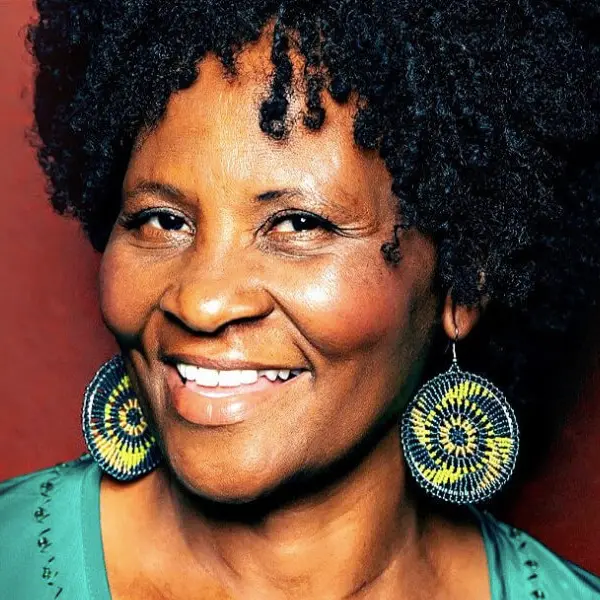
Oprah's All-Time Favorite Guest | Founder, Tererai Trent International | Education Advocate & Women's Empowerment Champion | Author, The Awakened Woman | PhD, Western Michigan University

Psychologist & #1 NYT Bestselling Author | MacArthur Fellow | Rosa Lee & Egbert Chang Professor, UPenn | Founder, Character Lab


© 2026 Aurum Speakers Bureau. All Rights Reserved

| Basic Data Protection Information | |
|---|---|
| Data controller | AURUM SPEAKERS BUREAU S.L. |
| Address | Parc Audiovisual de Catalunya 1, Oficina S11, 08225 Terrassa, Spain |
| Purposes | We will use your data to respond to your requests and deliver our services to you. |
| Marketing | We will only send you marketing correspondence if you have given your prior consent, which you can do by ticking the box for that purpose. |
| Lawful basis | We will only process your data if you have given your prior consent, which you can do by ticking the box for that purpose. |
| Recipients | Generally, only our members of staff who have been duly authorised may access the data that you have provided. |
| Your Rights | You have the right to know what information we hold about you, to rectify it and to erase it, as explained in the additional information available on our website. |
| Additional Information | For more information, please see our "PRIVACY POLICY". |