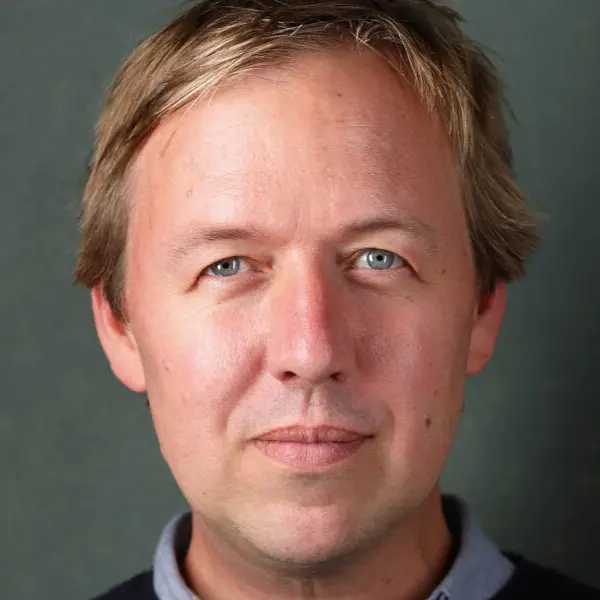
Tom Rivett-Carnac
OBE & Architect of the Paris Agreement | Co-Founder, Global Optimism & The Climate Pledge | Bestselling Author | TED Speaker


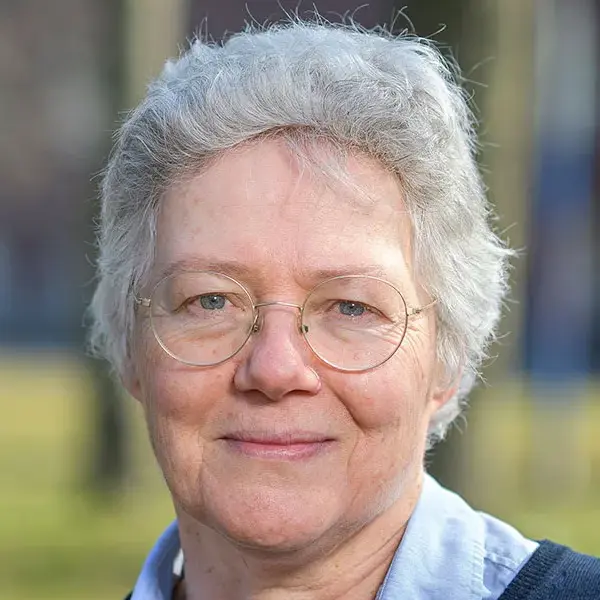
2023 Nobel Laureate in Physics | Professor of Atomic Physics, Lund University | Pioneer of Attosecond Science & High-Order Harmonic Generation
Few scientists have opened a window into nature that no one knew existed. Anne L'Huillier's discovery of high-order harmonic generation created the foundation for attosecond physics, a field that lets us observe electrons in motion inside atoms in real time. Her 2023 Nobel Prize in Physics recognized work that now drives advances in medicine, semiconductors, and chemistry. Audiences gain a rare perspective on scientific courage and the power of deep, patient research.
Want to book Anne L’Huillier as a speaker for your event? Please provide the info below and we’ll get in touch within 24h:
Anne L’Huillier is a 2023 Nobel Laureate in Physics whose decades of research created the scientific tools that allow humanity to observe electrons moving inside atoms in real time, one of the most consequential breakthroughs in modern physics. A keynote speaker of rare depth, Anne L’Huillier is Professor of Atomic Physics at Lund University, Sweden, where she leads the attosecond physics group and has built one of the world’s foremost research programs in ultrafast laser science.
Nobel Prize speaker Anne L’Huillier is best known for a 1987 discovery that became the seed of an entirely new scientific field. While transmitting intense infrared laser light through a noble gas, she observed that the gas emitted many different overtones of light, a phenomenon known as high-order harmonic generation (HHG). Rather than pursuing easier problems, she spent the following years building a rigorous theoretical and experimental understanding of this process, collaborating with leading physicists to decode why atoms respond to laser fields the way they do. This foundational work laid the ground for the eventual production of attosecond light pulses, tools so precise that they function as the world’s fastest camera, capable of capturing electrons mid-motion.
Born in Paris in 1958, L’Huillier completed her doctorate in experimental physics at the Université Pierre et Marie Curie and the French Atomic Energy Commission (CEA). She conducted postdoctoral research at Chalmers University of Technology and the University of Southern California, and was later a visiting scientist at Lawrence Livermore National Laboratory. She joined Lund University as an associate professor in 1995 and was appointed full professor in 1997.
L’Huillier was awarded the Nobel Prize in Physics jointly with Pierre Agostini and Ferenc Krausz for work that gave science entirely new methods to study the electron dynamics at the heart of chemistry, medicine, and materials science. Attosecond pulses, each lasting a billionth of a billionth of a second, open a window into photoionization, molecular reactions, and quantum processes that were previously invisible. Applications span from improving semiconductors and electronics to enabling faster diagnostics in medicine.
Her recognition extends well beyond the Nobel. She holds the Wolf Prize in Physics, the L’Oréal-UNESCO Award for Women in Science, the Max Born Award, the Blaise Pascal Medal, the Carl Zeiss Research Award, the Berthold Leibinger Zukunftspreis, and the Röntgen Plaque, among many others. She is a member of the Royal Swedish Academy of Sciences, a Fellow of the American Physical Society, and an international member of the U.S. National Academy of Sciences. France has honored her with the Legion of Honour, and Sweden with the Royal Order of the Polar Star.
As a speaker, Anne L’Huillier brings extraordinary depth and quiet authority to audiences grappling with the frontiers of science and innovation. Her talks move from the wonder of pure discovery, what it means to see electrons in motion for the first time, to practical implications for technology, medicine, and the future of scientific research. She speaks with the conviction of someone who spent decades following an unintuitive hunch that changed physics, making her a compelling voice on scientific courage, interdisciplinary thinking, and the long road from fundamental research to transformational impact. Senior audiences leave with a sharper appreciation for how curiosity-driven science creates the breakthroughs that shape civilization.
This keynote takes audiences on a journey into the smallest and fastest phenomena in nature, the movement of electrons inside atoms. L'Huillier traces the arc from her 1987 observation of an unexplained light phenomenon to the creation of a new scientific field, and explains what attosecond pulses can reveal about chemistry, medicine, and materials. Beyond the science, she explores what it means to spend decades pursuing a problem whose importance was not yet understood, and why the most transformational breakthroughs often begin as curiosity without an obvious destination.
This talk addresses one of the most urgent tensions in modern innovation: the pressure to deliver short-term results versus the slow, patient work that produces genuine breakthroughs. Drawing on her own career, from a niche laser experiment in the 1980s to a Nobel Prize and applications in semiconductor design and medical diagnostics, L'Huillier makes the case for sustained investment in fundamental science. A compelling and evidence-based talk for corporate, policy, and academic audiences grappling with how to build the conditions for transformational discovery.
One of only five women ever to receive the Nobel Prize in Physics, L'Huillier speaks candidly about navigating a career at the frontier of a demanding field, the structural and cultural challenges women face in science, and the importance of mentorship, institutional support, and sheer persistence. This is not a talk about barriers alone. It is a talk about what becomes possible when those barriers are overcome, and what organizations and institutions can do to create conditions where diverse scientific talent thrives.
OBE & Architect of the Paris Agreement | Co-Founder, Global Optimism & The Climate Pledge | Bestselling Author | TED Speaker

2021 Nobel Peace Prize Laureate | Co-Founder & Former Editor-in-Chief, Novaya Gazeta | Press Freedom & Democracy Advocate

Co-Founder, NP Digital | Owner, Ubersuggest & Answer The Public | NYT Bestselling Author | Top 10 Marketer, Forbes & WSJ

Four-Time Olympic Gold Medalist | World Record Holder in 200m and 400m | Founder, Michael Johnson Performance


© 2026 Aurum Speakers Bureau. All Rights Reserved

| Basic Data Protection Information | |
|---|---|
| Data controller | AURUM SPEAKERS BUREAU S.L. |
| Address | Parc Audiovisual de Catalunya 1, Oficina S11, 08225 Terrassa, Spain |
| Purposes | We will use your data to respond to your requests and deliver our services to you. |
| Marketing | We will only send you marketing correspondence if you have given your prior consent, which you can do by ticking the box for that purpose. |
| Lawful basis | We will only process your data if you have given your prior consent, which you can do by ticking the box for that purpose. |
| Recipients | Generally, only our members of staff who have been duly authorised may access the data that you have provided. |
| Your Rights | You have the right to know what information we hold about you, to rectify it and to erase it, as explained in the additional information available on our website. |
| Additional Information | For more information, please see our "PRIVACY POLICY". |