
Joachim Frank
2017 Nobel Laureate in Chemistry | Father of Cryo-EM | Professor, Columbia University | Member, National Academy of Sciences


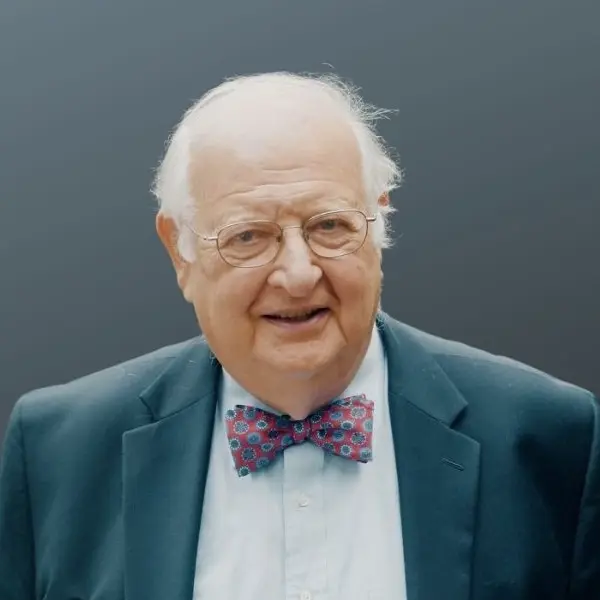
2015 Nobel Laureate in Economic Sciences | Senior Scholar, Princeton University | Expert on Poverty, Inequality & Human Welfare
One of the defining economic voices of our era, Sir Angus Deaton won the 2015 Nobel Prize in Economics for his groundbreaking analysis of poverty, consumption, and human welfare. His research on "deaths of despair," co-authored with Anne Case, reshaped the global conversation on inequality and public health. Audiences gain rigorous, evidence-based insight into the forces driving societal fracture and what it takes to build economies that genuinely work for everyone.
Want to book Angus Deaton as a speaker for your event? Please provide the info below and we’ll get in touch within 24h:
Sir Angus Deaton is the 2015 Nobel Laureate in Economic Sciences, honored for his foundational analysis of consumption, poverty, and welfare. Born in Edinburgh and educated at the University of Cambridge, where he earned his doctorate in 1974, he taught at the University of Bristol before joining Princeton University in 1983. He is the Dwight D. Eisenhower Professor of Economics and International Affairs Emeritus at Princeton’s School of Public and International Affairs, where he remains a Senior Scholar, and he has also served as Presidential Professor of Economics at the University of Southern California. Economics speaker Angus Deaton brings rare intellectual authority to the questions that define our era.
Deaton is best known for rigorous, data-driven work on how people make consumption decisions, how those decisions relate to income and saving across a lifetime, and what household spending reveals about poverty and welfare at scale. His methodological innovations, particularly the Almost Ideal Demand System developed with John Muellbauer, gave economists and policymakers a far sharper lens for measuring living standards and designing policy. He is a Fellow of the Econometric Society, a member of the National Academy of Sciences, a Corresponding Fellow of the British Academy, and the first recipient of the Frisch Medal. He was President of the American Economic Association in 2009 and was knighted in 2016 for services to economics and international affairs.
His 2013 book The Great Escape: Health, Wealth, and the Origins of Inequality traced the long arc of human progress while asking why so many were left behind. That inquiry deepened into one of the most consequential collaborations in modern social science: his work with economist Anne Case on “deaths of despair.” Their research documented a startling rise in mortality among working-class Americans without a college degree, driven by suicide, drug overdose, and alcoholism, and their bestselling book Deaths of Despair and the Future of Capitalism made international headlines. His most recent book, Economics in America: An Immigrant Economist Explores the Land of Inequality, turns a candid eye on his own profession, examining what economics gets right, where it fails, and how it shapes the policies that determine whether societies flourish or fracture.
As a speaker, Angus Deaton brings Nobel-caliber authority to questions at the top of every senior leader’s agenda: the real causes of inequality, why healthcare systems fail the most vulnerable, what consumption data reveals about a society’s health, and how policymakers can build economies that work for everyone. His talks pair rigorous evidence with genuine candor, making frontier economic research immediately useful to decision-makers across business, government, and civil society. He ranks among the most sought-after voices in economics.
Drawing on decades of research, Deaton explains how economic inequality is generated, why it is not simply a byproduct of growth, and which policy levers genuinely move the needle. He examines the interplay of market structure, healthcare costs, and labor-market shifts, moving past ideology to evidence, and offers a clear framework for leaders whose decisions carry distributional consequences. Audiences leave understanding why inequality is at once an economic and a moral challenge, and what responsible institutions can do about it.
Based on his landmark research with Anne Case, Deaton examines the sharp rise in deaths from suicide, drug overdose, and alcoholism among working-class Americans, and what the crisis exposes about structural failures in the American economic model. The talk moves beyond statistics to the role of healthcare systems, corporate power, and the erosion of community, offering insight directly relevant to leaders in healthcare, finance, and public policy who want to understand the human cost of economic dysfunction.
Drawing on his book The Great Escape, Deaton traces the extraordinary gains in human longevity and living standards since the Industrial Revolution, then asks the harder question: why have those gains been so unevenly shared, and what does the recent stalling of progress signal about where we go next? A keynote for organizations grappling with global development strategy, ESG commitments, or the long-term sustainability of their operating environment, delivered with both historical sweep and practical urgency.
In his most candid keynote, Deaton draws on Economics in America and decades of practice to offer a frank critique of his own profession, its blind spots, its political entanglements, and its failures to anticipate the social crises it helped create. The session is especially powerful for audiences in finance, academia, policy, and consulting who want to understand the limits of economic orthodoxy and what a more honest, human-centered approach to evidence and decision-making looks like.
2017 Nobel Laureate in Chemistry | Father of Cryo-EM | Professor, Columbia University | Member, National Academy of Sciences

Olympic Badminton Champion (Rio 2016) & First Non-Asian Woman to Win Gold | 3-Time World Champion & 7-Time European Champion | Motivational Speaker on Resilience
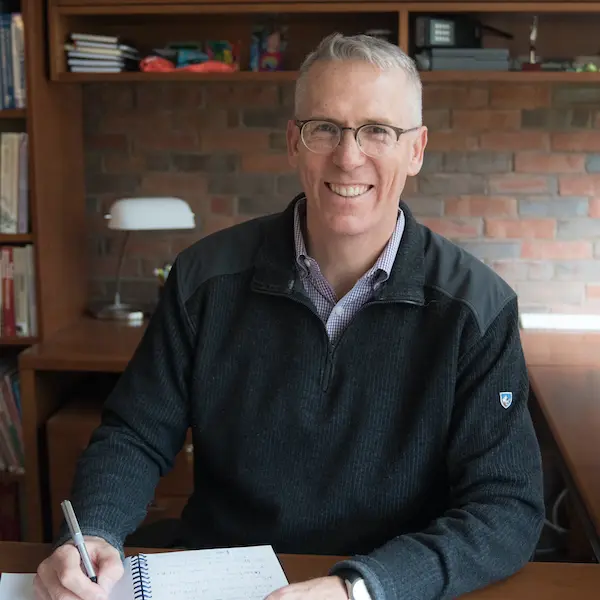
Professor of Engineering Innovation, Dartmouth | Faculty Director, Irving Institute for Energy & Society | Co-Author of Platform Revolution | Platforms, Networks & Energy
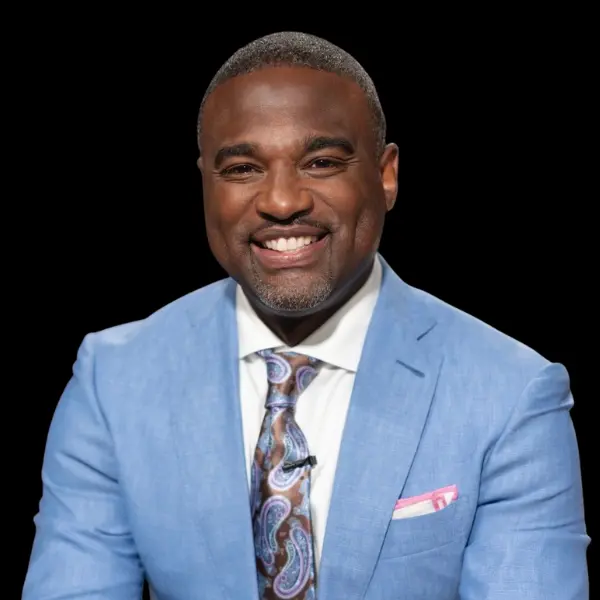
Co-Founder & CIO, Harbinger Sports Partners | Guest Shark, ABC's Shark Tank | Atlanta Falcons Limited Partner | Venture Capitalist | Black Enterprise Investor of the Year


© 2026 Aurum Speakers Bureau. All Rights Reserved

| Basic Data Protection Information | |
|---|---|
| Data controller | AURUM SPEAKERS BUREAU S.L. |
| Address | Parc Audiovisual de Catalunya 1, Oficina S11, 08225 Terrassa, Spain |
| Purposes | We will use your data to respond to your requests and deliver our services to you. |
| Marketing | We will only send you marketing correspondence if you have given your prior consent, which you can do by ticking the box for that purpose. |
| Lawful basis | We will only process your data if you have given your prior consent, which you can do by ticking the box for that purpose. |
| Recipients | Generally, only our members of staff who have been duly authorised may access the data that you have provided. |
| Your Rights | You have the right to know what information we hold about you, to rectify it and to erase it, as explained in the additional information available on our website. |
| Additional Information | For more information, please see our "PRIVACY POLICY". |