
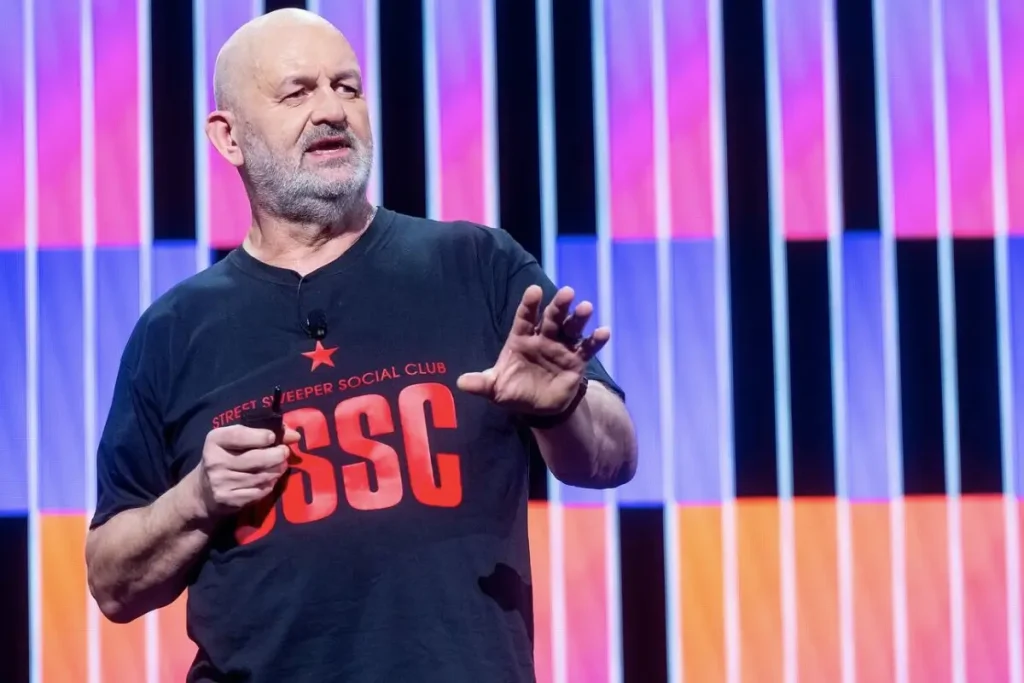
When something at Amazon breaks (and at the scale Amazon operates, something always does), there is no blame meeting. There is, instead, a principle: plan for failure before failure plans for you. That orientation, crystallized in Werner Vogels’ famous phrase “everything fails, all the time,” is not a pessimist’s credo. It is the architectural foundation on which the modern cloud was built.
Vogels has served as Chief Technology Officer and Vice President at Amazon since 2005, a tenure that spans the entire commercial history of cloud computing. As one of the principal architects behind Amazon Web Services, he shaped the distributed systems thinking that now underpins how millions of organizations run their technology. His frameworks are not academic. Every principle he has articulated was forged under the pressure of building systems that could not afford to go down.
For event planners and program chairs looking to bring genuine technical authority to a stage, keynote speaker Werner Vogels represents something increasingly rare: a practitioner at the highest level who can translate decades of hard-won infrastructure insight into strategic clarity for executive audiences.
“Everything Fails, All the Time”: Why This Phrase Changed Cloud Architecture

Werner Vogels has served as Chief Technology Officer and Vice President of Amazon since 2005, shaping the distributed systems principles that define how resilient organizations build at scale.
Most engineering cultures are built around the aspiration of preventing failure. Vogels inverted that logic. His argument, refined over two decades of building distributed systems at Amazon, is that the correct question is not “how do we stop this from breaking?” It is “how do we build so that when this breaks, nothing catastrophic happens?”
The practical consequence of this thinking is resilient architecture by design: systems decomposed into small, independent services; redundancy built in from the start rather than bolted on after an outage; automatic failover that prevents any single point of failure from cascading across the whole. These principles gave rise to the microservices architecture that most large technology organizations now take as standard practice.
For an audience of CTOs, CIOs, and technology executives, Vogels presents this not as engineering philosophy but as business strategy. Organizations that design for failure spend less time in crisis and more time building. The cost of resilience is predictable. The cost of a major outage (reputational, financial, operational) is not.
Eventual Consistency: The Principle Behind Modern Data at Scale
In 2007, Vogels published a paper in ACM Queue that would reshape how the industry thinks about data in distributed systems. The concept of “eventual consistency” offered a way out of the impossible trade-offs that came with demanding perfect data synchronization across a global network of servers.
The core insight is elegant: in a sufficiently large distributed system, insisting that every node sees identical data at every instant is not just expensive. It actively destroys availability and performance. Eventual consistency accepts a brief window in which different parts of the system might hold slightly different data, in exchange for dramatically higher availability and lower latency. For users, this trade-off is usually invisible. For the systems serving them, it is what makes global scale possible.
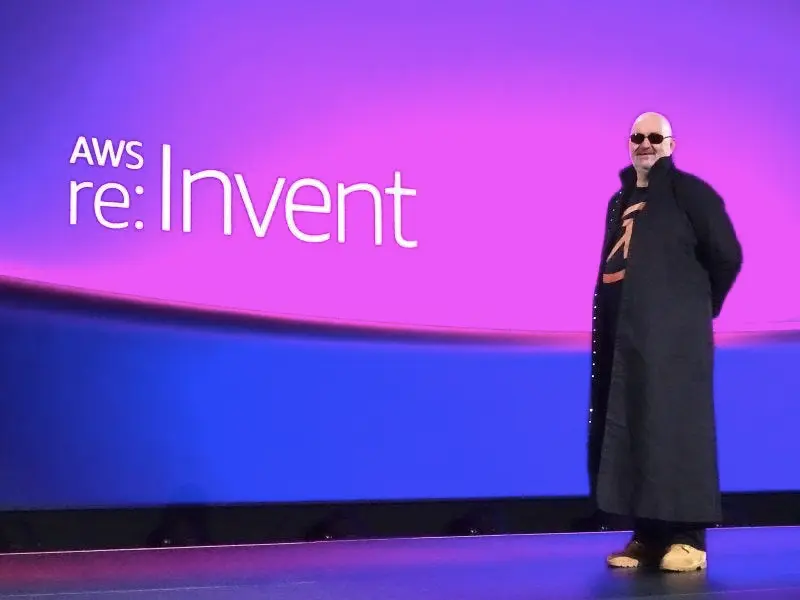
Werner Vogels has delivered keynotes to engineering and C-suite audiences for two decades, translating the architectural decisions behind AWS into strategic frameworks for organizational leaders.
This paper influenced an entire generation of database design, from Apache Cassandra to the storage systems at the heart of social platforms serving hundreds of millions of users. When Vogels speaks to technical audiences, he grounds these concepts in real decisions made under real pressure, not whiteboard theory.
The Frugal Architect: Cost as a First-Class Design Requirement
At AWS re:Invent 2023, Vogels introduced a framework that shifted the conversation from reliability alone to the sustainable economics of cloud architecture: the Frugal Architect. Organized around seven laws across three phases (Design, Measure, and Optimize), it makes the argument that cost discipline is not the enemy of good engineering. It is a property of good engineering.
The most consequential law is the first: treat cost as a non-functional requirement from day one, with the same standing as security or performance. Organizations that defer cost considerations to the end of the build cycle consistently find themselves locked into architectures that are expensive and difficult to change. Vogels has watched this pattern repeat across companies of every size.
For the executive audience, the Frugal Architect framework translates into a direct business case: technology leaders who build with cost awareness embedded in their decisions outperform those who treat infrastructure as a fixed expense to be managed after the fact. This is the kind of insight that changes how finance and technology leadership talk to each other.
The Renaissance Developer and the Future of Building
Vogels delivered what he described as his final re:Invent keynote in December 2025, after 14 consecutive years at the event. The theme was the “renaissance developer,” his term for the engineer who will thrive in an era where AI handles an increasing share of raw coding.
Drawing a deliberate parallel to the Renaissance, a period when generalist curiosity and mastery of multiple disciplines produced extraordinary outcomes, Vogels argued that the engineers of the next decade would need to think in systems, communicate across organizational boundaries, and maintain a broad intellectual curiosity that no AI model can replicate. “Creativity and technology evolve together,” he told the audience. “Curiosity leads to learning and invention.”
His 2026 technology predictions (covering companion robotics, quantum-safe encryption, the rise of AI-powered personalized learning, and the accelerated transfer of defense technology to civilian applications) extend this framework into the future. Amazon’s Executive Insights blog publishes his annual predictions in full, and they are required reading for anyone in technology leadership.
What Event Organizers Need to Know
Vogels speaks to audiences where technical and strategic leadership intersect. His keynotes work particularly well for:
- CIO and CTO summits where the audience wants genuine practitioner depth
- Technology and digital transformation conferences where context beyond the product pitch matters
- Executive leadership programs that include technology as a core strategic function
- Innovation and entrepreneurship forums focused on building scalable, resilient organizations
He covers cloud strategy, AI’s impact on software development, distributed systems design, the economics of sustainable architecture, and the future of human expertise in an AI-augmented world. Organizations increasingly turn to technology speakers who have both built at scale and can speak across the technical-executive divide, a combination Vogels embodies in a way very few can.
For context on how Vogels fits among the world’s leading technology voices, Aurum’s guide to the top technology keynote speakers is a useful reference.
Contact Aurum Speakers Bureau to explore availability and discuss how Werner Vogels fits your event program.
Frequently Asked Questions
Why should organizations book Werner Vogels as a keynote speaker?
Vogels brings something most technology speakers cannot: two decades of direct experience building the infrastructure that powers much of the global digital economy. His frameworks (from “everything fails, all the time” to the Frugal Architect) are not consulting frameworks or academic models. They were built under operational pressure at the largest scale in the industry. For organizations navigating cloud strategy, AI adoption, or digital transformation, he offers a perspective grounded in what actually works at scale. Reach out to Aurum Speakers Bureau to discuss booking options.
What keynote topics does Werner Vogels cover?
His speaking covers cloud architecture and resilience, AI’s impact on software development and engineering careers, distributed systems design, the economics of sustainable cloud infrastructure, and his annual technology predictions spanning robotics, quantum-safe security, and personalized learning. He tailors depth and framing to audience — from engineering teams to C-suite leadership.
What is “eventual consistency” and why does it matter for business audiences?
Eventual consistency is a design principle for distributed systems that trades perfect real-time data synchronization for dramatically higher availability and performance. In practical terms, it is part of what allows platforms to operate globally without going down when a single server fails. For business leaders, the underlying lesson is that the right architectural trade-offs made early determine how reliably — and at what cost — a technology organization can operate at scale.
What types of events are the best fit for a Werner Vogels keynote?
His keynotes perform best at events where technology and executive leadership overlap: CIO summits, digital transformation conferences, innovation forums, and technology leadership programs. He is most impactful when the audience includes decision-makers who need to understand not just what the technology does, but why the architectural choices behind it matter for organizational performance.