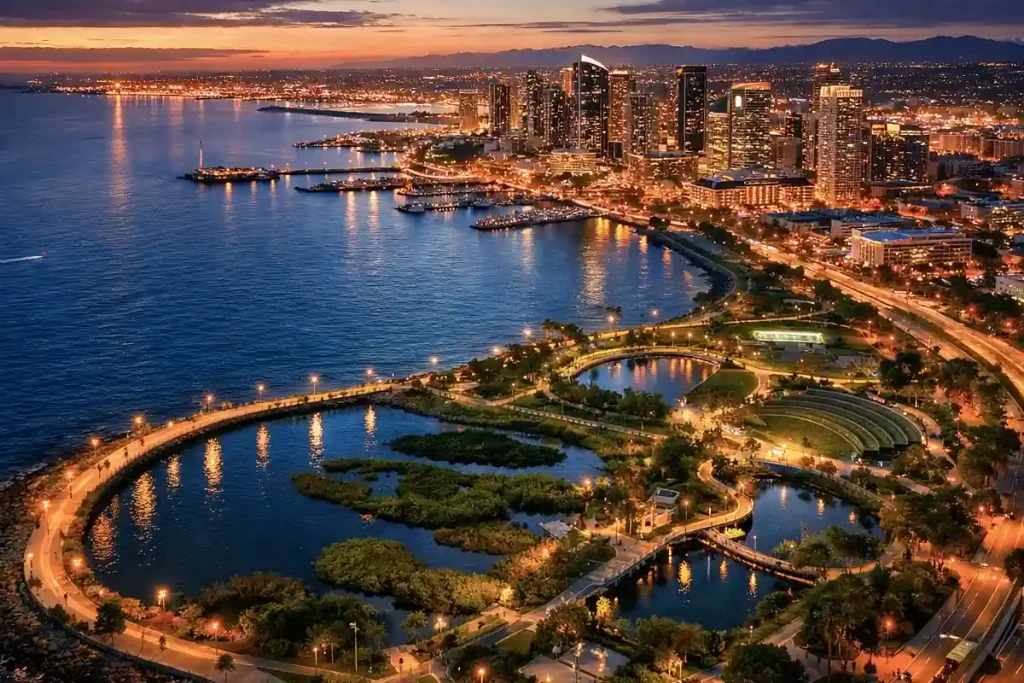
The smartest city in the world still has a problem if its coastline is failing. Sensors, data dashboards, and mobility platforms capture enormous attention in urban planning conversations – yet the greatest risks facing coastal cities in this century are ecological, not technological. Rising seas, biodiversity collapse, and the erosion of natural coastal infrastructure cannot be solved by software alone. Leading smart city sustainability speakers lend a valuable hand in discerning our needs, current stance, future steps, and many other considerations of small to large scale.
In that sense, two of the most compelling voices on this convergence are keynote speaker Greg Clark and Alexandra Cousteau, President of Oceans 2050. Together, they represent something event organizers increasingly seek: the full picture of what a resilient, livable, and truly intelligent city requires.
What Greg Clark Means When He Says “Smart City”
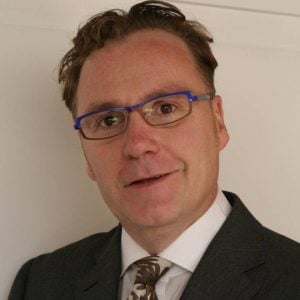
The phrase “smart city” has been deployed so broadly it risks losing meaning. Greg Clark, CBE, brings it back to substance. Over 35 years he has advised more than 300 cities, 40 national governments, and 20 multilateral institutions – a body of work that gives him a rare, comparative perspective no single case study can offer. His research spans city leadership and strategic planning in contexts as diverse as New York, Mumbai, São Paulo, Auckland, and Oslo.
Clark currently chairs the Connected Places Catapult, the UK’s national innovation accelerator for cities and transport. He also chairs the UK Cities Commission for Climate Investment (3Ci), which connects city leaders directly with the capital markets needed to finance a just urban transition. His seat on the WEF Global Future Council on Cities & Urbanisation keeps him at the center of where global urban policy is being made.
His keynotes – covering the decarbonization of cities, the business of cities, and the urban century – translate dense systemic complexity into frameworks audiences can use immediately. For executives, city leaders, and infrastructure investors, Clark answers the question that matters most: which levers actually work?
From Data to Decision: Clark’s Framework for Urban Intelligence
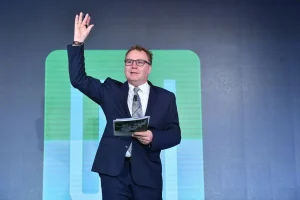
Greg Clark speaking about the future of cities and global urban development at an international conference.
Clark’s approach distinguishes between cities that collect data and cities that act on it. The difference, he argues, lies in governance design and cross-sector trust – not in the sophistication of the technology deployed. His research into more than 100 failed city strategies offers a direct and sobering counterpoint to the assumption that connectivity automatically produces resilience. For event organizers serving audiences in real estate, infrastructure, mobility, or public sector leadership, this is the kind of insight that earns standing ovations precisely because it complicates easy narratives.
His book Global Cities: A Short History, traces the forces of trade, migration, technology, and governance that have separated global urban leaders from the pack across centuries. It remains one of the most cited references in strategic urban planning.
Alexandra Cousteau and the Coastal City Reckoning
 Over 40 percent of the global population lives within 100 kilometers of a coastline. That is not merely a demographic statistic – it is an exposure figure. For every city that qualifies as a smart city, a majority of the world’s great urban centers sit directly in the path of the consequences of ocean degradation: storm surge, fisheries collapse, freshwater intrusion, and the loss of natural coastal buffers that no engineered seawall can fully replicate.
Alexandra Cousteau has spent more than two decades documenting what that loss looks like in practice – and, more recently, what recovery can look like. As President of Oceans 2050, she leads the scientific and operational work of ocean afforestation: restoring marine forests, kelp beds, and coastal habitats that provide habitat for marine life, reverse acidification, and measurably sequester carbon.
Her keynotes do not frame the ocean as an abstraction. They connect coastal health directly to the risks that corporate boards, city planners, and infrastructure investors are already pricing into their decisions.
The Blue Cities Alliance: Where Ocean Science Meets Urban Strategy
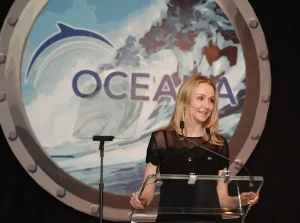
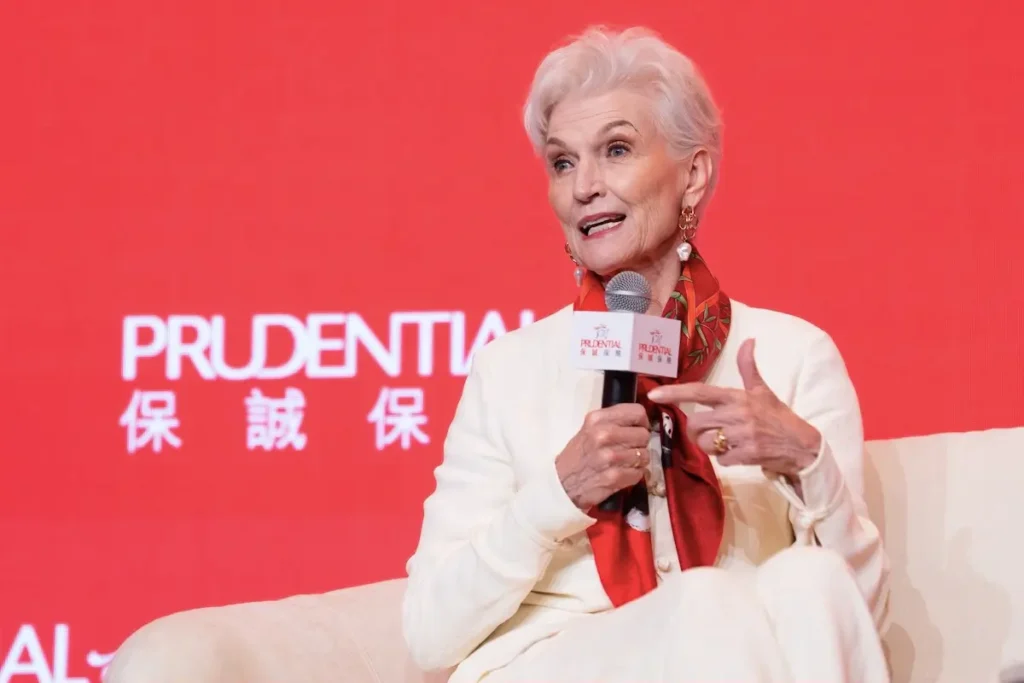
Ocean advocate Alexandra Cousteau speaking at an Oceana event on protecting the world’s oceans.
In June 2025, Athens became the first city to formally sign the Blue Cities Manifesto and join the Blue Cities Alliance, a global initiative led by Cousteau and powered by Oceans 2050. Athens Mayor Haris Doukas cited the city’s maritime identity as inseparable from its climate resilience strategy – making the case that ocean restoration and urban development are not competing priorities but complementary ones.
The Alliance is designed to help coastal cities embed ocean restoration into urban planning in measurable, publicly transparent ways. For event organizers serving audiences of mayors, urban planners, port authorities, and sustainability leaders, this gives Cousteau’s keynotes a specificity and a practical framework that goes well beyond inspiration. Audiences leave with a lens for how their own cities can act – not just why they should.
Her work builds naturally on the themes explored in Aurum’s earlier post on Ocean Abundance and Sustainability Leadership, which examines how ocean restoration and marine ecosystems can shape the future of sustainable economic development. Cousteau’s work extends those ideas directly into the urban planning domain.
Why Book 2 Smart City Sustainability Speakers for the Same Event?
The instinct to book a single speaker on sustainability or cities is understandable. The case for booking both Clark and Cousteau, particularly for urban leadership summits, infrastructure conferences, or ESG leadership events, is compelling.
Clark maps the systemic architecture: how cities finance transitions, how governance design determines whether data becomes action, and how the urban century will divide cities that adapt from those that do not. Cousteau brings the dimension Clark’s framework needs to be complete: the ecological baseline that determines whether coastal resilience is even possible, and the specific tools – restoration, measurement, public accountability – that move cities from pledges to proof.
Together, they address the full range of sustainability speakers topics an ambitious conference requires: economic strategy, climate risk, nature-based solutions, investment alignment, and leadership accountability. The combination rarely produces overlap – it produces depth.
For conferences addressing climate finance, the blue economy, net zero urban transitions, or the future of coastal cities, this pairing is a programming decision that signals seriousness.
FAQ
Why should organizations book Greg Clark and Alexandra Cousteau as keynote speakers?
Greg Clark offers what few urban strategists can match: 35 years of direct advisory work across more than 300 cities, grounded research on why city strategies fail, and a current position at the center of UK and global urban climate finance. Alexandra Cousteau brings the scientific and operational credibility of Oceans 2050 and the Blue Cities Alliance, translating ocean restoration science into frameworks city leaders and corporate boards can act on. Booked together, they offer a rare combination of strategic depth and ecological urgency. To discuss availability and programming options, contact Aurum Speakers Bureau.
What types of events are Greg Clark and Alexandra Cousteau best suited for?
Greg Clark is particularly effective at urban leadership summits, real estate and infrastructure investment conferences, government and multilateral institution events, and sustainability-focused corporate offsites. Alexandra Cousteau performs strongly at ESG leadership events, coastal city conferences, corporate sustainability forums, and any event where the audience includes investors, municipal leaders, or senior executives with direct exposure to climate and coastal risk. Events that combine urban planning and environmental themes are an ideal fit for either or both.
What is the Blue Cities Alliance and why does it matter for event planners?
The Blue Cities Alliance, launched by Alexandra Cousteau and Oceans 2050, is a global initiative that helps coastal cities embed ocean restoration directly into their urban planning and investment frameworks. Athens joined as the inaugural city in June 2025. For event planners, the Alliance represents the frontier of where urban sustainability and ocean science converge – a topic with direct relevance to mayors, infrastructure investors, and corporate sustainability leads. It makes Cousteau’s keynotes highly current and actionable rather than aspirational.
What does a “smart city” actually mean in Greg Clark’s framework?
Clark’s working definition centers on three things: cities that align governance with data, attract the right capital for long-term transitions, and maintain competitive positioning through openness, talent, and strategic planning. He draws a clear distinction between cities that acquire smart technology and cities that actually function smartly – the difference being largely a question of institutional design and leadership quality, not hardware. His research into over 100 failed city strategies makes this point with particular force.
Contact Aurum Speakers Bureau to explore availability and programming options for Greg Clark, Alexandra Cousteau, or any other speaker on your shortlist.