For three years running, AI has been the single most requested keynote topic on corporate briefs, across almost every industry. That demand is understandable, and often exactly right. But “book an AI speaker” has quietly become a reflex, and a reflex is not a strategy.
The honest truth, which a good speakers bureau should tell you even when it costs a booking, is that an AI keynote is sometimes the most valuable hour of your event, and sometimes the least.
Knowing when to book an AI keynote speaker, and when to resist the pull, is what separates a program that lands from one that merely follows the trend.
When an AI keynote helps
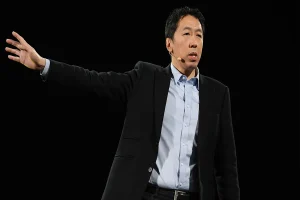
When an AI keynote is the right call, it’s because someone like Andrew Ng is delivering it. This founder of Google Brain has spent his career turning AI from hype into working systems, and audiences can tell the difference within minutes.
An AI keynote earns its place when it answers a real question the audience is already asking. It helps most in a few clear situations.
- The audience faces a genuine AI decision.
When a leadership team is weighing where and how to deploy AI over the next year, the right speaker turns abstract anxiety into a framework for action. A practitioner who has actually run enterprise deployments, rather than a commentator, is what moves a boardroom from worry to plan.
- The room is skeptical or hype-fatigued.
Audiences that have sat through shallow AI talks respond to a grounded, honest assessment from someone who has built or shipped the technology. This is where a credible optimist like Zack Kass, former head of go-to-market at OpenAI, does his best work: not selling the hype, but making a reasoned case for what is genuinely possible.
- The workforce is anxious about its future.
At times when people fear for their jobs, a human-centered talk that reframes the shift, rather than a technical deep-dive, is what steadies and motivates a room, often better served by a future of work speaker than by a pure technologist.
If the topic maps onto a live question in the room, an AI keynote is hard to beat.
When an AI keynote hurts
The counterintuitive part, and the one most bureaus won’t say out loud, is that an AI keynote can actively work against you.

Nothing disarms a skeptical room faster than a builder. Sebastian Thrun founded Google X, the self-driving car project, and is now building a new startup, Dulo, so when he speaks about what AI can and cannot yet do, everyone leans into his knowledge.
Watch for these situations:
- AI is a bolt-on, not the theme.
Shoehorning an AI talk into an event about culture, leadership, or team performance because it feels current dilutes both. If your real goal is to align or energize leaders, the room is better served by the best leadership speakers than by a tangential AI session.
- The audience is already saturated.
Some rooms have simply had enough AI for one year. A fourth AI keynote in twelve months lands flat no matter how good the speaker; the audience needs a different lens, sometimes a straightforwardly human lift from a motivational speaker.
- The speaker is a commentator, not a practitioner.
And this is a big one. The true differentiation lies in the capacity to observe behind all the hype. This category attracts people who read about AI rather than build or deploy it. A speaker long on buzzwords and short on real experience does lasting damage to your credibility with a sophisticated audience. Watch out for that and you will be on the good side.
Normally, we can add, this sort of a booking is driven by fear of missing out.
In general, if your honest answer to “why an AI keynote?” is “because everyone’s doing one,” that is a reason to pause, not to proceed. Let us keep going over varying situations to sort this out even better.
How to tell which situation you’re in

The cure for AI fatigue is specificity. As the world’s first Chief AI Officer, Sol Rashidi has run over 200 deployments, and she speaks not about what AI might do, but about what actually works inside a real organization.
Three questions cut through it quickly:
-
-
- First, what decision or shift should the audience leave ready to make?
-
- Second, what is the room’s real relationship with the topic, curious, saturated, anxious, or skeptical?
- Third, is AI the event’s actual theme or a fashionable add-on?
Each points to a different call.
If you can name it and it genuinely involves AI, a keynote helps; if you can’t, AI may be the wrong frame.
Watching a candidate’s full talks, many of the best are on TED, tells you quickly whether there is substance behind the title, or whether you are being offered buzzwords in a good suit.
If you do book, choose the type that fits
Once you have decided an AI keynote genuinely helps, fit becomes everything, and the strongest AI speakers are almost always practitioners: people who built, shipped, or deployed the technology rather than merely narrate it. The distinction shows up in the room within minutes.
Some are the engineers and pioneers.
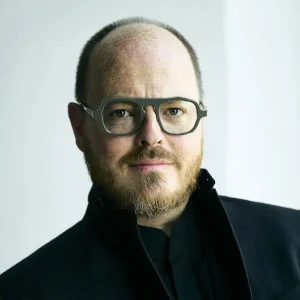
Reading the moment is its own skill. Forbes’ top-ranked futurist, Jonathan Brill, does it for a living, helping leaders tell durable shifts from passing noise, the same judgment this decision demands.
Andrew Ng, who founded Google Brain and has taught AI to millions, and Sebastian Thrun, who founded Google X, led the self-driving car project, and is now building a robotics startup, Dulo, carry an authority a technical audience trusts on sight.
Others are the enterprise operators who have actually made AI work inside large organizations. Sol Rashidi, the world’s first Chief AI Officer, with more than 200 deployments behind her, speaks directly to the executive question of how to adopt AI without eroding the workforce, which is what a board actually needs to hear.
And some are the futurists who help leaders see around the corner: Jonathan Brill, ranked by Forbes as the world’s leading futurist and a former Futurist in Residence at Amazon, works with executives on how companies genuinely win with AI rather than bolting tools onto old structures, a perspective substantial enough that we will devote a full feature to it soon.
Match the type to the audience and the decision at hand. For example, book an engineer for a technical room, an operator for a board, and a futurist for a strategy offsite, for example.
Also, treat our roundup of the top AI keynote speakers for corporate events as a vetted shortlist rather than a popularity contest. We genuinely hope this helps. If you would like to discuss these nuances further, feel free to reach out to us at Aurum and we will gladly get you sorted.
Frequently Asked Questions
When is an AI keynote worth booking?
When it answers a live question in the room: a real decision about deploying AI, a skeptical or anxious audience that needs a grounded voice, or an event whose actual theme is AI or its impact on work.
If the topic maps onto something the audience is already grappling with, a strong AI keynote is one of the highest-value sessions you can program.
If you’re unsure which category your event falls into, contact us so we can help you decide within 24 hours.
When should you not book an AI keynote speaker?
When AI is a fashionable bolt-on rather than the theme, when the audience is already saturated with AI content, when the real need is leadership, culture, or motivation, or when the only reason is that everyone else is doing it.
In those cases, the hour is better spent on the topic the room actually needs.
How do you know if your audience is AI-fatigued?
Look at what they have already seen. If your organization has run several AI sessions in the past year, or the audience works with the technology daily, another overview will underwhelm.
Ask what new decision or perspective a talk would give them; if you can’t answer, they are probably saturated.
How far in advance should you book an AI keynote speaker?
The strongest, most credible AI speakers book out three to six months ahead, and longer for peak seasons. Because this category turns over quickly, start early and prioritize current, hands-on expertise over a name that led the field two years ago.
The willingness to say “not this time” is exactly what you should want from a speakers bureau, because it means the recommendation is built around your event, not the trend. If you are weighing an AI keynote, tell us your audience and the outcome you’re after, and Aurum Speakers Bureau will tell you honestly whether an AI speaker is the right call, and if so, which one. We look forward to connecting.