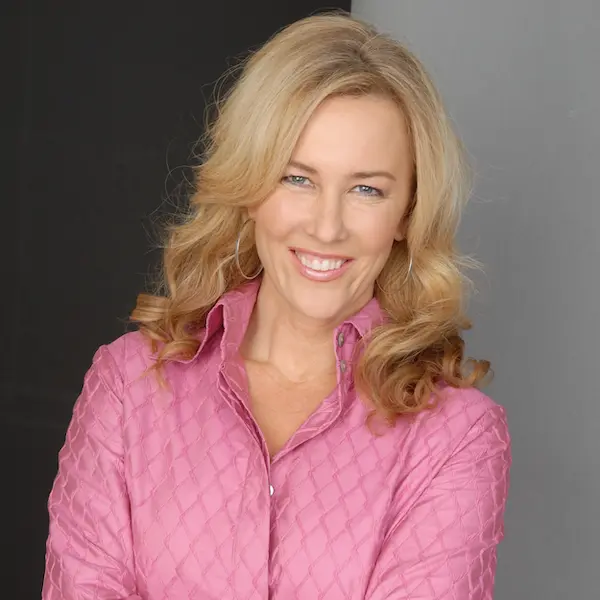
Jennifer Aaker
General Atlantic Professor, Stanford Graduate School of Business | Behavioral Scientist & Authority on Meaning, Purpose & Story | Bestselling Co-Author of Humor, Seriously | Thinkers50-Ranked



World's First Chief AI Officer | Bestselling Author of Your AI Survival Guide | Forbes Contributor | Responsible AI & Workforce Leadership
One of the most credentialed enterprise AI leaders of her generation, Sol Rashidi became the world's first Chief AI Officer in 2016 and has led more than 200 AI deployments across the Fortune 500. A bestselling author, Harvard Senior Fellow, and 2026 LinkedIn Top Voice, she speaks with hard-won authority. On stage she helps boards de-risk AI investments, operationalize governance, and ensure AI strengthens advantage without eroding human capability.
Want to book Sol Rashidi as a speaker for your event? Please provide the info below and we’ll get in touch within 24h:
Keynote speaker Sol Rashidi is one of the most credentialed voices in enterprise artificial intelligence today. In 2016 she became the world’s first Chief AI Officer, defining what the role would look like at scale, and she has since guided more than 200 AI deployments across some of the largest organizations in the world. Recognized by Forbes as an “AI Maverick & Visionary of the 21st Century” and named a 2026 LinkedIn Top Voice, she pairs deep technical fluency with the operational scars of doing the work inside the Fortune 500.
Her career reads like a map of enterprise AI itself. She helped IBM bring Watson to market in 2011, one of the first commercial AI platforms, then served as Chief Data Officer and Chief Analytics Officer across Estee Lauder, Merck, Sony Music, Royal Caribbean, and Amazon. Today she advises boards and executive teams as a fractional Chief Data and AI Officer, and holds multiple patents in data governance and enterprise systems design.
What sets Sol apart is that her insight is grounded in lived execution rather than theory. She does not treat AI as a technology experiment; she treats it as an operating-model shift that must function under regulatory constraints, workforce realities, data-maturity limits, and real business pressure. A Harvard Senior Fellow and Carnegie Mellon adjunct professor, she coined the term Intellectual Atrophy to describe the erosion of human judgment that follows over-automation, a warning she brought to a global audience through her TEDx talk “Brain Rust.”
She is the bestselling author of Your AI Survival Guide, a practical field manual for leaders navigating AI adoption, and co-author of Scaling AI, an enterprise playbook for AI governance and security that ties governance maturity directly to ROI and risk.
As a speaker, Sol Rashidi helps boards, executives, and global teams deploy AI responsibly, build workforce readiness, and measure success beyond productivity alone. Among today’s most sought-after AI Speakers, she shows audiences how to make artificial intelligence a force multiplier for both business performance and human ingenuity.
AI adoption inside organizations is never uniform. Some employees fold it into their daily work immediately while others hesitate, yet the direction is fixed: AI is becoming part of the operating fabric, whether through standalone agents, proprietary models, or tools embedded in platforms like Microsoft Copilot, Salesforce, and Snowflake.
This keynote lays out what leaders should be doing now to prepare for humans and AI working side by side. It covers the shifts companies routinely underestimate: changing skill requirements, new productivity dynamics, evolving decision rights, and the management strain that appears when teams adopt AI at different speeds.
Built for HR leaders, executives, and middle management, the session offers a practical framework for anticipating what will change, which assumptions will break, and how to plan the next one to three years of workforce transformation.
AI is not there to replace human capability but to extend it. The real gain comes from doing more with the same resources by accelerating strengths rather than shrinking teams.
Once systems are live, the harder work begins. How should the operating model evolve? Which structural changes are needed to turn deployment into measurable return? Which early decisions determine whether AI compounds value or fades into a short-lived experiment?
This session maps the move from first deployment to a regenerative growth model, where AI keeps compounding value instead of delivering a one-time efficiency bump, creating momentum that drives durable performance.
Written for non-technical audiences, this keynote turns a fast-moving AI landscape into practical, usable insight, moving past visionary promises into everyday application.
Most professionals are not engineers or data scientists, yet they are still expected to navigate AI-driven change. What does AI actually mean for your role, your industry, and your career? Which claims hold up, and which are amplified by marketing?
Attendees leave with clarity on what AI can do today, what remains aspirational, and how to prepare personally and professionally without getting lost in the noise.
Organizations want to innovate, yet most innovation programs underdeliver. Why does that keep happening, and how can it be avoided?
This talk examines the structural and cultural traps that derail innovation and challenges the assumption that short-term business value alone should decide which projects advance. It looks at how executive roles are shifting as technology spreads well beyond traditional IT, reshaping how CXOs share responsibility.
The session also tackles workforce hesitation around emerging tools, with guidance on motivating teams, forecasting an innovation portfolio, and designing initiatives that build lasting advantage rather than momentary excitement.
Becoming data-driven is a near-universal aspiration, yet many organizations struggle to convert it into results. Despite heavy investment, most data strategies fall short of their original promise.
This keynote examines why data transformations stall and what separates the organizations that break through from those that plateau. It offers practical guidance on moving from isolated analytics projects to a sustainable, enterprise-wide capability.
Participants learn how to build a culture where data fluency strengthens creativity, judgment, and experience rather than replacing them, so data becomes a lasting asset instead of a managed cost.
AI adoption is accelerating and intelligent systems are clearly here to stay. What remains uncertain are the long-term economic and ethical consequences.
Much as caregivers shape the next generation, people shape the AI systems they build, and those systems inherit our biases, errors, and shortcuts. Without deliberate safeguards, misinformation and unintended harm can scale fast.
Drawing on a personal account of how fabricated information nearly derailed a decades-long career, Sol shows what responsible AI use really requires. Attendees leave with practical frameworks for embedding accountability, transparency, and safer development into their AI strategy.
Change has never moved faster, and leaders are expected to deliver results while absorbing constant disruption, buried in digital noise and competing priorities.
Old leadership habits no longer suffice. This keynote explores what it means to go rogue in a constructive sense: choosing focus over busyness, reflection over reaction, and long-term impact over constant availability.
Participants discover how to reclaim attention, manage energy rather than only time, and build the clarity to see around corners. By redefining productivity and resisting distraction, leaders can steer transformation while keeping resilience and purpose intact.
General Atlantic Professor, Stanford Graduate School of Business | Behavioral Scientist & Authority on Meaning, Purpose & Story | Bestselling Co-Author of Humor, Seriously | Thinkers50-Ranked

CEO of AG1 | Former President & COO of Focus Brands | Former President of Cinnabon | Global Operator, Brand Builder & Growth Strategist

Former Federal Minister of Finance of Germany | Former Co-CEO of Goldman Sachs Germany & Austria | Ex-Chancellery State Secretary & G7/G20 Sherpa | Economist
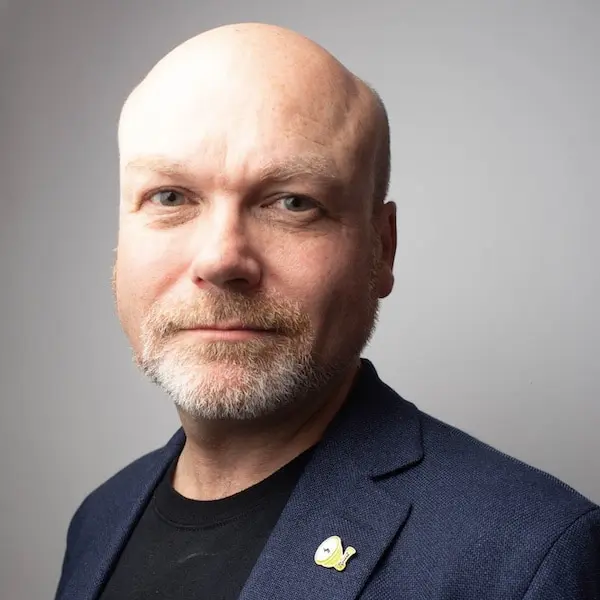
CTO EMEA at Rapid7 | Former CISO, Publicis Groupe & Velonetic | Founder, (TL)2 Security & Host Unknown | Award-Winning Security Blogger


© 2026 Aurum Speakers Bureau. All Rights Reserved

| Basic Data Protection Information | |
|---|---|
| Data controller | AURUM SPEAKERS BUREAU S.L. |
| Address | Parc Audiovisual de Catalunya 1, Oficina S11, 08225 Terrassa, Spain |
| Purposes | We will use your data to respond to your requests and deliver our services to you. |
| Marketing | We will only send you marketing correspondence if you have given your prior consent, which you can do by ticking the box for that purpose. |
| Lawful basis | We will only process your data if you have given your prior consent, which you can do by ticking the box for that purpose. |
| Recipients | Generally, only our members of staff who have been duly authorised may access the data that you have provided. |
| Your Rights | You have the right to know what information we hold about you, to rectify it and to erase it, as explained in the additional information available on our website. |
| Additional Information | For more information, please see our "PRIVACY POLICY". |