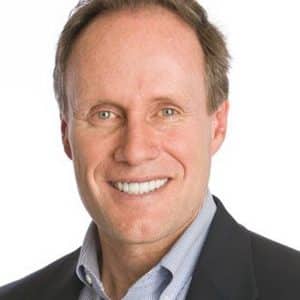
Stephen M.R. Covey, author of The Speed of Trust and one of the world’s leading authorities on trust in leadership and organizations.
Every leader has felt it, even without naming it. The project that stalls in endless approvals. The deal that dies in due diligence. The team that double-checks everything because no one quite believes anyone else. What they are feeling is the cost of low trust, and few people have measured that cost more precisely than Stephen M.R. Covey, whose work on the Speed of Trust reframed a soft virtue as a hard economic driver. For organizations trying to move faster without cutting corners, his message is among the most practical a leadership audience can hear.
His central claim is deceptively simple: trust is not a nice-to-have; it is a measurable force that either accelerates an organization or quietly taxes everything it does.
Inside the Speed of Trust
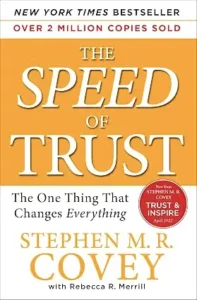
The Speed of Trust has sold more than two million copies and reframed trust as a measurable driver of speed and cost in every organization.
In his bestseller The Speed of Trust, which has sold more than two million copies in over twenty languages, Covey makes the economic case plainly. When trust is low, everything slows down and costs more, a hidden tax on every transaction, meeting, and decision. When trust is high, communication speeds up, costs fall, and execution improves, a dividend that compounds. He gives leaders a concrete way to build it, through what he calls the Four Cores of Credibility and the Thirteen Behaviors of high-trust leaders, so trust becomes something you deliberately create rather than merely hope for.
The framework is grounded in practice: Covey was president and CEO of the Covey Leadership Center, which he grew into the largest leadership development firm in the world before the merger that formed FranklinCovey.
As one of the most sought-after leadership speakers on the subject, he shows audiences how to convert trust taxes into trust dividends. His classic on the topic remains widely read.
From command and control to trust and inspire
Covey’s more recent work pushes the idea further. In Trust & Inspire, he argues that most organizations still lead the way they did a century ago, through command and control, built on hierarchy and compliance, even though the workforce and the work itself have changed completely. By his data, the overwhelming majority still operate from some version of that old model. His alternative starts from a different belief: that people are creative, collaborative, and full of potential, and that a leader’s job is to unleash that potential rather than manage it. People, as he puts it, do not want to be managed; they want to be led. For management speaker audiences wrestling with engagement and retention, it reframes leadership as a talent magnet rather than a control system.
Forging his own path
The Covey name is synonymous with leadership, and Stephen M.R. Covey grew up inside it. He is the son of Dr. Stephen R. Covey, author of The 7 Habits of Highly Effective People, and he personally led the strategy that propelled his father’s book to become one of the most influential business books of the twentieth century. Rather than trade on the name, he built his own body of work around a single, distinct idea: trust. He became recognized in his own right as one of the world’s leading authorities on it. A Harvard MBA who has taught trust and leadership in more than fifty countries and earned a lifetime achievement award as a top thinker on trust, he is a case study in stepping out of a long shadow by planting a flag somewhere new.
Why leaders keep booking him
What makes Covey resonate is that he makes an abstract idea usable. Audiences leave not with a warm feeling about trust but with a model for building it, measuring it, and repairing it when it breaks. His work sits where leadership meets organizational health, which is why he pairs naturally with the thinkers in our roundups of the top leadership keynote speakers. For any organization where speed, execution, or culture has stalled, his diagnosis tends to land uncomfortably close to home, and his prescription is refreshingly concrete.
Frequently Asked Questions
Why should organizations book Stephen M.R. Covey?
Because he turns trust from a vague value into a measurable driver of speed, cost, and performance, and hands leaders a practical framework to improve it. Few speakers connect a single idea so directly to both the bottom line and daily culture. To check his availability and fit for your event, contact Aurum Speakers Bureau and our team will walk you through the options.
What is the Speed of Trust?
It is Covey’s idea that trust works as an economic multiplier: when trust is high, work moves faster and costs less; when trust is low, everything slows down and costs more. He frames these as trust dividends and trust taxes, and offers specific behaviors leaders can use to build credibility and raise trust on purpose.
Is Stephen M.R. Covey related to the author of The 7 Habits?
Yes. Stephen M.R. Covey is the son of Dr. Stephen R. Covey, who wrote The 7 Habits of Highly Effective People. Stephen M.R. built his own reputation as an authority on trust, writing The Speed of Trust and Trust & Inspire.
What types of events suit a speaker like Stephen M.R. Covey?
He is a strong fit for leadership summits, executive retreats, culture and change initiatives, and any event where trust, engagement, or execution is on the agenda. He speaks to business, government, education, and healthcare audiences alike.
To explore whether Stephen M.R. Covey is right for your next event, reach out to Aurum Speakers Bureau to discuss availability and goals.