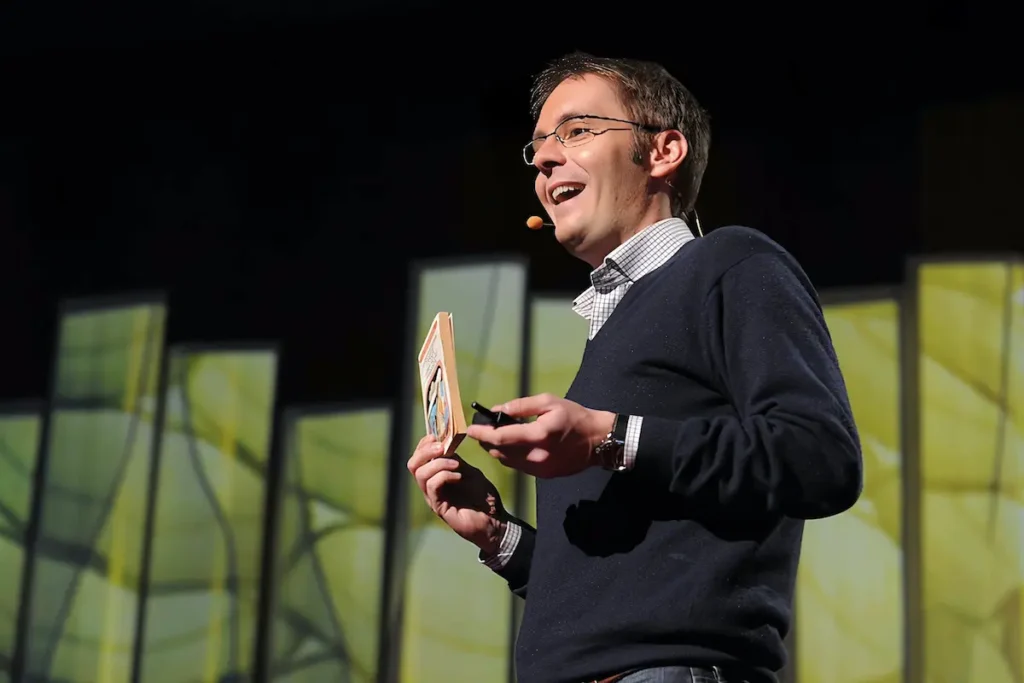

Wernicke’s most-watched TED talk used statistics to deconstruct what makes a great TED talk. Data Inspired runs the same move at corporate scale: turn the tools of analysis on the analysts themselves.
Georgetown University Press has released Data Inspired: Building an Organizational Culture of Inquiry for Lasting Transformation, the new book by Sebastian Wernicke. It arrives at a striking moment. Nearly every company treats data and AI as a strategic essential. Most also say their initiatives are stalling out. The argument behind the title is sharp: the problem isn’t a lack of data. It is a culture that does not know how to ask better questions.
From Data-Driven to Data-Inspired
For two decades, Wernicke has worked at the intersection of data science, machine learning, and corporate strategy. As a partner at Oxera Consulting and head of its data and AI practice, he has guided global organizations through hundreds of data initiatives across pharmaceuticals, manufacturing, financial services, and technology. His three TED talks on data and decision-making have been viewed by more than five million people.
In Data Inspired, he draws a clean line between two postures. A data-driven company tightens the operations it already runs. A data-inspired company uses evidence to find the operations it should be running next. The first improves margins. The second changes the company. The distinction sounds subtle. In practice, it is the gap between a dashboard that confirms what leaders already believe and a culture of inquiry that lets evidence reshape strategy.
Why the Book Lands Now
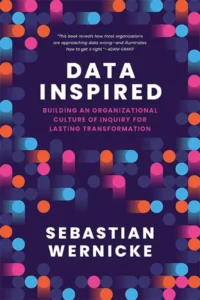
Adam Grant’s cover blurb is the book’s thesis in one line: most organizations are getting data wrong, and the fix isn’t more tools. Cover via Georgetown University Press.
The release coincides with a period of acute AI investment and equally acute frustration. Boards approve generative AI budgets, pilots stall, and the gap between ambition and outcome widens. Wernicke argues that this gap is not technical; it is cultural. Most organizations treat data as an engineering problem to be solved with more tools, more storage, and more dashboards. The book reframes it as a leadership problem: how decisions are made, who is allowed to question assumptions, and whether evidence can override hierarchy.
Structured in five parts, the book closes with a working toolbox: frameworks for evidence-based decisions, formats for team workshops, and a method for ranking which data projects deserve investment first. It is written for executives, managers, and data professionals who are tired of incremental optimization and want a roadmap for transformation that actually compounds.
Endorsements From a Distinguished Lineup
Pre-launch, the book attracted blurbs from a striking roster of thinkers, several of whom are familiar voices to Aurum audiences. AI pioneer Sebastian Thrun, founder of Google X and Waymo, calls it an essential roadmap for “leaders who want to move beyond incremental optimization and inspire transformative innovation.” Adam Grant, the Wharton organizational psychologist, describes Wernicke as “a wizard at using evidence to shape successful change.” Seth Godin frames the central insight bluntly: “Culture beats algorithms every time.” Harvard’s Amy Edmondson and Linda Hill, Thinkers50 strategist Rita McGrath, investor Guy Spier, and Babson’s Tom Davenport round out a list that, taken together, signals serious intellectual weight.
Why Event Organizers Should Pay Attention
Wernicke is in unusual demand for a reason most polished AI keynotes miss. He has personally led data and AI engagements at the scale of mRNA vaccine manufacturing and national genome projects, which means his stage presence carries the credibility of someone who has shipped, not just theorized. With the launch of Data Inspired, his keynote now has a clear backbone: a book leaders can hand to their teams, a vocabulary their organizations can adopt, and a set of frameworks that survive contact with reality.
For events focused on AI strategy, digital transformation, and the cultural side of data, his session is one of the few that closes the gap between aspiration and execution. Aurum represents the leading AI speakers on this topic, and Wernicke now sits at the practitioner end of that spectrum. Programs that lead with big data speakers and analytics often miss the leadership work that makes the data usable, and programs anchored by digital transformation speakers often skip the evidence layer underneath.

Drawing on hundreds of enterprise data initiatives, Wernicke makes the case that lasting AI transformation starts with how teams ask questions, not which tools they deploy.
Wernicke covers both halves in a single keynote.
The hardcover and ebook editions are now available, with the book landing at the moment most leadership teams are weighing exactly the questions it sets out to answer. For a preview of how Wernicke handles the material live, his TED talks on data and decision-making remain the cleanest entry point to a topic most speakers oversimplify.
Contact Aurum Speakers Bureau to discuss booking Sebastian Wernicke for your next event.
Further reading: If you are still narrowing the brief, our piece on Sebastian Thrun on AI and the future of learning offers a complementary perspective from the founder of Google X and Waymo.
For a third angle from the AI side of the roster, our breakdown of Andrew Ng’s agentic AI framework for business examines how another top voice frames where AI investment actually pays off.