

The most overused word in keynote programming is “inspiring.” The most underused question is: what actually changes after the applause stops?
The best leadership speakers do not just deliver a talk. They shift how an audience understands the decisions in front of them. They make the invisible visible — whether that is the trust dynamics undermining a team’s speed, the pressure response that kills a deal in its final moments, or the discipline required to build a champion over two decades. These five voices represent leadership thinking at its most grounded and most rigorous. Each has earned their authority not in a consulting room, but in the arena.
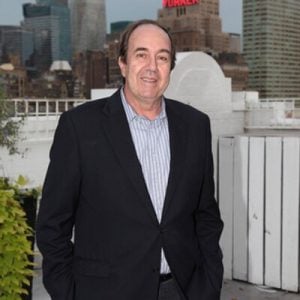
Nando Parrado — the leader who walked out of the Andes when hope had already left.
Nando Parrado: Leadership When the Rules Disappear
In October 1972, a plane carrying a Uruguayan rugby team crashed at 18,000 feet in the Andes. Over the 72 days that followed, Nando Parrado lost his mother and sister, watched hope of rescue collapse, and ultimately led a ten-day trek across the mountains that saved 16 survivors. He returned home to rebuild his life from nothing — and built several successful companies in the process.
What makes keynote speaker Nando Parrado exceptional for corporate audiences is that his lessons are not metaphors. They are documented outcomes from a situation where leadership was the only resource available. When formal structures disappeared on that mountain, influence, clarity, and shared purpose were all that remained.

Survival begins where certainty ends. Nando Parrado’s story is a masterclass in leadership under the most extreme conditions on Earth.
His keynotes address crisis decision-making, resilience under uncertainty, and what it means to build teams around absolute trust and a shared mission. He has headlined some of the world’s largest leadership conferences — the kind of platform reserved for voices that have proven durability across decades.
For organizations navigating transformation, M&A integration, or high-stakes change programs, Parrado’s framework is not borrowed from theory. It was tested at altitude.
Outbound: Miracle in the Andes remains the definitive account of his story.
For a deeper look at the leadership principles behind the story, see What Modern Leaders Can Learn from the Andes Survival Story.
Toni Nadal: How Champions Are Built, Not Born
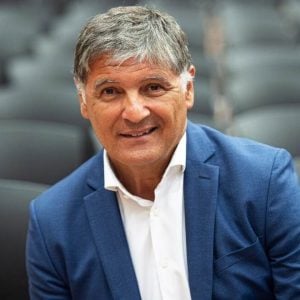
Toni Nadal — the coach behind 22 Grand Slams and a philosophy that every organization can train.
Before Rafael Nadal won 22 Grand Slam titles and became arguably the greatest tennis player in history, he was a four-year-old boy being trained on the courts of Mallorca by his uncle. Toni Nadal coached Rafa for 27 years, guiding him to 74 tournament titles, 4 Davis Cups, and 2 Olympic Games. He is now Ambassador and Sports Director of the Rafa Nadal Academy, continuing to shape the next generation of elite athletes.
What distinguishes speaker Toni Nadal from other sports-to-business crossovers is his insistence that excellence is a product of controllable factors. Talent, he argues, is secondary. What he built with Rafael was a system of discipline, humility, self-demand, and mental toughness — all qualities that can be coached, trained, and institutionalized.
His book Todo se puede entrenar (Everything Can Be Trained) translates this philosophy into a framework any organization can apply. His TED talk has drawn nearly two million views. At corporate events, he speaks directly to the leaders responsible for building high-performance cultures — not just the individuals they are trying to develop.
His message is particularly relevant for organizations managing talent development and executive coaching initiatives. The habits of champions, he argues, are not exceptional. They are simply more consistent.
Carl Lewis: The Long Game of Elite Performance
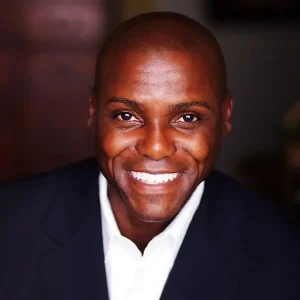
Carl Lewis — nine Olympic golds and a lifetime of lessons in discipline, timing, and the long game.
Nine Olympic gold medals. Eight World Championship gold medals. Named Sportsman of the Century by the International Olympic Committee. Carl Lewis dominated track and field for nearly two decades, competing at the highest level from 1979 to 1996 — a run of consistency that has no parallel in the sport.
Speaker Carl Lewis brings a framework built on one of sport’s most counterintuitive insights: that the athlete who peaks at exactly the right moment wins, not the one who simply trains the hardest. His understanding of periodization, discipline, and long-term planning translates directly into how organizations approach growth and team development.
Since retirement, Lewis has devoted significant energy to the Carl Lewis Foundation, serving as a United Nations Ambassador for the Food and Agricultural Organisation and coaching the next generation as a volunteer at the University of Houston. He is also the subject of a recent documentary that has introduced his story to a new generation of leaders.
His keynotes speak to sports speakers audiences and business leaders alike — covering the architecture of peak performance, goal discipline, and the mental habits behind sustained excellence over decades.
Stephen M R Covey: The Economics of Trust
In any given leadership conversation, trust is either invisible or absent. Stephen M R Covey has spent decades making it legible. His book The Speed of Trust, translated into 22 languages and sold to more than two million readers, introduced
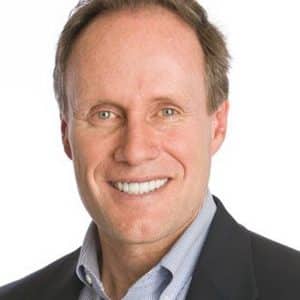
Stephen M R Covey — trust is not a soft virtue. It is the one variable that changes everything.
a framework that changed how organizations think about their most overlooked asset.
Covey’s core argument is structural: when trust is high, organizations move faster and cost less to run. When it is low, every initiative carries a tax — in oversight, in verification, in the friction between good decisions and their execution. Trust, he shows, is not a soft virtue. It is a measurable competitive variable.
His second book, Trust & Inspire, named the number one leadership book of the year by the Outstanding Work of Literature Awards, extends this framework into the talent era — arguing that command-and-control management is not just outdated but economically irrational in a world where the most valuable people have options.
Keynote speaker Stephen M R Covey co-leads FranklinCovey’s Global Speed of Trust Practice and has keynoted in 55 countries, working with business, military, government, and healthcare organizations. His sessions are among the most requested for leadership summits and executive retreats where the agenda centers on culture, engagement, and organizational transformation.
JP Pawliw-Fry: What Happens in the Final 8%
Most organizations know what they need to do. The gap is in execution — specifically, in the moments of highest pressure, when the stakes are clearest and the decisions are hardest to make.
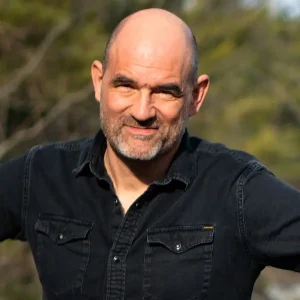
JP Pawliw-Fry — researching the gap between what leaders know they should do and what they actually do under pressure.
JP Pawliw-Fry has spent more than two decades studying this gap. His organization surveys more than 40,000 individuals monthly, producing one of the most comprehensive longitudinal data sets on human performance under pressure in existence. His research — including a landmark study with 34,000 participants published in the Harvard Business Review — identifies a consistent pattern: the last 8% of any difficult decision or conversation is where most professionals stop short.
His New York Times bestselling book, Performing Under Pressure, published in 65 countries, answers a deceptively simple question: why do some people deliver when it matters most and others do not? His framework, developed across seven years of research and refined through work with Fortune 100 companies, the U.S. Marines, and Olympic athletes, gives leaders practical tools to close that gap.
As co-founder of IHHP and host of the Last 8% Morning podcast, speaker JP Pawliw-Fry brings a level of empirical grounding to the emotional intelligence conversation that distinguishes him sharply from motivational speakers working from instinct alone. For organizations where the cost of a failed conversation or a delayed decision is measurable, his keynotes function as operational interventions, not inspiration.
His work connects directly with the future of work speakers category — particularly as organizations design for high performance under uncertainty.
Frequently Asked Questions
Why should organizations book a leadership keynote speaker for their next event?
A leadership keynote speaker does something internal training programs rarely achieve: they shift perspective at scale, in a single session. The most effective speakers bring a combination of lived authority and transferable frameworks that help audiences see their own leadership challenges from a new angle. For organizations navigating change, culture transformation, or performance gaps, an outside voice with genuine credibility often unlocks conversations that internal leaders cannot. Contact Aurum Speakers Bureau to discuss which of these speakers fits your event’s strategic objectives.
What types of events are best suited to leadership keynote speakers?
Leadership keynotes work across a wide range of formats — executive retreats, annual leadership summits, sales kickoffs, HR and talent conferences, and board strategy days. The key variable is alignment between the speaker’s framework and the specific challenge the organization is working through. A speaker focused on trust-based leadership will land differently at a post-merger integration than a speaker focused on pressure performance — both are valuable, but for different moments.
What is the difference between a motivational speaker and a leadership keynote speaker?
Motivational speakers primarily focus on energy, mindset, and inspiration. Leadership keynote speakers — at their best — do all of that while also delivering frameworks that audiences can apply immediately. The speakers featured here combine emotional impact with intellectual substance: Covey’s trust model, Pawliw-Fry’s pressure research, Toni Nadal’s coaching methodology. The goal is not just to move the room but to equip it.
How far in advance should we book a leadership keynote speaker?
Top-tier leadership speakers are typically booked four to six months in advance for major conferences. Some — particularly those appearing on multiple global stages in a given season — are committed further out. Engaging a speakers bureau early is the most reliable way to secure your preferred speaker and ensure alignment between their keynote and your event objectives.