
Mark Gallagher
Formula 1 Executive | Bestselling Author of The Business of Winning | MD, Performance Insights | Leadership & Teamwork


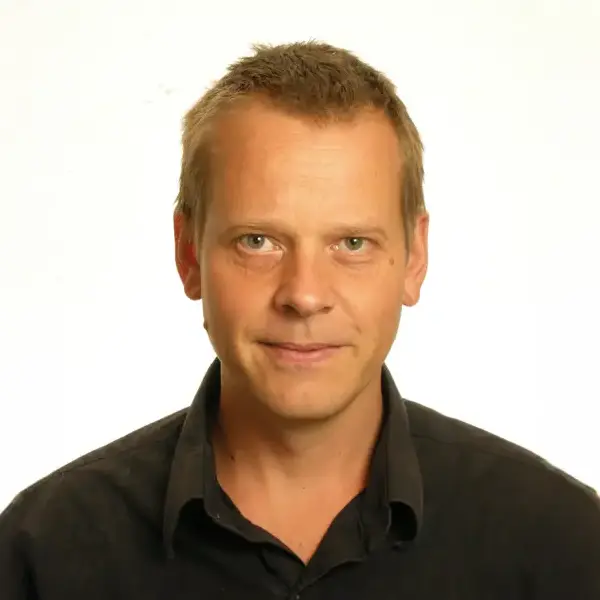
President & Co-Founder, Gapminder Foundation | Inventor of Trendalyzer (Acquired by Google) | Co-Author, Factfulness | Former Google Public Data Product Manager
Behind every data point lies a story that challenges what we think we know. Ola Rosling has dedicated his career to revealing those stories through innovative visualization tools and fact-based education. As President of Gapminder, inventor of Trendalyzer, and co-author of the bestselling Factfulness, Rosling equips audiences worldwide with the frameworks to see past misconceptions and understand the world as it truly is—better than we think, yet still demanding our attention where it matters most.
Want to book Ola Rosling as a speaker for your event? Please provide the info below and we’ll get in touch within 24h:
Ola Rosling is President and Co-Founder of the Gapminder Foundation, a non-profit organization dedicated to combating global ignorance through fact-based education. Together with his wife Anna Rosling Rönnlund and his late father Hans Rosling, he founded Gapminder to democratize access to global statistics and promote evidence-based understanding of world development.
Futurist speaker Ola Rosling pioneered revolutionary approaches to data visualization that transformed how millions understand global trends. In 1999, he led the development of Trendalyzer, groundbreaking software that converts complex statistical datasets into dynamic, interactive graphics. Google acquired Trendalyzer in 2007, and Rosling spent three years at Google headquarters as Product Manager for Google Public Data, where he and his team created the Motion Chart feature for Google Spreadsheets and built the infrastructure to integrate official statistics directly into Google Search results.
In 2011, Ola returned to Gapminder to launch the Ignorance Project, now the world’s largest collection of public misconception surveys measuring what people get wrong about fundamental global facts. The project’s findings revealed a stunning pattern: educated people across all backgrounds consistently score worse than random chance when asked basic questions about poverty, health, education, and development. This research became the foundation for the term “factfulness,” which Rosling coined in 2014 to describe the stress-reducing habit of forming opinions based on strong supporting facts rather than instincts and misconceptions.
Co-authored with Anna and Hans, Factfulness: Ten Reasons We’re Wrong About the World—and Why Things Are Better Than You Think became an international phenomenon, selling millions of copies worldwide. Bill Gates called it “one of the most important books I’ve ever read” and gifted four million copies to college graduates. The book has been translated into dozens of languages and continues to reshape how leaders, educators, and the public understand global progress. Rosling’s work earned him speaking invitations at major forums including TED, where the talk “How Not to Be Ignorant About the World” demonstrated his signature blend of humor, data, and insight.
As a speaker, Ola Rosling delivers transformative presentations that challenge audiences to question their assumptions and embrace data-driven thinking. His talks combine stunning visual tools with practical frameworks for interpreting statistics, equipping business leaders, policymakers, and educators with the skills to cut through media bias, resist cognitive distortions, and make decisions grounded in reality. Audiences leave with a more accurate worldview, actionable strategies for thinking clearly under uncertainty, and renewed optimism about humanity’s capacity for progress.
Most leaders base critical decisions on outdated assumptions and cognitive biases rather than current facts. Ola Rosling presents the core principles of factfulness, teaching audiences to recognize the ten instincts that systematically distort perception—from the gap instinct that makes us see false dichotomies to the negativity instinct that blinds us to progress. Using dynamic data visualizations and engaging examples, he demonstrates how even highly educated professionals routinely get basic facts wrong about global trends. Participants learn practical techniques for evaluating information sources, interpreting statistics accurately, and forming opinions grounded in evidence rather than emotion or drama.
Poverty, health, education, population—what do we really know about the state of the world? Ola Rosling challenges widespread misconceptions with stunning visual demonstrations showing how humanity has made extraordinary progress in areas most people believe are getting worse. Drawing from Gapminder's Ignorance Project surveys, he reveals why the public systematically underestimates improvements in child mortality, literacy rates, and living standards across developing regions. This presentation equips audiences with an accurate understanding of current global conditions, enabling more strategic allocation of resources and more realistic approaches to addressing remaining challenges in sustainability and development.
Organizations that rely on intuition and anecdote rather than rigorous analysis miss opportunities and misallocate resources. Ola Rosling shows how to build a culture where factual thinking becomes the default mode, not the exception. He explores how cognitive shortcuts that served our ancestors now lead modern professionals astray, creating systematic blind spots in strategy and planning. Through case studies and interactive elements, participants discover how to structure decision-making processes that reward evidence over storytelling, how to present data in ways that actually change minds, and how to create accountability systems that demand factual support for key claims.
Media bias, selective reporting, and sensationalism make it nearly impossible to understand what's actually happening globally. Ola Rosling teaches audiences how to cut through the noise and extract signal from statistics. He demonstrates why dramatic stories dominate news cycles while slow, steady progress goes unreported, and provides tools for evaluating whether reported trends represent genuine shifts or statistical noise. This keynote is particularly valuable for executives navigating uncertainty, helping them distinguish between meaningful changes requiring strategic response and temporary fluctuations that merit patience and perspective.
Formula 1 Executive | Bestselling Author of The Business of Winning | MD, Performance Insights | Leadership & Teamwork

Iconic Cyclist & Cancer Survivor | Livestrong Founder | Podcast Host, THEMOVE & The Forward | Venture Investor
Senior Lecturer in Leadership & Innovation, MIT Sloan | Bestselling Author of Questions Are the Answer & The Innovator's DNA | Creator of Catalytic Questioning | Thinkers50-Ranked
The Iron Cowboy | Endurance Athlete & Multiple Guinness World Record Holder | 50.50.50 & Conquer 100 | Bestselling Author of 'Iron Hope' | Mental Toughness Expert


© 2026 Aurum Speakers Bureau. All Rights Reserved

| Basic Data Protection Information | |
|---|---|
| Data controller | AURUM SPEAKERS BUREAU S.L. |
| Address | Parc Audiovisual de Catalunya 1, Oficina S11, 08225 Terrassa, Spain |
| Purposes | We will use your data to respond to your requests and deliver our services to you. |
| Marketing | We will only send you marketing correspondence if you have given your prior consent, which you can do by ticking the box for that purpose. |
| Lawful basis | We will only process your data if you have given your prior consent, which you can do by ticking the box for that purpose. |
| Recipients | Generally, only our members of staff who have been duly authorised may access the data that you have provided. |
| Your Rights | You have the right to know what information we hold about you, to rectify it and to erase it, as explained in the additional information available on our website. |
| Additional Information | For more information, please see our "PRIVACY POLICY". |