
Amy Cuddy
Social Psychologist & Award-Winning Harvard Lecturer | Bestselling Author of Presence | Creator of the Iconic TED Talk on Body Language | Expert on Power & Presence


2025 Nobel Laureate in Physics | Chief Scientist, Google Quantum AI | Professor, UC Santa Barbara & Yale | Inventor of the Transmon Qubit
2025 Nobel Laureate in Physics and the inventor of the transmon qubit, Michel Devoret is the scientist who proved quantum mechanics operates at macroscopic scale — the discovery that made modern quantum computing possible. As Chief Scientist for Quantum Hardware at Google Quantum AI, he remains at the center of the field he founded. His talks give senior audiences a credible, strategic view of quantum's real-world trajectory.
Want to book Michel Devoret as a speaker for your event? Please provide the info below and we’ll get in touch within 24h:
Michel H. Devoret is a 2025 Nobel Laureate in Physics whose foundational experiments in the 1980s proved that quantum mechanical phenomena — long assumed to exist only at the subatomic level — could emerge in macroscopic electrical circuits. That discovery did not just advance physics theory; it laid the experimental groundwork for every superconducting quantum computer being built today. Born in Paris in 1953, Devoret trained as an engineer at Télécom Paris before earning his doctorate in condensed matter physics from Paris University in 1982, followed by postdoctoral research at UC Berkeley alongside John Clarke and John Martinis — the very collaboration the Nobel committee would later honor.
Nobel Physics speaker Michel Devoret is best known for a series of breakthroughs that defined the trajectory of quantum hardware. At CEA Saclay, he co-founded the Quantronics group, where his team invented the electron pump, measured Cooper pair charge directly, and developed the quantronium qubit. After joining Yale University in 2002, he and colleagues Robert Schoelkopf and Steven Girvin co-invented the transmon qubit — now the most widely deployed qubit architecture in the world, used by IBM, Google, and virtually every major quantum computing program. He also pioneered the fluxonium qubit and demonstrated the ability to catch and reverse a quantum jump mid-flight, a result published in Nature that reshaped how physicists think about quantum measurement.
In 2025, Devoret shared the Nobel Prize in Physics with John Clarke and John Martinis for the discovery of macroscopic quantum mechanical tunneling and energy quantization in electric circuits — work the Nobel committee described as research that “essentially kicked off an entire field.” He holds the Frederick W. Beinecke Emeritus Professorship at Yale, serves as Professor of Physics at UC Santa Barbara, and is Chief Scientist for Quantum Hardware at Google Quantum AI. He is also an elected member of the American Academy of Arts and Sciences, the French Academy of Sciences, and the National Academy of Sciences, and has received the John Stewart Bell Prize, the Fritz London Memorial Prize, the Micius Quantum Prize, and the 2024 Comstock Prize in Physics, among many others.
As a speaker, Michel Devoret brings unmatched authority to one of the most consequential technology transitions of our era. His talks move fluently between the physics of quantum circuits and the strategic implications for industries from finance to pharmaceuticals — making quantum computing not just comprehensible, but urgent and actionable for senior audiences. Attendees gain a clear picture of where the technology genuinely stands, what timelines are realistic, and how organizations can begin positioning themselves for a quantum-enabled future. Few speakers combine Nobel-level scientific credibility with the ability to make frontier research immediately relevant to executive decision-making.
Quantum computing has moved from theoretical curiosity to one of the most intensely contested frontiers in global technology. In this keynote, Devoret draws on his decades at the center of the field to offer a clear-eyed assessment of where quantum hardware genuinely stands, what milestones remain, and what a fault-tolerant quantum computer will actually look like when it arrives. Audiences leave with a realistic and strategically useful picture of quantum's timeline — free from hype, grounded in physics.
In the mid-1980s, a small group of physicists set out to answer a question most of their colleagues thought was absurd: could a circuit you could hold in your hand obey the laws of quantum mechanics? The answer was yes — and that experiment launched a field. Devoret tells the story of that breakthrough from the inside, drawing lessons about scientific risk-taking, the relationship between curiosity-driven research and transformative technology, and what it means to work on ideas that seem impossible until they aren't.
The central challenge in quantum computing today is not whether the physics works — it does — but whether engineers can build systems reliable enough to outperform classical computers on real tasks. Devoret explains the architecture of superconducting quantum processors, the concept of quantum error correction, and the technical path toward fault-tolerant quantum computing. This technically substantive talk is tailored for audiences in science, engineering, and technology strategy who want to understand not just what quantum computers do, but how they are actually built.
Quantum computing is not a distant prospect — it is a near-term strategic reality for sectors from pharmaceuticals and materials science to cryptography and financial modeling. Devoret maps the most credible near-term applications of quantum technology, explains which industries face the greatest disruption, and offers a framework for how organizations can begin preparing now. This forward-looking session bridges fundamental physics and executive strategy, giving leaders the conceptual tools to make informed decisions about quantum investment and readiness.
Social Psychologist & Award-Winning Harvard Lecturer | Bestselling Author of Presence | Creator of the Iconic TED Talk on Body Language | Expert on Power & Presence
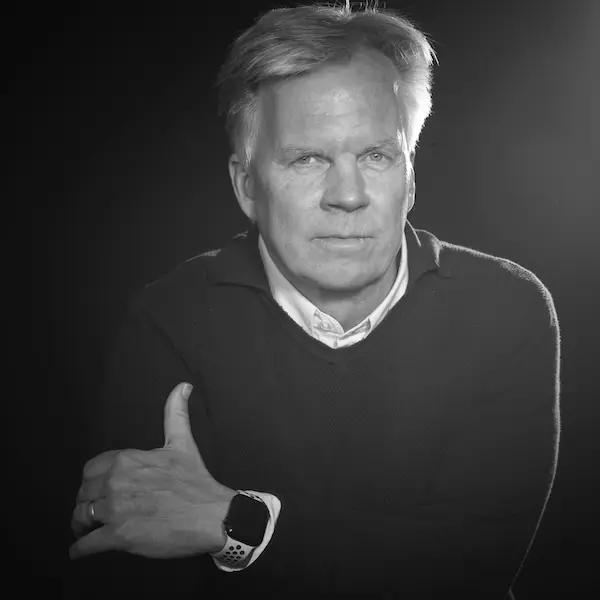
Creator of the Apple Stores | Author, Shop Different | Former SVP, Apple Retail | Harvard MBA | Innovation, Culture & Customer Experience

1997 Nobel Laureate in Economic Sciences | Distinguished Professor of Finance, MIT Sloan | Co-Creator, Black-Scholes-Merton Model

Founder, Global Innovation Index (WIPO) | Former Dean, Cornell SC Johnson & Oxford Saïd | President, Portulans Institute | Board Member, Dassault Systèmes


© 2026 Aurum Speakers Bureau. All Rights Reserved

| Basic Data Protection Information | |
|---|---|
| Data controller | AURUM SPEAKERS BUREAU S.L. |
| Address | Parc Audiovisual de Catalunya 1, Oficina S11, 08225 Terrassa, Spain |
| Purposes | We will use your data to respond to your requests and deliver our services to you. |
| Marketing | We will only send you marketing correspondence if you have given your prior consent, which you can do by ticking the box for that purpose. |
| Lawful basis | We will only process your data if you have given your prior consent, which you can do by ticking the box for that purpose. |
| Recipients | Generally, only our members of staff who have been duly authorised may access the data that you have provided. |
| Your Rights | You have the right to know what information we hold about you, to rectify it and to erase it, as explained in the additional information available on our website. |
| Additional Information | For more information, please see our "PRIVACY POLICY". |