
David Villa
Spain's All-Time Top Goalscorer | 2010 World Cup & Euro 2008 Winner | Barcelona, Valencia & Atlético Madrid Legend | Founder of DV7 Group


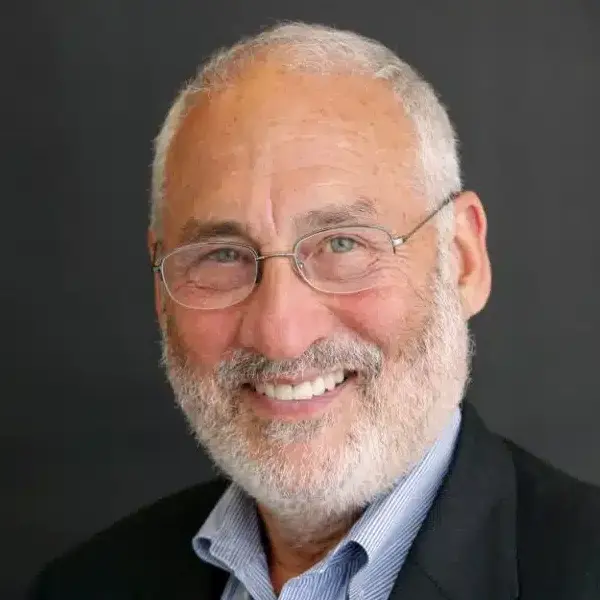
2001 Nobel Laureate in Economics | University Professor, Columbia | Chief Economist, Roosevelt Institute | Former Chief Economist, World Bank
Joseph Stiglitz won the 2001 Nobel Prize in Economics for revolutionizing our understanding of markets through the theory of asymmetric information. Former World Bank Chief Economist and Chair of Clinton's Council of Economic Advisers, he is today's most authoritative voice on inequality, globalization, and the economic consequences of AI. His keynotes give senior audiences the frameworks to make sense of a fracturing global economy.
Want to book Joseph Stiglitz as a speaker for your event? Please provide the info below and we’ll get in touch within 24h:
Joseph E. Stiglitz is one of the most influential economists of his generation, a Nobel Laureate whose research transformed how the world understands markets, inequality, and the limits of free-market orthodoxy. University Professor at Columbia University, Chief Economist of the Roosevelt Institute, and Co-Chair of the OECD’s High-Level Expert Group on the Measurement of Economic Performance and Social Progress, Stiglitz operates at the frontier of academic economics and the center of global policy debate.
Nobel Prize economics speaker Joseph Stiglitz received the 2001 Sveriges Riksbank Prize in Economic Sciences for his foundational work on the economics of information, developing the theory of asymmetric information, which explains why markets routinely fail when buyers and sellers possess unequal knowledge. The insight reshaped entire fields, from financial regulation and insurance markets to labor economics and development policy. He also holds the John Bates Clark Medal (1979), awarded to the most promising American economist under 40, and has received honorary degrees from more than fifty universities, including Harvard, Cambridge, and Oxford. He is an elected member of the National Academy of Sciences, the American Academy of Arts and Letters, the Royal Society, and the British Academy.
Stiglitz’s policy career has been as consequential as his academic one. He served as Chairman of President Clinton’s Council of Economic Advisers and subsequently as Chief Economist and Senior Vice President of the World Bank, positions from which he challenged the Washington Consensus on structural adjustment and became one of the world’s most prominent critics of unmanaged globalization. His 2001 book Globalization and Its Discontents became an international bestseller and a touchstone of the debate over free trade and development. He later chaired the UN Commission of Experts on Reform of the International Monetary System and the French government’s Commission on the Measurement of Economic Performance and Social Progress.
Stiglitz’s intellectual output has never slowed. His 2024 book The Road to Freedom: Economics and the Good Society argues for a reimagined economic framework that expands genuine freedom for all citizens rather than concentrating it among the wealthy. His landmark 2025 work, The Origins of Inequality (Oxford University Press), an 880-page synthesis of fifty years of research, argues that rising inequality is not an inevitable feature of capitalism but a direct result of policy choices, weakened labor bargaining power, and unchecked corporate market power. He is also a leading voice on how AI and automation will reshape income distribution in the decades ahead, and serves on a Pontifical Academy of Social Sciences commission addressing the global sovereign debt crisis.
As a speaker, Joseph Stiglitz brings to every stage a rare combination of Nobel-level theoretical depth, firsthand experience reshaping international economic institutions, and an unflinching willingness to challenge conventional wisdom. Senior audiences at economic forums, policy summits, financial conferences, and leadership events consistently cite his presentations as among the most intellectually rigorous and consequential they have experienced.
Drawing on his landmark 2025 book The Origins of Inequality and five decades of research, Stiglitz makes the evidence-based case that rising inequality is not a law of economics but a consequence of specific policy decisions: weakened labor protections, unchecked corporate market power, and financial systems designed to concentrate rather than distribute wealth. He presents a coherent framework for understanding why inequality has accelerated since the 1980s and, crucially, identifies the policy levers that can reverse it without sacrificing economic growth. This is not a polemic. It is a rigorous, data-driven argument that equality and efficiency are more complementary than they are at odds.
Standard economic debate frames freedom as the absence of government intervention. Stiglitz challenges this directly. Real economic freedom, the ability of all citizens to pursue meaningful lives, requires active institutions, redistributive mechanisms, and rules that prevent the concentration of power. Based on his 2024 book The Road to Freedom, this keynote offers a reimagined philosophy of economic policy that moves beyond left-right divisions to ask what a genuinely good society looks like, and what practical steps bring us closer to it. It is a talk designed for audiences wrestling with the legitimacy crisis of democratic capitalism.
The wave of globalization that defined the last four decades is fracturing under the pressure of trade wars, geopolitical rivalry, supply chain shocks, and the backlash of communities left behind. Stiglitz, who predicted many of these fault lines in Globalization and Its Discontents, brings his signature combination of historical depth and policy precision to explain what went wrong, what comes next, and how organizations and governments can operate in a world of competing economic blocs, rising protectionism, and contested multilateral institutions. This talk is essential for multinationals, financial institutions, and policymakers operating across borders.
Artificial intelligence is far more than a technology story. It is an economic inflection point with profound consequences for income distribution, labor markets, and the social contract. Stiglitz draws on his theoretical framework of asymmetric information and market power to explain why, without deliberate policy design, AI will likely deepen inequality rather than reduce it. He makes the affirmative case for governance frameworks, education investments, and taxation approaches that can shape AI's economic trajectory toward broadly shared prosperity, and explains what is at stake if we fail to act.
Spain's All-Time Top Goalscorer | 2010 World Cup & Euro 2008 Winner | Barcelona, Valencia & Atlético Madrid Legend | Founder of DV7 Group
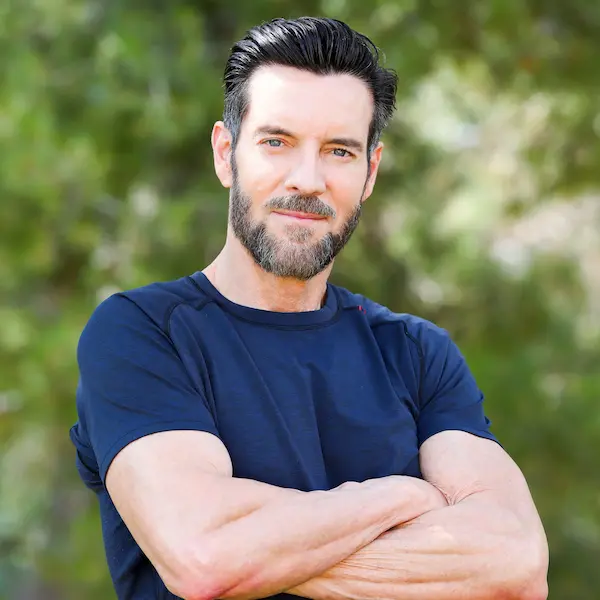
Creator of P90X | Founder of Power Nation Fitness & Power Life | Bestselling Author of Bring It! & The Big Picture | Fitness Icon & Active-Aging Expert

Future-of-Work Strategist & Author | Creator of "Onlyness" | Founder, The Intangible Labs | Former Apple & Autodesk Executive | Thinkers50-Ranked Thinker

Former Global Head of Digital Marketing, Nike, Revlon & Estée Lauder | Board Director, Edgewell & NovaBay | Co-Founder, Ani Energy | Investor


© 2026 Aurum Speakers Bureau. All Rights Reserved

| Basic Data Protection Information | |
|---|---|
| Data controller | AURUM SPEAKERS BUREAU S.L. |
| Address | Parc Audiovisual de Catalunya 1, Oficina S11, 08225 Terrassa, Spain |
| Purposes | We will use your data to respond to your requests and deliver our services to you. |
| Marketing | We will only send you marketing correspondence if you have given your prior consent, which you can do by ticking the box for that purpose. |
| Lawful basis | We will only process your data if you have given your prior consent, which you can do by ticking the box for that purpose. |
| Recipients | Generally, only our members of staff who have been duly authorised may access the data that you have provided. |
| Your Rights | You have the right to know what information we hold about you, to rectify it and to erase it, as explained in the additional information available on our website. |
| Additional Information | For more information, please see our "PRIVACY POLICY". |