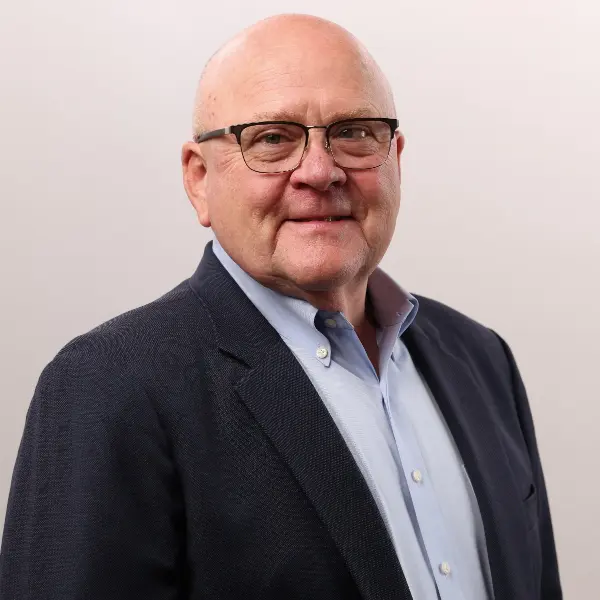
Garry Ridge
Former Chairman & CEO, WD-40 Company | Founder, The Learning Moment | Bestselling Author | Expert in Corporate Culture & Servant Leadership


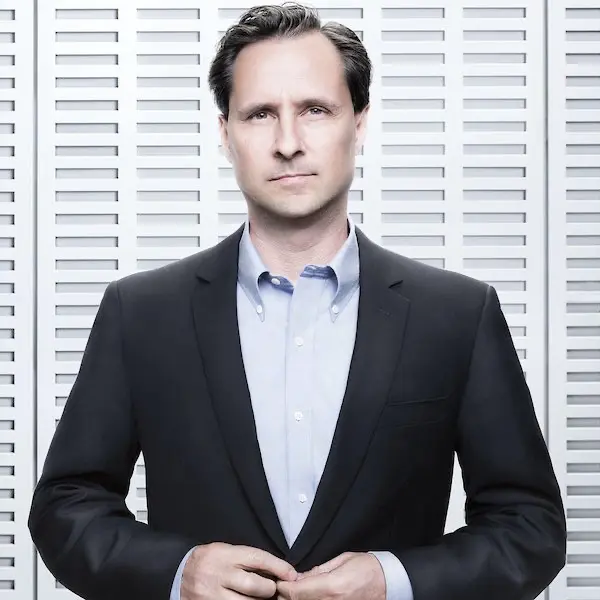
"Leader of the Bionic Age" — Time Magazine | MIT Professor & Co-Director, K. Lisa Yang Center for Bionics | Pioneer of Brain-Controlled Prosthetics | Princess of Asturias Award Laureate
Called the "Leader of the Bionic Age" by Time, MIT's Hugh Herr lost both legs at 17 and turned personal tragedy into a scientific revolution — inventing brain-controlled prosthetics that restore sensation and movement as part of the body itself. His talks fuse one of the most extraordinary personal stories on any stage with a concrete, near-term vision of human augmentation that permanently changes how audiences think about technology and human potential.
Want to book Hugh Herr as a speaker for your event? Please provide the info below and we’ll get in touch within 24h:
Hugh Herr is redefining what the human body can be. A professor of media arts and sciences at MIT, co-director of the K. Lisa Yang Center for Bionics at MIT, and head of MIT’s Biomechatronics research group, Herr is the world’s leading scientist in the field where human physiology meets electromechanics — building prosthetic limbs that don’t just replicate lost function but restore sensation, nervous-system control, and full embodiment. Time magazine dubbed him the “Leader of the Bionic Age,” and his work has since more than justified the title: over 200 peer-reviewed publications and patents chronicle a body of innovation that has fundamentally advanced how medicine, engineering, and neuroscience intersect.
Science speaker Hugh Herr’s story begins with personal catastrophe. At 17, he was one of the most gifted young rock climbers in the United States. In January 1982, a winter ascent of New Hampshire’s Mount Washington went wrong: caught in a blizzard for three days, Herr suffered severe frostbite and had both legs amputated below the knee. Rather than accepting the limitations of the prosthetics available to him, he began designing custom limbs that allowed him to climb again — often more effectively than before. That act of refusal became a lifelong scientific mission. He went on to earn a master’s degree from MIT and a doctorate in biophysics from Harvard, before returning to MIT to build the laboratory that would pioneer an entirely new scientific field.
Herr’s most transformative breakthrough is the Agonist-Antagonist Myoneural Interface (AMI) — a surgical procedure invented by his group that reconnects muscle pairs during amputation, preserving the nervous system’s ability to communicate with a prosthetic limb in real time. People who receive AMI surgery can control their prosthetic with thought and feel natural sensations from it, experiencing the limb as genuinely part of their body rather than a tool attached to it. In 2024, his team published landmark research in Science demonstrating that AMI patients walk faster and navigate obstacles more naturally than those with conventional prosthetics. His group has since extended the approach to above-the-knee amputees, developing a tissue-integrated bionic knee anchored to both bone and the nervous system — covered by the Boston Globe, The Economist, the Washington Post, and Smithsonian Magazine. Herr’s accolades include the Heinz Award for Technology, the Prince Salman Award for Disability Research, the Smithsonian American Ingenuity Award, and the 2016 Princess of Asturias Award for Technical and Scientific Research.
As a speaker, Hugh Herr delivers one of the most viscerally powerful experiences available on any stage today. He combines a deeply personal story of loss and reinvention with a vision of human augmentation so concrete and near-term that it transforms the way audiences think about technology, disability, resilience, and what it means to be human. His TED talks have reached tens of millions of viewers worldwide. Whether he is speaking to technology leaders, healthcare executives, innovation teams, or general audiences, Herr leaves the room with a permanently altered sense of what is possible — and what is coming.
Hugh Herr's signature keynote — the talk that has reached tens of millions through TED and made him one of the most sought-after science communicators in the world. Drawing on his own life story and the cutting-edge research of his MIT lab, he takes audiences from the moment he lost his legs at 17 to the present frontier of brain-controlled prosthetics, neural interfaces, and the science of restoring full embodiment after limb loss. This is not a talk about overcoming disability — it is a talk about redesigning the human body, and what that means for every field that technology touches.
A deep-dive keynote for technology, healthcare, and innovation audiences. Herr introduces his concept of NeuroEmbodied Design — a methodology for creating synthetic body parts that integrate seamlessly with the human nervous system — and walks through the science behind the AMI procedure, tissue-integrated prosthetics, optogenetic muscle control, and magnetomicrometry. This session shows how the convergence of neuroscience, robotics, AI, and materials science is approaching an inflection point where reconstructed limbs will match — and ultimately exceed — biological ones in function and sensation.
A keynote for leadership, innovation, and general audiences that uses Herr's extraordinary personal journey as the lens through which to explore how constraints drive breakthrough thinking. From designing custom climbing prosthetics as a teenager to publishing landmark papers in Science, Herr shows how radical innovation almost always begins with a refusal to accept the limitations that others take for granted. This talk challenges audiences to reframe the problems in their own organizations — asking not what is impossible, but what would need to be true for it to become possible.
As bionic technology advances rapidly in wealthy research institutions, a critical question emerges: who gets access? In this keynote, Herr addresses the work his lab is doing to bring prosthetic innovation to underserved communities — including mobile 3D-printing prosthetics programs in Sierra Leone — and opens a broader conversation about the ethical, societal, and policy frameworks needed to ensure that the bionic age benefits humanity equitably. Essential for audiences in global health, corporate social responsibility, policy, and the ethics of emerging technology.
Former Chairman & CEO, WD-40 Company | Founder, The Learning Moment | Bestselling Author | Expert in Corporate Culture & Servant Leadership
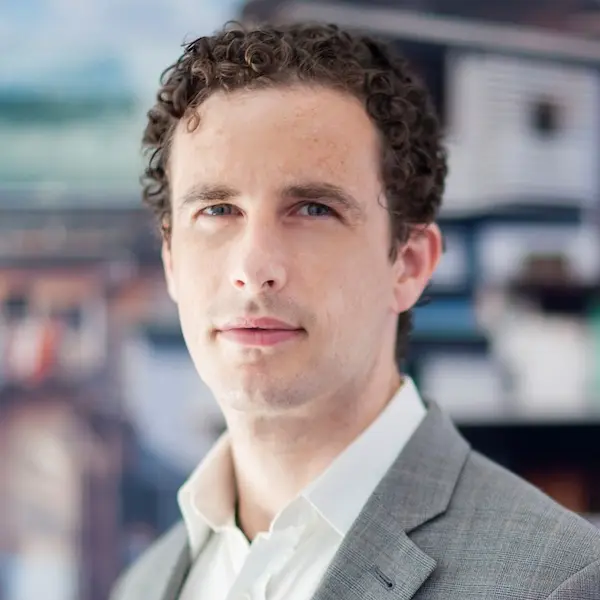
Founder of Microsoft Research's Plural Technology Collaboratory | Co-Author of Plurality & Radical Markets | Chair, Plurality Institute | Co-Founder, RadicalxChange

OBE & Architect of the Paris Agreement | Co-Founder, Global Optimism & The Climate Pledge | Bestselling Author | TED Speaker
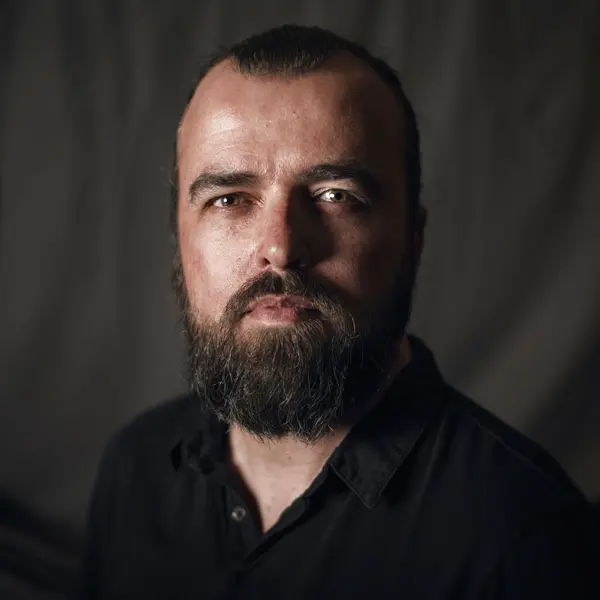
President of UnMarketing | NSA Hall of Fame Keynote Speaker | 5x Bestselling Author | Forbes Top 5 Social Media Influencer


© 2026 Aurum Speakers Bureau. All Rights Reserved

| Basic Data Protection Information | |
|---|---|
| Data controller | AURUM SPEAKERS BUREAU S.L. |
| Address | Parc Audiovisual de Catalunya 1, Oficina S11, 08225 Terrassa, Spain |
| Purposes | We will use your data to respond to your requests and deliver our services to you. |
| Marketing | We will only send you marketing correspondence if you have given your prior consent, which you can do by ticking the box for that purpose. |
| Lawful basis | We will only process your data if you have given your prior consent, which you can do by ticking the box for that purpose. |
| Recipients | Generally, only our members of staff who have been duly authorised may access the data that you have provided. |
| Your Rights | You have the right to know what information we hold about you, to rectify it and to erase it, as explained in the additional information available on our website. |
| Additional Information | For more information, please see our "PRIVACY POLICY". |