
Marc Raibert
Founder of Boston Dynamics | Executive Director, The AI Institute | Pioneer in Robotics & AI | IEEE Pioneer in Robotics | Member, National Academy of Engineering



World-Renowned Futurist & Humanist | CEO, The Futures Agency | Bestselling Author of Technology vs. Humanity | Filmmaker | Voice of "The Good Future"
Gerd Leonhard is one of the world's most influential futurists, named by Wired among Europe's 100 most influential people. A futurist and humanist, he has spent two decades helping leaders navigate AI, automation, and the megashifts reshaping society, always asking how technology can serve people rather than replace them. Author of the bestseller Technology vs. Humanity and creator of immersive cinematic keynotes, he gives audiences a clear, optimistic roadmap for building "The Good Future."
Want to book Gerd Leonhard as a speaker for your event? Please provide the info below and we’ll get in touch within 24h:
Futurist speaker Gerd Leonhard is one of the world’s most influential voices on the future of technology and humanity. A self-described futurist and humanist, he has spent more than two decades helping leaders understand where exponential change is taking us, and how to shape it for the better. Wired has named him one of the 100 most influential people in Europe, and his ideas reach audiences far beyond the stage through his books and films.
Based in Zürich, Leonhard is the CEO of The Futures Agency and has advised governments and global brands including Microsoft, Google, SAP, Accenture, Visa, Mastercard, Siemens, and the BBC. His central message is consistent and increasingly urgent: as artificial intelligence, automation, and other “megashifts” reshape society, we must invest as much in our humanity as we do in our technology. He argues that AI should augment people rather than replace them, and that the real goal is not efficiency for its own sake but human flourishing.
Much of Leonhard’s recent work centers on what he calls “The Good Future” and “Protopia,” a vision of step-by-step progress that avoids both naive techno-optimism and bleak dystopia. He is the author of five books, including the bestseller Technology vs. Humanity, published in more than a dozen languages, and a filmmaker whose docu-fiction work explores AI and the human future. His talks have evolved into immersive, cinematic “Super-Keynote” experiences, using ultra-wide visuals and animation to make complex ideas vivid. He is a Fellow of the Royal Society of Arts in London and a visiting professor at Fundação Dom Cabral in Brazil.
As a speaker, Gerd Leonhard has presented to more than 3.5 million people across over 70 countries, blending hard-hitting foresight with humor, humanity, and genuine optimism. He challenges senior audiences to think beyond the hype, confront the ethical stakes of emerging technology, and take an active role in authoring a future built around people, planet, purpose, and prosperity.
The era of "transform or die" digital hype is fading, and a more important question is taking its place: how do we keep technology human? Gerd Leonhard argues that once the IT upgrades are done, real advantage comes from meaning, experience, and trust. He shows why organizations must invest as much in humanity as in technology, and why putting people at the center of everything is the surest path to lasting relevance.
Digitization, automation, datafication, virtualization, robotization, and the other forces Gerd Leonhard calls the "Megashifts" are remaking every industry at once. In this fast-moving, eye-opening session, he maps the trends fueled by AI, the Internet of Things, and new human-machine interfaces, flags the likely pitfalls, and pinpoints the opportunities, giving leaders a practical guide to becoming a future-ready organization.
AI is the most hyped and most misunderstood technology of our time. Cutting through the noise, Gerd Leonhard distinguishes between intelligent assistance, AI, and artificial general intelligence, and explains what each really means for business and society over the next several years. He makes the case that AI should augment human capability, not erode it, and explores the ethics, risks, and opportunities that will define how it is used.
With climate change, geopolitical upheaval, and the rise of AI converging at once, the future can feel overwhelming. In this immersive keynote, Gerd Leonhard offers an alternative to both doom and blind optimism: "Protopia," a vision of step-by-step progress guided by human agency and shared purpose. He lays out his foresights for the coming years and a hopeful, actionable path toward a future built around people, planet, purpose, and prosperity.
Automation is everywhere, already: from electronic bridge-tolls to connected cars with dash-cams and selfparking capabilities, to digital wallets and mobile payment platforms, to networked medical devices and quantified-self applications, to sensor networks for traffic control and robotic nurses for the elderly – and this is only the beginning. The next 5 years will bring rapid advancements in all areas of AI, robotics and the Internet of Things, and almost all of them will bring more automation to every sector of our society (and I am sure this will not always be a good thing, either). I believe that in the near future we need to focus on human-only jobs and non-routine tasks that only humans can undertake, focusing on creativity, design, tacit pattern recognition, negotiation and other ‘soft skills’, on right-brain capabilities or on emotional context (EQ).
However, unemployment is very likely to soar, regardless, as ever smarter and cheaper machines increasingly automate all routines. So will we see the rise of a minimum guaranteed income (i.e. get paid without working) in some developed countries such as Switzerland? The very concept of work and ‘earning a living’ will need to be reimagined, and soon. The end of routine is not the end of human work!
Successful businesses always maintain a constant conversation about the future: what lessons need to be operationalized today in order to avoid future irrelevance or worse, extinction? For one thing, it is essential to understand that everything that can be digitized, automated or virtualised, will be. Cognification, automation, disintermediation and robotization and 7 other Megashifts are now taking place across all industries, globally, not just in B2C sectors like media, content and marketing. Digital transformation – going from an industrial society to a digitally-native world – is certain to be the #1 challenge-opportunity in the next 5-7 years.
How can people and their organisations become better at understanding the new challenges and opportunities, and move faster to develop the mindset and implement the transformations that are required? How will a company prosper in a world that is quickly becoming hyper-connected and interdependent? What skills and mindsets will we need, and what should remain human even if it is inefficient?
AI has become a global buzz-phrase that hogs our attention everywhere – yet the very idea of AI is being frequently misinterpreted, misunderstood and misrepresented. Hopefully this presentation can clear up this confusion! From a nonacademic perspective I explain the differences between what I call IA (intelligent assistance), AI and AGI (artificial general intelligence), and what each of them could mean for our near-future.
I depict what is real and what’s not so real (yet), and where things are going in the next 5-7 years. Examples are usually drawn specifically from a client’s domain or industry.
This talk also includes some elements from the Technology vs. Humanity talk, as outlined above, and often addresses the impact of AI on work, education and jobs, as well.
Founder of Boston Dynamics | Executive Director, The AI Institute | Pioneer in Robotics & AI | IEEE Pioneer in Robotics | Member, National Academy of Engineering

43rd Treasurer of the U.S. | Chair of America 250 Commission | CEO of Red River Associates | Board Member at Ripple Labs & American Family Insurance
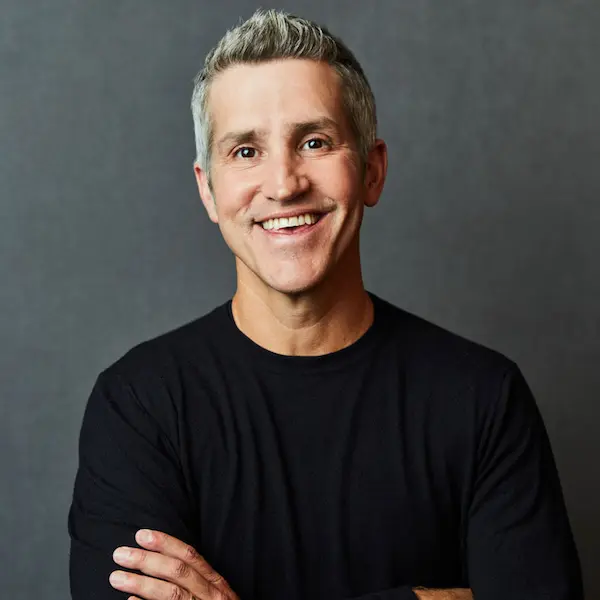
New York Times Bestselling Author of Soundtracks, Finish & Procrastination Proof | One of Inc.'s Top 100 Leadership Speakers | Host of the All It Takes Is a Goal Podcast
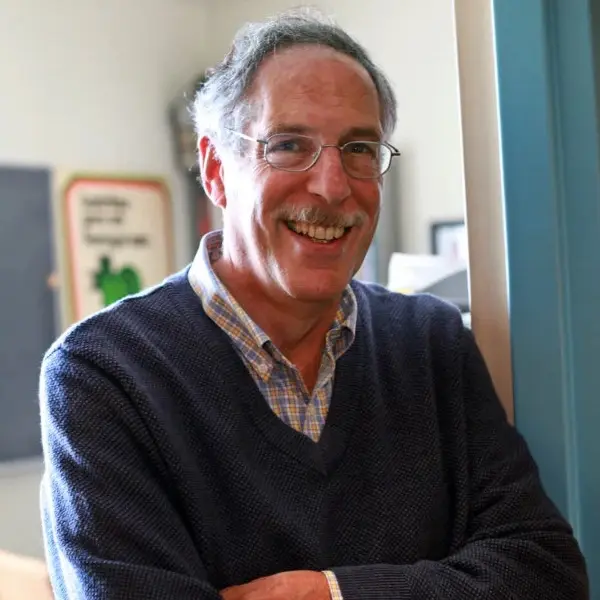
2010 Nobel Laureate in Economics | Institute Professor Emeritus, MIT | Architect of Social Security Reform | Taxation & Labor Market Expert


© 2026 Aurum Speakers Bureau. All Rights Reserved

| Basic Data Protection Information | |
|---|---|
| Data controller | AURUM SPEAKERS BUREAU S.L. |
| Address | Parc Audiovisual de Catalunya 1, Oficina S11, 08225 Terrassa, Spain |
| Purposes | We will use your data to respond to your requests and deliver our services to you. |
| Marketing | We will only send you marketing correspondence if you have given your prior consent, which you can do by ticking the box for that purpose. |
| Lawful basis | We will only process your data if you have given your prior consent, which you can do by ticking the box for that purpose. |
| Recipients | Generally, only our members of staff who have been duly authorised may access the data that you have provided. |
| Your Rights | You have the right to know what information we hold about you, to rectify it and to erase it, as explained in the additional information available on our website. |
| Additional Information | For more information, please see our "PRIVACY POLICY". |