
Jacques Villeneuve
1997 Formula 1 World Champion | 1995 Indianapolis 500 Winner & IndyCar Champion | Motorsport Analyst | Multilingual Elite Performance Speaker

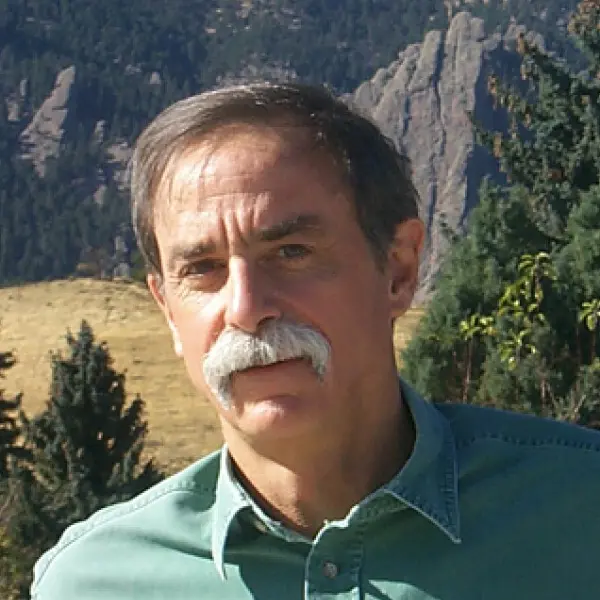
2012 Nobel Laureate in Physics | Pioneer of Trapped-Ion Quantum Computing | Philip H. Knight Research Chair, University of Oregon | U.S. National Medal of Science
David Wineland built the experimental foundations of quantum computing: he performed the world's first quantum logic gate, invented laser cooling of trapped ions, and developed atomic clocks precise enough to detect Einstein's relativity in real time. A 2012 Nobel Laureate and Knight Research Chair at the University of Oregon, he gives audiences an unmatched first-principles view of where the quantum revolution came from and where it is heading.
Want to book David Wineland as a speaker for your event? Please provide the info below and we’ll get in touch within 24h:
David Wineland is a 2012 Nobel Laureate in Physics and one of the founding architects of quantum computing. An American physicist, keynote speaker David Wineland spent four decades at the National Institute of Standards and Technology producing a series of firsts that still define the field. Born in Wisconsin and educated at UC Berkeley and Harvard, he completed his doctorate in 1970 under Nobel laureate Norman Ramsey and went on to postdoctoral research with Hans Dehmelt, himself a future Nobel Prize winner, at the University of Washington. The intellectual lineage is as distinguished as the work it produced.
Science speaker David Wineland is best known for pioneering the laser cooling of trapped ions, a technique he first demonstrated in 1978 that uses precisely tuned laser light to slow ions to near absolute zero and gave him the extraordinary quantum control his later breakthroughs required. In 1995, his team at NIST performed the first quantum logic gate using two trapped ions, one of the earliest working demonstrations of quantum computing. He later developed quantum logic spectroscopy, used to build atomic clocks of unprecedented precision, accurate enough to detect the time dilation predicted by Einstein’s relativity across a height difference of just 33 centimeters. In 2004, his group became the first to quantum teleport information between massive particles.
These achievements form the experimental scaffolding on which the modern quantum computing industry now rests. The Nobel Committee recognized as much when it awarded Wineland and Serge Haroche the 2012 Physics Prize for experimental methods that enable the measurement and manipulation of individual quantum systems, work the committee described as opening the door to a new era of experimentation.
Beyond the Nobel Prize, Wineland’s honors include the U.S. National Medal of Science, presented by President George W. Bush, the Frederic Ives Medal from the Optical Society of America, and election to the National Academy of Sciences. After more than four decades at NIST in Boulder, Colorado, he joined the University of Oregon in 2018 as the Philip H. Knight Distinguished Research Chair and Research Professor of Physics, where he remains active in trapped-ion research while keeping ties to NIST and an adjoint appointment at the University of Colorado Boulder.
As a speaker, David Wineland offers audiences a rare combination of historical authority and practical clarity on quantum computing. He speaks on the science behind quantum information processing, the role of atomic clocks in modern technology and navigation, the long arc from curiosity-driven research to commercial quantum hardware, and the patience and experimental culture that foundational breakthroughs demand. His talks resonate with technology leaders, scientists, investors, and policymakers who want a grounded, first-principles perspective on the quantum revolution from one of the people most responsible for making it possible.
Wineland walks audiences through the experimental journey behind the first quantum logic gate in 1995, from the physics of ion traps and laser cooling to the moment his team showed that quantum bits could perform logical operations. The talk builds a clear, accessible foundation for understanding what quantum computers really are, why they are so hard to build, and why trapped ions remain one of the most promising hardware architectures in the field today.
An exploration of how Wineland's work on quantum logic spectroscopy produced atomic clocks able to detect time dilation at walking speed and gravitational shifts across a few centimeters, and what that precision means for GPS, telecommunications, financial systems, and fundamental physics. The session is especially valuable for audiences in technology infrastructure, defense, and precision engineering who want to see how quantum measurement is already reshaping the world.
A long-view perspective on how quantum computing grew from isolated university experiments in the 1970s and 80s into a global technology contest that now draws in the world's largest companies and national governments. Wineland examines what the field got right, what took longer than anyone expected, and what the history of experimental physics offers organizations trying to commercialize deep science.
A reflective talk on the culture, mindset, and institutional conditions that make foundational breakthroughs possible, drawing on Wineland's four decades at NIST, his doctoral training under Nobel laureates, and the iterative experimental work behind every milestone. The session resonates with R&D leaders, research university audiences, and executives weighing long-horizon innovation strategy.
1997 Formula 1 World Champion | 1995 Indianapolis 500 Winner & IndyCar Champion | Motorsport Analyst | Multilingual Elite Performance Speaker
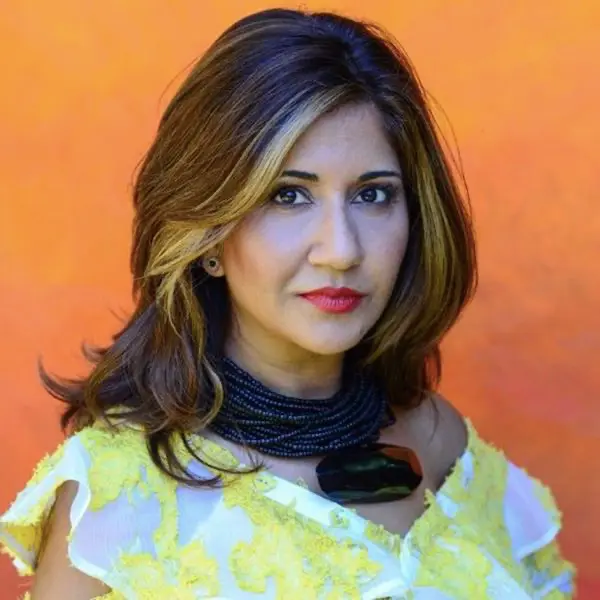
Future-of-Work Strategist & Author | Creator of "Onlyness" | Founder, The Intangible Labs | Former Apple & Autodesk Executive | Thinkers50-Ranked Thinker
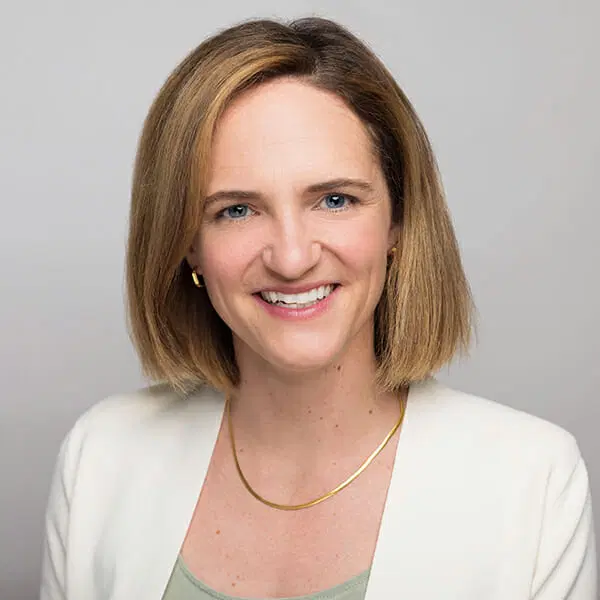
Award-Winning Harvard Professor of Management | Expert on Teaming, Psychological Safety & Collaboration | Creator of the '4 Ups' Model | Thinkers50 Radar
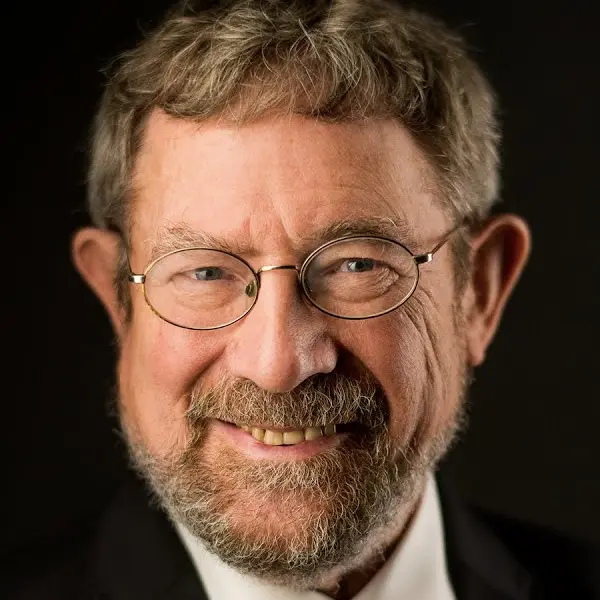
2016 Nobel Laureate in Physics | Royal Society Fellow | Harrison E. Farnsworth Professor, Brown University | Topological Phase Transitions


© 2026 Aurum Speakers Bureau. All Rights Reserved

| Basic Data Protection Information | |
|---|---|
| Data controller | AURUM SPEAKERS BUREAU S.L. |
| Address | Parc Audiovisual de Catalunya 1, Oficina S11, 08225 Terrassa, Spain |
| Purposes | We will use your data to respond to your requests and deliver our services to you. |
| Marketing | We will only send you marketing correspondence if you have given your prior consent, which you can do by ticking the box for that purpose. |
| Lawful basis | We will only process your data if you have given your prior consent, which you can do by ticking the box for that purpose. |
| Recipients | Generally, only our members of staff who have been duly authorised may access the data that you have provided. |
| Your Rights | You have the right to know what information we hold about you, to rectify it and to erase it, as explained in the additional information available on our website. |
| Additional Information | For more information, please see our "PRIVACY POLICY". |