
John Grotzinger
Harold Brown Professor of Geology, Caltech | Chief Scientist, NASA Curiosity Rover | Member, National Academy of Sciences



Security Technologist & Cryptographer | Lecturer, Harvard Kennedy School | Fellow, Berkman Klein Center | Author of 15 Books
Bruce Schneier is the world's most widely read security technologist — the thinker who coined "security theater," redefined how we understand digital trust, and has spent 30 years translating cryptography and cyber risk into language that policymakers, executives, and the public can act on. Harvard Kennedy School lecturer, EFF board member, and author of 15 books including the recent Rewiring Democracy.
Want to book Bruce Schneier as a speaker for your event? Please provide the info below and we’ll get in touch within 24h:
Bruce Schneier is the most widely read and cited security technologist in the world — a cryptographer, author, and public-interest advocate whose work has shaped how governments, corporations, and individuals think about digital risk for more than three decades. Called a “security guru” by The Economist, he has an intellectual range that spans the technical foundations of cryptography, the psychology of risk perception, the political economy of surveillance, and the governance of artificial intelligence. Few thinkers have moved as fluidly between the technical and the political, or brought the same depth to both.
Cybersecurity speaker Bruce Schneier came to prominence with Applied Cryptography (1994), a landmark text that became the definitive reference for an entire generation of security engineers and launched him as one of the field’s foremost voices. He followed it with a body of work — 15 books in total — that progressively broadened his focus from technical systems to the human and institutional dimensions of security. Titles including Secrets and Lies, Beyond Fear, Data and Goliath, and Click Here to Kill Everybody brought rigorous security thinking to audiences far beyond the technical community, earning him a reputation as the field’s most effective public communicator. His newsletter Crypto-Gram and blog Schneier on Security collectively reach over 250,000 readers — a readership that spans government agencies, Fortune 500 security teams, academics, and policymakers worldwide.
Schneier is a Lecturer in Public Policy at the Harvard Kennedy School, a Fellow at the Berkman Klein Center for Internet and Society, and a board member of the Electronic Frontier Foundation, Access Now, and The Tor Project. He has testified before the U.S. Congress, served on government advisory committees, and is one of the most frequently quoted security experts in the American press. His most recent book, Rewiring Democracy: How AI Will Transform Our Politics, Government, and Citizenship (MIT Press, 2025), co-authored with data scientist Nathan Sanders, examines how artificial intelligence is reshaping every layer of democratic governance — from legislation and regulation to litigation and elections — and what must be done to ensure it distributes rather than concentrates power.
As a speaker, Bruce Schneier is in a category of his own: a technical authority who can hold a room of senior executives, government officials, or security professionals with equal command. His keynotes are known for intellectual rigor delivered without jargon — he coined the term “security theater” precisely because he understands that most audiences need honest clarity, not false reassurance. Boards and leadership teams leave his sessions with a clearer, more honest picture of the threat landscape, the limits of technical solutions, and the policy and organizational choices that actually determine security outcomes.
AI is changing the threat landscape in ways that most organizations have barely begun to absorb — not just by enabling more sophisticated attacks, but by reshaping who controls data, systems, and institutions. Drawing on his latest research in Rewiring Democracy and decades of security practice, Schneier maps the genuine risks from the overhyped ones, explains where AI creates structural vulnerabilities in critical systems, and helps senior audiences make smarter decisions about where to invest, what to trust, and what to demand from technology vendors and governments.
Most security spending is theater — visible, expensive, and largely ineffective against the threats that actually matter. Schneier draws on 30 years of security analysis to dismantle the most common organizational security myths, explain how incentives distort decision-making at every level, and make the case for a more honest, trade-off-aware approach to risk. Audiences leave with a clearer understanding of what "good security" actually looks like, and what questions every leader should be asking their security teams.
The internet was not designed with privacy in mind, and the surveillance economy that emerged from it has created asymmetries of power that affect everyone — individuals, corporations, and governments alike. Schneier examines how data collection became the dominant business model of the digital age, what it means for civil liberties and competitive dynamics, and what responsible data governance looks like in an era where AI makes that data exponentially more powerful.
Based on his MIT Press book co-authored with data scientist Nathan Sanders, this keynote examines AI's far-reaching impact on democratic institutions — how it will reshape legislation, regulation, courts, elections, and the balance of power between governments and corporations. This is not a talk about deepfakes and disinformation alone; it is a rigorous, wide-ranging analysis of what it means when the most powerful general-purpose technology in history meets the systems through which societies govern themselves.
Election security, encryption policy, AI governance, critical infrastructure, and algorithmic fairness are now at the heart of public policy. Yet technologists are still under-represented where these decisions are made. Bruce Schneier argues for a new cadre of 'public-interest technologists' — people from the security and technology fields embedded inside government, NGOs, universities, media, and enterprises. He outlines the current state of this movement and a path for leaders who want to shape — not just react to — the rules governing the digital world.
Harold Brown Professor of Geology, Caltech | Chief Scientist, NASA Curiosity Rover | Member, National Academy of Sciences
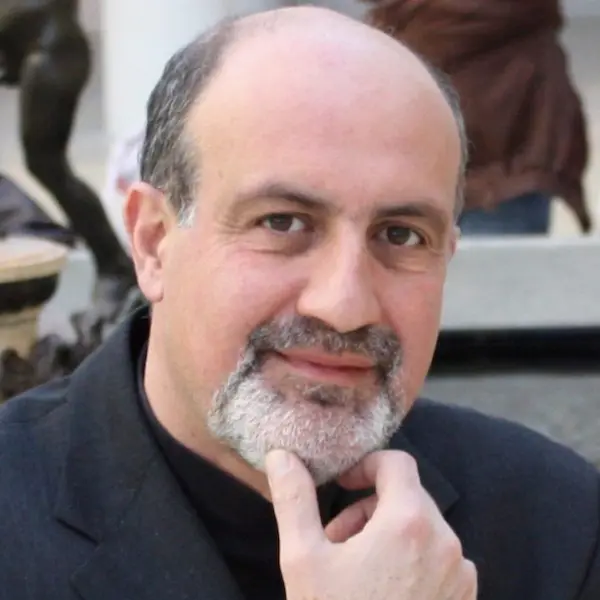
Author, the Incerto (The Black Swan, Fooled by Randomness, Antifragile, and Skin in the Game)

Nigerian-American Actress, Writer & Producer | Star of American Gods, This Is Us & Star Trek: Strange New Worlds | Executive Producer & Star of Queen Nzinga (Starz)
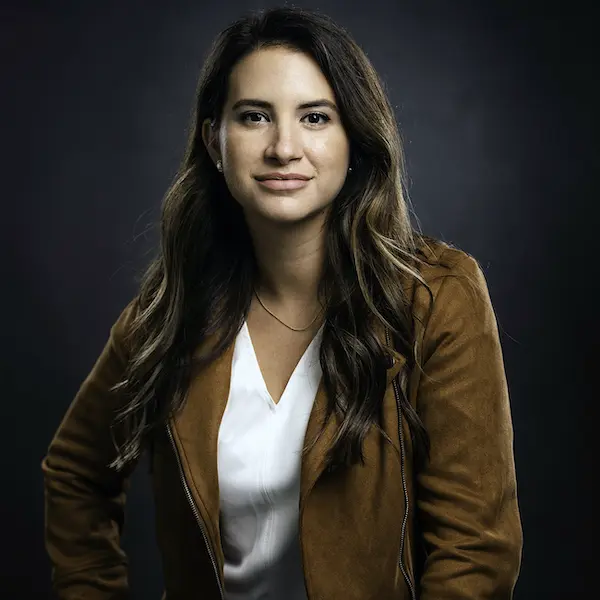
One of TIME's 100 Most Influential People in AI | Former Global Head of ML for Startups & VC at AWS | Most-Followed Voice on AI in Business | CEO of Open Machine


© 2026 Aurum Speakers Bureau. All Rights Reserved

| Basic Data Protection Information | |
|---|---|
| Data controller | AURUM SPEAKERS BUREAU S.L. |
| Address | Parc Audiovisual de Catalunya 1, Oficina S11, 08225 Terrassa, Spain |
| Purposes | We will use your data to respond to your requests and deliver our services to you. |
| Marketing | We will only send you marketing correspondence if you have given your prior consent, which you can do by ticking the box for that purpose. |
| Lawful basis | We will only process your data if you have given your prior consent, which you can do by ticking the box for that purpose. |
| Recipients | Generally, only our members of staff who have been duly authorised may access the data that you have provided. |
| Your Rights | You have the right to know what information we hold about you, to rectify it and to erase it, as explained in the additional information available on our website. |
| Additional Information | For more information, please see our "PRIVACY POLICY". |