
Kevin Lin
Co-Founder & Former COO of Twitch | Co-Founder & CEO of Metatheory | Founding GP, Lifelike Capital | Angel Investor Turned Venture Capitalist & Game Builder


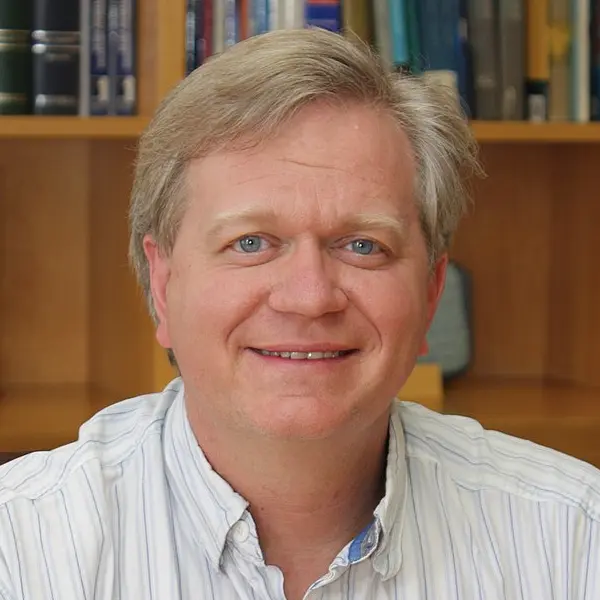
2011 Nobel Laureate in Physics | Distinguished Professor, ANU | Discoverer of Dark Energy | Vice Chair, Giant Magellan Telescope Board
Brian Schmidt is one of the few people alive who has fundamentally changed our understanding of the universe. Co-discoverer of dark energy and 2011 Nobel Laureate in Physics, he bridges frontier science and real-world leadership, drawing on years as ANU vice-chancellor and now vice chair of the Giant Magellan Telescope board. Audiences gain rare perspective on uncertainty, discovery, and the evidence-based thinking that shapes the future.
Want to book Brian Schmidt as a speaker for your event? Please provide the info below and we’ll get in touch within 24h:
Brian Schmidt is a Nobel Prize-winning astrophysicist whose research permanently changed humanity’s understanding of the cosmos. A Distinguished Professor at the Australian National University’s (ANU) Mount Stromlo Observatory and Research School of Astronomy and Astrophysics, keynote speaker Brian Schmidt is best known for leading the High-Z Supernova Search Team, the international collaboration whose landmark 1998 findings revealed that the expansion of the universe is not slowing down but accelerating. By analyzing the brightness and redshift of distant Type Ia supernovae, the team inferred the existence of dark energy, a repulsive force that accounts for roughly 70% of the mass-energy content of the universe and one of the most consequential scientific findings of the twentieth century.
Schmidt earned bachelor’s degrees in physics and astronomy from the University of Arizona and completed his master’s and PhD in astronomy at Harvard University in 1993. He formed the High-Z Supernova Search Team in 1994 alongside Nicholas Suntzeff and led the group from Australia to its Nobel-winning result. His research has ranged across supernovae, gamma-ray bursts, exoplanets, gravitational-wave transients, and metal-poor stars, and he led the SkyMapper project, Australia’s first dedicated sky-survey telescope, through 2015.
For the accelerating-universe discovery, Nobel Prize speaker Brian Schmidt shared the 2011 Nobel Prize in Physics with Adam Riess and Saul Perlmutter. His wider recognition includes the Shaw Prize in Astronomy, the Gruber Prize in Cosmology, the Breakthrough Prize in Fundamental Physics, and a Companion of the Order of Australia. He is a Fellow of the Royal Society, the Australian Academy of Science, the U.S. National Academy of Sciences, and the Spanish Royal Academy of Sciences.
Schmidt served as the twelfth Vice-Chancellor and President of ANU from 2016 to 2023, where he championed research investment and science-policy reform before returning to teaching and research. He was elected Vice Chair of the Board of Directors of the Giant Magellan Telescope, the US$2.6 billion next-generation observatory under construction in Chile and expected to begin operations in the early 2030s. He also sits on Australia’s Prime Minister’s National Science and Technology Council and is a prominent public voice on science communication, climate change, and evidence-based policy.
As a speaker, Brian Schmidt brings the rare authority of a scientist who made a discovery that rewrote the textbooks, and who has spent decades translating frontier science into terms that matter for business, policy, and society. His keynotes cover dark energy, cosmology, and the nature of scientific discovery alongside broader themes: navigating risk and uncertainty, evidence-based decision-making, building institutional trust in science, and the global competition for research leadership. Senior audiences leave with a fresh sense of what humanity can achieve when curiosity and rigor combine, and what it takes to lead through complexity at a civilizational scale.
Schmidt recounts one of the most stunning moments in modern science, when his team's data showed the universe was not slowing down but speeding up. Beyond cosmology, this keynote is a masterclass in handling unexpected results, challenging prevailing assumptions, and building the courage to follow where evidence leads. Essential for leaders who must navigate uncertainty and decide when the data defies expectations.
As misinformation spreads and trust in institutions erodes, the scientific community faces a communication crisis as serious as any in its history. Drawing on his experience as a Nobel Laureate and former university vice-chancellor, Schmidt explores how scientists, leaders, and institutions can rebuild credibility, communicate risk honestly, and make the case for evidence-based thinking in a polarized world.
From the US$2.6 billion Giant Magellan Telescope to the Square Kilometre Array, the world's most ambitious scientific infrastructure projects are also statements about which nations and institutions intend to lead the future. Schmidt takes audiences inside the race for cosmological discovery and draws out what it means for innovation strategy, international collaboration, and the long-term investment in knowledge that separates leading nations from lagging ones.
Astrophysics is a discipline defined by incomplete information, vast timescales, and the constant possibility of being profoundly wrong. In this keynote, Schmidt translates the cognitive tools of frontier science, how to quantify uncertainty, when to trust a model and when to abandon it, into a practical framework for executive decision-making in volatile, fast-changing environments.
Co-Founder & Former COO of Twitch | Co-Founder & CEO of Metatheory | Founding GP, Lifelike Capital | Angel Investor Turned Venture Capitalist & Game Builder
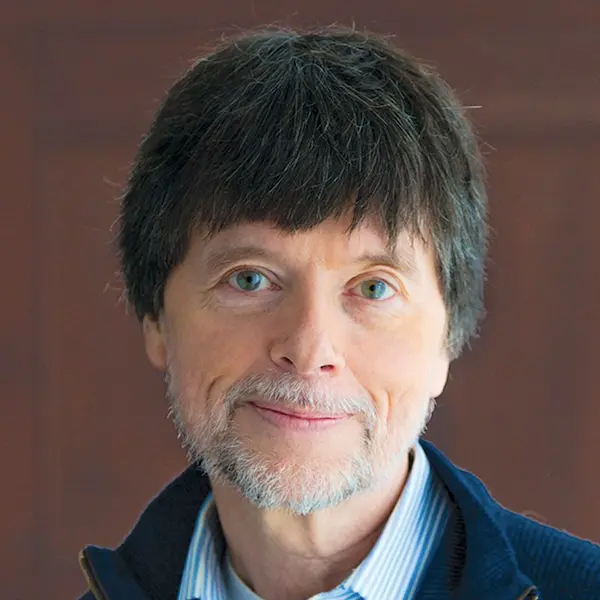
Legendary Documentary Filmmaker | Creator of The Civil War, The Vietnam War & The American Revolution | Multiple Emmy & Grammy Winner | Master of Storytelling

5x FIFA World Cup Captain | FC Barcelona Champions League & La Liga Winner | Next Head Coach of the Mexico National Team | Leadership & Teamwork

3x Olympic Gold Medalist & 5x Olympian | Beach Volleyball GOAT | Co-Founder, p1440 | MLV Franchise Owner | NCAA Champion, Stanford


© 2026 Aurum Speakers Bureau. All Rights Reserved

| Basic Data Protection Information | |
|---|---|
| Data controller | AURUM SPEAKERS BUREAU S.L. |
| Address | Parc Audiovisual de Catalunya 1, Oficina S11, 08225 Terrassa, Spain |
| Purposes | We will use your data to respond to your requests and deliver our services to you. |
| Marketing | We will only send you marketing correspondence if you have given your prior consent, which you can do by ticking the box for that purpose. |
| Lawful basis | We will only process your data if you have given your prior consent, which you can do by ticking the box for that purpose. |
| Recipients | Generally, only our members of staff who have been duly authorised may access the data that you have provided. |
| Your Rights | You have the right to know what information we hold about you, to rectify it and to erase it, as explained in the additional information available on our website. |
| Additional Information | For more information, please see our "PRIVACY POLICY". |