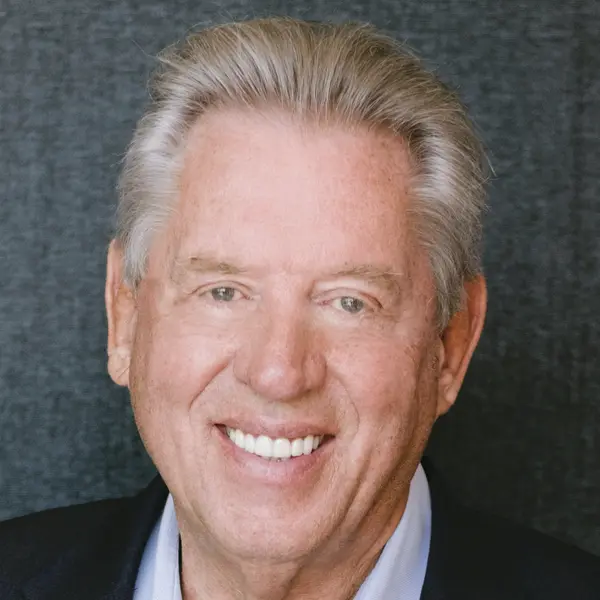
John Maxwell
World's Most Influential Leadership Expert | #1 NYT Bestselling Author, 35M+ Books Sold | Founder, Maxwell Leadership® | NSA Hall of Fame & Toastmasters Golden Gavel


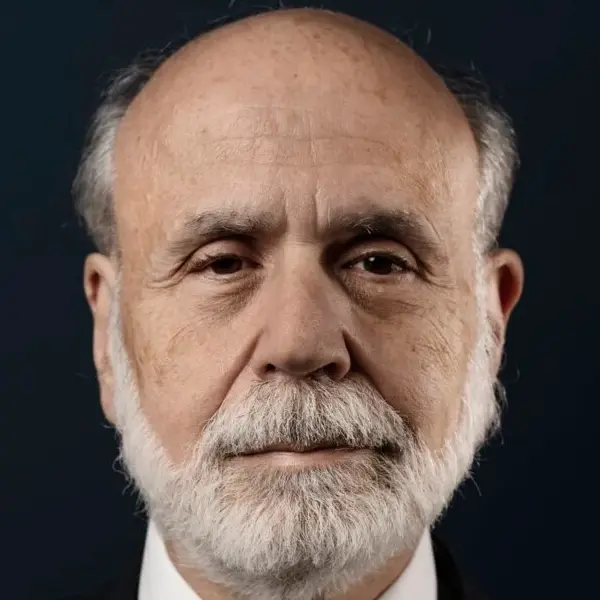
2022 Nobel Laureate in Economic Sciences | Former Chairman, U.S. Federal Reserve | Distinguished Senior Fellow, Brookings Institution
Few economists have shaped both theory and history as profoundly as Ben Bernanke. As Federal Reserve Chairman during the 2008 financial crisis, he deployed unprecedented tools to prevent a second Great Depression, drawing on Nobel Prize-winning research into how bank failures destroy economies. Audiences gain a firsthand framework for understanding financial crises, monetary policy, and institutional resilience under extreme pressure.
Want to book Ben Bernanke as a speaker for your event? Please provide the info below and we’ll get in touch within 24h:
Nobel economist speaker Ben Bernanke is one of the most consequential economic policymakers of the modern era, a scholar who not only explained financial crises in theory but managed one of the worst in history from the most powerful central banking seat in the world. He is a 2022 Nobel Laureate in Economic Sciences and a Distinguished Senior Fellow at the Brookings Institution, where he continues to study monetary policy, financial stability, and the long-term challenges facing central banks.
Bernanke is best known for his eight-year tenure as Chairman of the U.S. Federal Reserve, from 2006 to 2014, a period that encompassed the worst financial crisis since the Great Depression. When the collapse of the U.S. housing market in 2007 threatened to bring down the global financial system, he deployed an unprecedented toolkit: emergency lending facilities, quantitative easing, near-zero interest rates, and direct liquidity injections into frozen credit markets. His actions, widely credited with averting a second Great Depression, drew on decades of academic research into how banking crises propagate, research that would later earn him the Nobel Prize.
Before entering public service, Bernanke built one of the most distinguished academic careers in modern economics. He graduated summa cum laude from Harvard University and earned his Ph.D. from MIT, before joining the faculty at Stanford and later Princeton, where he chaired the Department of Economics. His landmark 1983 paper on the nonmonetary effects of the financial crisis was the first to show rigorously that bank failures during the Great Depression did not merely reflect economic deterioration but actively caused it, by destroying the information capital and credit channels through which businesses access financing. That insight, complementary to the Diamond-Dybvig model, transformed how economists understand financial contagion.
Bernanke received the 2022 Sveriges Riksbank Prize in Economic Sciences jointly with Douglas Diamond and Philip Dybvig for research on banks and financial crises. He also chaired the President’s Council of Economic Advisers, has held fellowships from the Guggenheim and Sloan Foundations, and was named Time magazine’s Person of the Year in 2009. His books include the New York Times bestselling memoir The Courage to Act and 21st Century Monetary Policy: The Federal Reserve from the Great Inflation to COVID-19. His scholarship remains active: recent work revisits credit and debt-deflation in the Great Depression and, with Olivier Blanchard, examines the causes of pandemic-era inflation. He was also appointed to the Long-Term Benefit Trust of the AI company Anthropic, extending his influence into the governance of emerging technology.
As a speaker, Ben Bernanke brings an authority no purely academic economist can match: the perspective of someone who made the decisions, under real pressure, that shaped the global economy for a generation. His keynotes address the mechanics of financial crises, the design of monetary policy, the lessons of the 2008 collapse, and the challenges central banks face today, from inflation and digital currencies to geopolitical risk and financial instability. Senior audiences gain not only historical insight but a rare, firsthand framework for understanding the forces that move markets, govern institutions, and define economic resilience.
Drawing on his experience steering the U.S. Federal Reserve through the 2008 global financial crisis, Bernanke explores what it means to make high-stakes decisions under uncertainty, with incomplete information and intense political pressure. This keynote examines the tools central banks use to respond to financial emergencies, the trade-offs that define crisis management, and the leadership principles that let institutions act decisively when the cost of inaction is catastrophic. An essential session for senior leaders who need to build organizations capable of withstanding systemic shocks.
Why do financial crises happen, and why do some spiral into full-scale economic catastrophes while others are contained? Bernanke draws on decades of research, from his Nobel Prize-winning work on the Great Depression to his frontline experience managing the worst downturn since, to trace the common anatomy of financial crises. He explores the role of credit markets, banking fragility, policy failures, and contagion dynamics, giving audiences a rigorous and practical framework for recognizing early warning signals and understanding the forces that can destabilize even the most sophisticated economies.
The Federal Reserve has undergone a fundamental transformation over the past several decades, from inflation fighter to crisis responder to pandemic stabilizer. In this forward-looking keynote, Bernanke charts the evolution of monetary policy, explains the unconventional tools that have become standard practice, and addresses the new challenges confronting central banks: persistent inflation, digital currencies, financial instability, and the limits of what monetary policy alone can achieve. Based on his book 21st Century Monetary Policy, this talk offers unparalleled insight into the institution that shapes the global economic environment.
Every major financial crisis carries lessons that, if absorbed, could have prevented the next one. Bernanke synthesizes the most durable insights from his research and career into a framework for building institutional resilience in banks, corporations, and governments alike. This keynote covers the structural vulnerabilities that make systems fragile, the regulatory and governance approaches that strengthen them, and the leadership culture required to act before a crisis becomes uncontrollable. Practical, evidence-based, and grounded in history, it is essential for boards and executives accountable for organizational stability.
World's Most Influential Leadership Expert | #1 NYT Bestselling Author, 35M+ Books Sold | Founder, Maxwell Leadership® | NSA Hall of Fame & Toastmasters Golden Gavel

Founder, Virgin Group | Entrepreneur Behind 400+ Companies in 8 Sectors | Philanthropist, Adventurer & Bestselling Author

2025 Princess of Asturias Laureate | Philosopher of the Digital Age | Professor, Berlin University of the Arts | Author of The Burnout Society
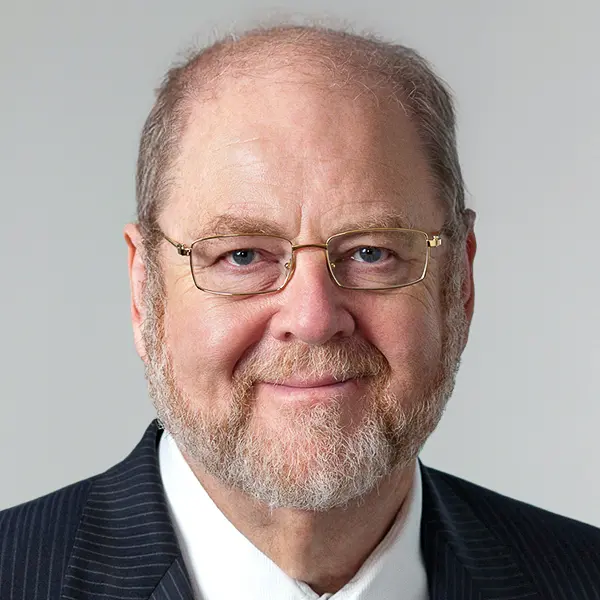
2013 Nobel Laureate in Physiology or Medicine | Sterling Professor of Cell Biology, Yale | Discoverer of the SNARE Vesicle Trafficking Machinery


© 2026 Aurum Speakers Bureau. All Rights Reserved

| Basic Data Protection Information | |
|---|---|
| Data controller | AURUM SPEAKERS BUREAU S.L. |
| Address | Parc Audiovisual de Catalunya 1, Oficina S11, 08225 Terrassa, Spain |
| Purposes | We will use your data to respond to your requests and deliver our services to you. |
| Marketing | We will only send you marketing correspondence if you have given your prior consent, which you can do by ticking the box for that purpose. |
| Lawful basis | We will only process your data if you have given your prior consent, which you can do by ticking the box for that purpose. |
| Recipients | Generally, only our members of staff who have been duly authorised may access the data that you have provided. |
| Your Rights | You have the right to know what information we hold about you, to rectify it and to erase it, as explained in the additional information available on our website. |
| Additional Information | For more information, please see our "PRIVACY POLICY". |