
Adam Savage
MythBusters Co-Host & Executive Producer | NYT Bestselling Author | Board Member, Smithsonian Air & Space Museum | Innovation & Creativity

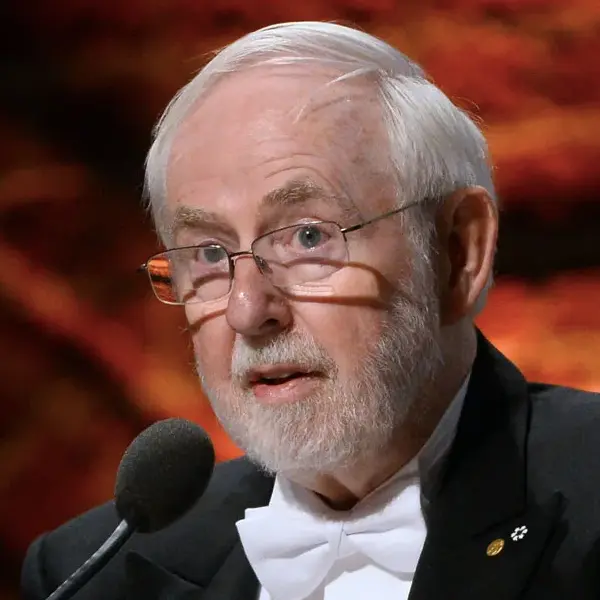
2015 Nobel Laureate in Physics | Discoverer of Neutrino Mass | Gray Chair in Particle Astrophysics, Queen's University | Founder, McDonald Institute
Arthur B. McDonald solved one of the deepest puzzles in modern physics, proving that neutrinos have mass and rewriting the Standard Model, work that earned him the 2015 Nobel Prize. As director of the Sudbury Neutrino Observatory, he led one of science's most ambitious experiments, two kilometers underground. On stage, he turns frontier science into a compelling case for curiosity, collaboration, and the long-term investment behind real breakthroughs.
Want to book Arthur McDonald as a speaker for your event? Please provide the info below and we’ll get in touch within 24h:
Nobel Prize speaker Arthur McDonald is a Canadian astrophysicist and 2015 Nobel Laureate in Physics whose landmark discovery rewrote the fundamental laws of particle physics. Born in Sydney, Nova Scotia, he earned his B.Sc. and M.Sc. in physics from Dalhousie University before completing his Ph.D. at the California Institute of Technology in 1969 under Nobel Laureate William Fowler. He spent more than a decade at AECL Chalk River Nuclear Laboratories, joined Princeton University as a professor in 1982, and moved to Queen’s University in 1989, where he became Professor Emeritus and holds the Gordon and Patricia Gray Chair in Particle Astrophysics.
McDonald is best known for leading the Sudbury Neutrino Observatory (SNO) Collaboration, one of the most ambitious physics experiments ever built. Constructed 2,100 meters underground in a mine near Sudbury, Ontario, and using 1,000 tonnes of heavy water, the SNO detector solved a long-standing scientific puzzle known as the Solar Neutrino Problem. By measuring both the total number of neutrinos arriving from the sun and the subset that kept their original electron-neutrino identity, McDonald and his team proved that neutrinos oscillate between types and therefore have mass. The result overturned a core assumption of the Standard Model and reshaped how physicists understand the building blocks of the universe.
The 2015 Nobel Prize in Physics was awarded jointly to McDonald and Japanese physicist Takaaki Kajita “for the discovery of neutrino oscillations, which shows that neutrinos have mass.” His work has also been recognized with the Breakthrough Prize in Fundamental Physics, the Gerhard Herzberg Canada Gold Medal, the Killam Prize in the Natural Sciences, and appointment as a Companion of the Order of Canada, the country’s highest civilian honor. He continues to guide frontier research through the Arthur B. McDonald Canadian Astroparticle Physics Research Institute at Queen’s University, a national hub he inspired, where teams pursue the next generation of neutrino and dark matter experiments and open questions such as the ordering of neutrino masses and whether neutrinos are their own antiparticles.
As a speaker, Arthur McDonald brings a rare ability to translate the most complex ideas in modern science into clear, compelling narratives that reach far beyond academic audiences. His talks explore curiosity-driven research, the architecture of large-scale scientific collaboration, Canada’s rise as a leader in astroparticle physics, and what fundamental discoveries reveal about our place in the cosmos. Senior audiences, from corporate boards to government leaders, gain both scientific insight and a durable framework for thinking about long-term investment in knowledge and the unexpected breakthroughs that change everything.
Deep in a Canadian mine, a team led by Arthur McDonald built an experiment that solved a decades-long scientific mystery and overturned a foundational assumption of the Standard Model. This keynote takes audiences inside the SNO project: the vision, the engineering, the international collaboration, and the moment the results confirmed that neutrinos have mass. McDonald draws powerful parallels between the patience and rigor of fundamental research and the long-term thinking that drives lasting innovation in any field.
The most transformative discoveries rarely arrive on schedule. Drawing on his own career in particle astrophysics and the legacy of the SNO experiment, McDonald makes the case that investment in curiosity-driven research consistently yields unexpected dividends for technology, policy, medicine, and society. This talk challenges leaders to rethink risk, time horizons, and the institutional conditions that allow genuine breakthroughs to emerge.
Building the Sudbury Neutrino Observatory meant coordinating hundreds of scientists, engineers, and institutions across many countries over decades, with no guarantee of success. McDonald shares frank insights on sustaining momentum in long-horizon projects, building trust across disciplines and cultures, and leading with clarity when the endpoint is uncertain. A masterclass in scientific leadership with direct relevance to any organization managing complex, high-stakes initiatives.
What does it mean to discover that a fundamental particle has mass? What are neutrinos telling us about the origin and structure of the universe? And what comes next in the search for dark matter? McDonald brings audiences to the cutting edge of astroparticle physics, explaining the science accessibly, connecting it to the biggest questions humanity has ever asked, and showing why what happens in underground laboratories matters for how we understand our place in the cosmos.
MythBusters Co-Host & Executive Producer | NYT Bestselling Author | Board Member, Smithsonian Air & Space Museum | Innovation & Creativity
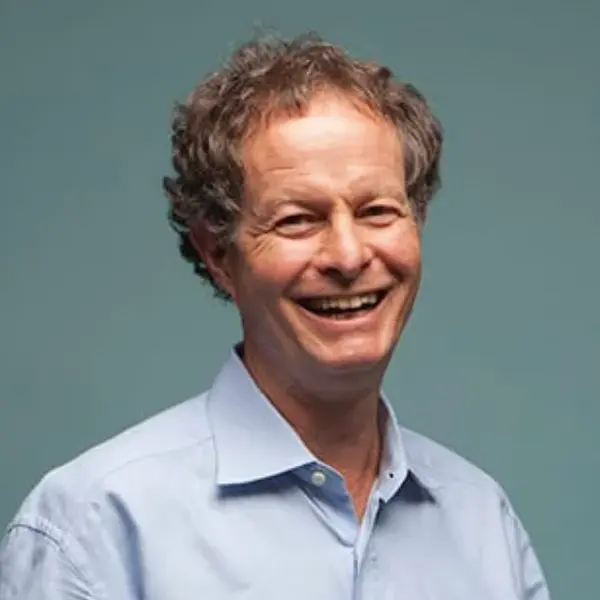
Co-Founder & Former CEO, Whole Foods Market | Conscious Capitalism Pioneer | CEO, Love.Life | Bestselling Author
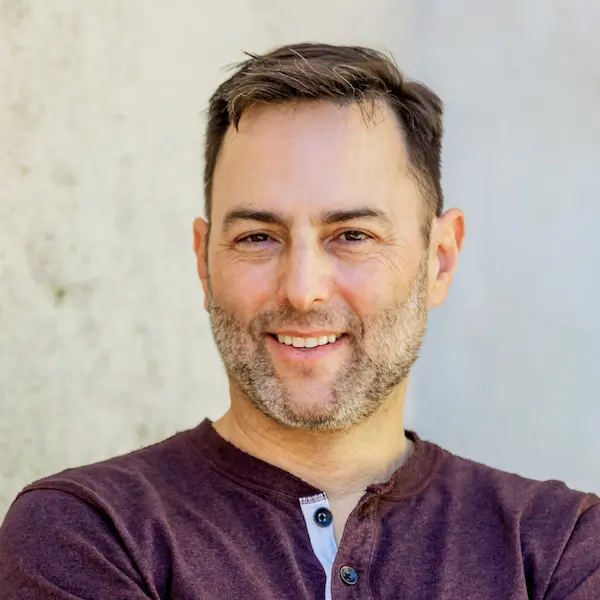
Award-Winning Showrunner, Writer & Executive Producer | The West Wing, The Umbrella Academy, Sleepy Hollow, The Irrational | TED Speaker, Keynote and Panelist on Creativity, Storytelling and AI

Practice Professor of Management Emeritus, The Wharton School | Creator of Total Leadership | Authority on Work/Life Integration | Thinkers50 Distinguished Achievement Award


© 2026 Aurum Speakers Bureau. All Rights Reserved

| Basic Data Protection Information | |
|---|---|
| Data controller | AURUM SPEAKERS BUREAU S.L. |
| Address | Parc Audiovisual de Catalunya 1, Oficina S11, 08225 Terrassa, Spain |
| Purposes | We will use your data to respond to your requests and deliver our services to you. |
| Marketing | We will only send you marketing correspondence if you have given your prior consent, which you can do by ticking the box for that purpose. |
| Lawful basis | We will only process your data if you have given your prior consent, which you can do by ticking the box for that purpose. |
| Recipients | Generally, only our members of staff who have been duly authorised may access the data that you have provided. |
| Your Rights | You have the right to know what information we hold about you, to rectify it and to erase it, as explained in the additional information available on our website. |
| Additional Information | For more information, please see our "PRIVACY POLICY". |