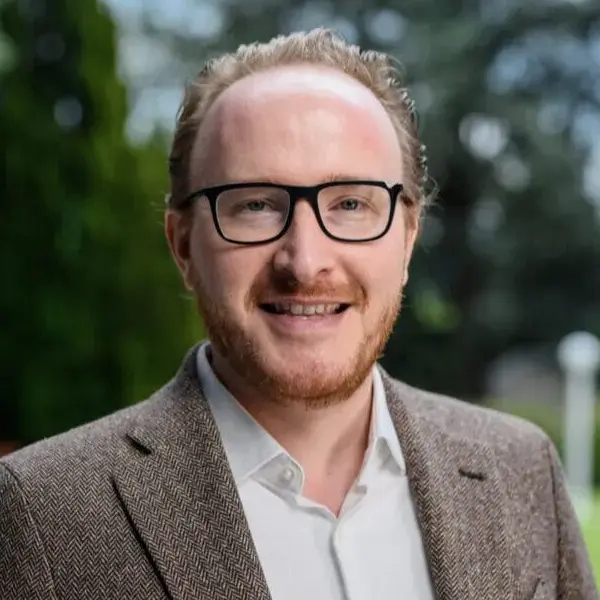
Mark Greeven
Professor of Management Innovation & Dean of Asia, IMD | Authority on Innovation & Ecosystems in China | Thinkers50-Ranked | On Future Readiness & Digital Transformation


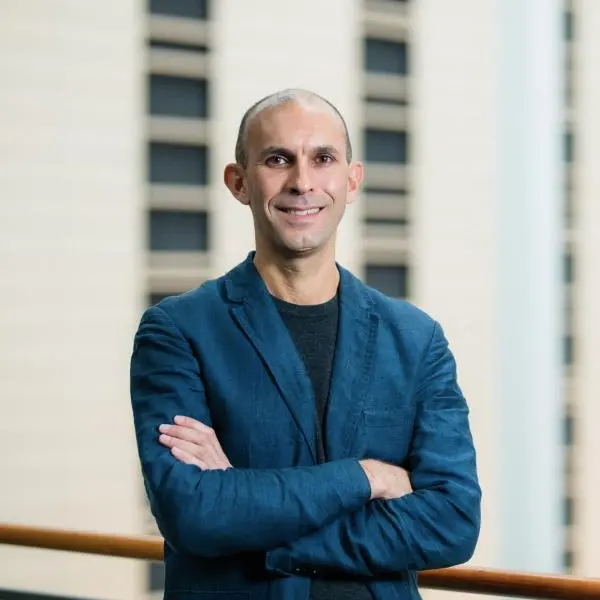
Professor & Director, Centre for Consciousness Science, U. of Sussex | Bestselling Author of Being You | TED Speaker | AI, Mind & the Science of Consciousness
Anil Seth is one of the world's leading neuroscientists on consciousness and how the brain constructs reality and the self. Winner of the 2025 Berggruen Prize and the Royal Society's Michael Faraday Prize, he is the author of the international bestseller Being You and one of TED's most-watched science speakers. His keynotes challenge how senior audiences think about the mind, AI, and human identity.
Want to book Anil Seth as a speaker for your event? Please provide the info below and we’ll get in touch within 24h:
Anil Seth ranks among the world’s foremost authorities on the science of consciousness and Professor of Cognitive and Computational Neuroscience at the University of Sussex, where he directs the Centre for Consciousness Science. He is also Co-Director of the CIFAR Program on Brain, Mind, and Consciousness and Editor-in-Chief of the journal Neuroscience of Consciousness. With more than 200 research papers and a place among the top 0.1% of researchers worldwide by Web of Science, speaker Anil Seth pairs the highest scientific standing with a rare gift for public communication.
Seth is best known for describing consciousness as a form of “controlled hallucination”: the brain does not passively receive the world but actively predicts and constructs it. It reframes the deepest questions of human experience, from the self to reality. His 2017 TED talk, Your brain hallucinates your conscious reality, has passed fifteen million views and ranks among the most-watched science talks in TED’s history, with a second talk carrying his total past sixteen million. Aurum Speakers Bureau represents him alongside other leading science speakers.
His 2021 book, Being You: A New Science of Consciousness, was an instant Sunday Times Top 10 bestseller and a Book of the Year for The Economist, Bloomberg, and the Financial Times. Translated into more than a dozen languages, it brought the science of consciousness to a global readership. He also edited the bestselling 30 Second Brain and writes for Aeon, The Guardian, New Scientist, and Scientific American.
Seth’s work has earned recognition across scientific and public spheres. In 2023 the Royal Society awarded him its Michael Faraday Prize, the UK’s foremost honor for science communication, and Prospect Magazine named him one of its Top 25 Global Thinkers for 2024. He won the 2025 Berggruen Prize Essay Competition, chosen from roughly 3,000 entries across more than 120 countries, for “The Mythology of Conscious AI.” He was lead scientist on the public arts project Dreamachine and, in 2025, became a patron of Humanists UK.
As a speaker, Anil Seth pairs scientific authority with genuine curiosity. He addresses the neuroscience of consciousness, the nature of selfhood, the relationship between AI and the human mind, and what brain research means for leadership and decision-making. His talks invite audiences to question lifelong assumptions and rethink what it means to be human in an age of artificial intelligence.
Who are you, really? Anil Seth examines how the brain assembles our sense of self from the inside out, moment by moment. Drawing on cognitive neuroscience, he makes the case that the self is not a fixed entity but a continuous prediction, the brain's best model of the body it works to keep alive. He shows how perception, memory, and personal identity are actively built rather than passively received, and what that means for how we understand free will, decision-making, and human consciousness. Audiences leave with a strikingly fresh perspective on what it means to be a self in the world.
Based on one of the most-watched science talks in the history of TED, this keynote presents Seth's central argument: we do not experience the world as it objectively is, but the brain's best guess about it. Every conscious moment is a controlled hallucination, shaped by expectation and corrected by incoming sensory signals. Seth explores why people can perceive the same event so differently, and how disruptions to this predictive process underlie experiences from psychosis to altered states. For business audiences, the framework opens new ways of thinking about perception, judgment, bias, and the limits of decision-making.
Consciousness was long considered beyond the reach of science. Anil Seth argues that this is no longer the case, and that what researchers are learning carries profound implications. He distinguishes the different dimensions of conscious experience, shows how experimental neuroscience is mapping the neural basis of awareness and selfhood, and examines what happens when these systems break down in neurological and psychiatric conditions. He also confronts the question now sitting between science and technology: what does consciousness science tell us about the prospect of conscious AI, and why does getting it right matter so much for the choices we make today?
Anil Seth goes deeper into what gives rise to the felt experience of being alive and aware. Drawing on his own research and on psychology, control theory, and evolutionary biology, he argues that conscious selfhood is rooted in the brain's constant effort to regulate the body, so that the experience of being you is inseparable from the biological drive to survive. The perspective reaches far: into how we think about emotion and intuition in leadership, how we connect physical and mental wellbeing, and what, if anything, artificial systems might ever truly experience.
Professor of Management Innovation & Dean of Asia, IMD | Authority on Innovation & Ecosystems in China | Thinkers50-Ranked | On Future Readiness & Digital Transformation

Co-Founder & Founding CTO of YouTube | Emmy Award Winner | PayPal Mafia Member | Digital Media Pioneer & Silicon Valley Icon

Africa's Leading Female Cybersecurity Expert | Founder, CyberSafe Foundation & MerkleFence | Bestselling Author, 'API Security for White Hat Hackers'
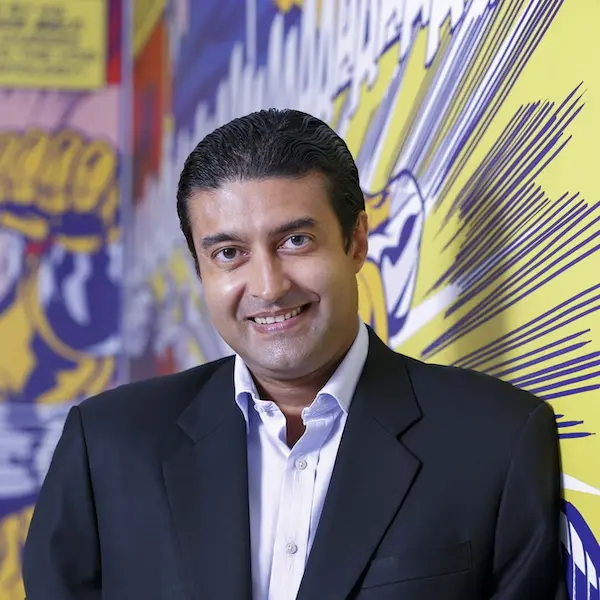
AI & Technology Professor, Columbia Business School | Award-Winning Creator & Entrepreneur | Founder & CEO of FaiBLE & Graphic India | Co-Creator of Spider-Man: India


© 2026 Aurum Speakers Bureau. All Rights Reserved

| Basic Data Protection Information | |
|---|---|
| Data controller | AURUM SPEAKERS BUREAU S.L. |
| Address | Parc Audiovisual de Catalunya 1, Oficina S11, 08225 Terrassa, Spain |
| Purposes | We will use your data to respond to your requests and deliver our services to you. |
| Marketing | We will only send you marketing correspondence if you have given your prior consent, which you can do by ticking the box for that purpose. |
| Lawful basis | We will only process your data if you have given your prior consent, which you can do by ticking the box for that purpose. |
| Recipients | Generally, only our members of staff who have been duly authorised may access the data that you have provided. |
| Your Rights | You have the right to know what information we hold about you, to rectify it and to erase it, as explained in the additional information available on our website. |
| Additional Information | For more information, please see our "PRIVACY POLICY". |