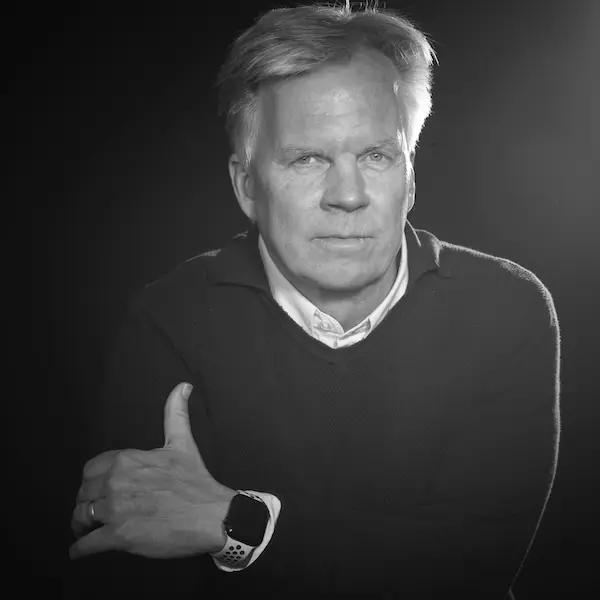
Ron Johnson
Creator of the Apple Stores | Author, Shop Different | Former SVP, Apple Retail | Harvard MBA | Innovation, Culture & Customer Experience


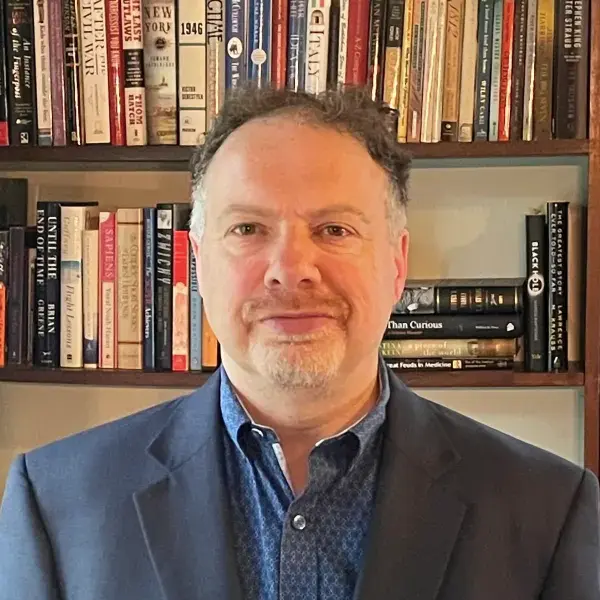
2011 Nobel Laureate in Physics | Bloomberg Distinguished Professor, Johns Hopkins | Discoverer of Dark Energy | Leader, SH0ES Team
Adam Riess discovered that the universe is not just expanding but accelerating, a finding that earned him the 2011 Nobel Prize in Physics and introduced the world to dark energy. Now leading the SH0ES Team with the Hubble and James Webb telescopes, he sits at the center of cosmology's most consequential open question, the Hubble tension. On stage, he makes the universe's deepest mysteries feel urgent, accessible, and alive.
Want to book Adam Riess as a speaker for your event? Please provide the info below and we’ll get in touch within 24h:
Adam Riess is one of the most influential astrophysicists alive, a Nobel Prize-winning scientist whose work has redefined our understanding of the universe and continues to push at the boundaries of what modern physics can explain. Bloomberg Distinguished Professor and Thomas J. Barber Professor of Physics and Astronomy at Johns Hopkins University, and Distinguished Astronomer at the Space Telescope Science Institute, keynote speaker Adam Riess has spent his career using the cosmos as a laboratory to answer the deepest questions about space, time, and the forces that govern them.
Riess earned his bachelor’s degree in physics from MIT in 1992 and his PhD from Harvard University in 1996. As a key member of the High-Z Supernova Search Team, he led the analysis behind one of the most astonishing findings in the history of science: the 1998 discovery that the expansion of the universe is not decelerating, as physicists had long assumed, but accelerating. Using Type Ia supernovae, stellar explosions of predictable luminosity, as cosmic measuring sticks, his team traced the universe’s growth across billions of light-years and found it speeding up. The cause was an invisible, pervasive force now called dark energy, estimated to account for roughly 70% of the universe’s total energy budget. Science magazine named the discovery its Breakthrough of the Year in 1998.
Nobel Prize speaker Adam Riess was awarded the 2011 Nobel Prize in Physics, jointly with Saul Perlmutter and Brian Schmidt, for this discovery. His recognition spans the MacArthur Fellowship (“genius grant”) in 2008, the Shaw Prize in Astronomy, the Gruber Foundation Cosmology Prize, the Breakthrough Prize in Fundamental Physics, and the Albert Einstein Medal. He is a member of the National Academy of Sciences and the American Academy of Arts and Sciences, and ranks among the top 1% most-cited researchers in his field globally.
Today, Riess leads the SH0ES Team (Supernova H0 for the Equation of State of Dark Energy), the most precise ongoing effort to measure the Hubble constant, the rate at which the universe is currently expanding. Using both the Hubble Space Telescope and the James Webb Space Telescope, his team has confirmed a deep discrepancy, the “Hubble tension,” between the expansion rate measured in the nearby universe, around 73 kilometers per second per megaparsec, and the slower rate predicted from observations of the early universe. His landmark studies with Webb data ruled out measurement error as the cause at greater than 8-sigma confidence, and he now helps lead international efforts to reconcile the competing measurements. The implication is extraordinary: our best current theory of the universe may be missing something profound.
As a speaker, Adam Riess brings audiences to the edge of human knowledge, and makes them feel at home there. His keynotes translate the universe’s deepest puzzles into vivid, accessible narratives about discovery, uncertainty, and the courage to follow data wherever it leads. Whether addressing a scientific conference or a senior business audience, he pairs intellectual rigor with genuine wonder. Attendees leave not just with a new understanding of cosmology, but with a sharpened appreciation for evidence-based thinking, the nature of paradigm shifts, and what it means to operate at the frontier of the unknown.
In 1998, Riess and his team found something the entire physics community thought impossible: the universe was speeding up. This keynote tells the story of that discovery, from the first suspicious data points to the Nobel Prize, and draws out its lessons for any audience: what it takes to follow evidence that contradicts consensus, how to tell a real result from a measurement error, and why the most important breakthroughs often begin with something that looks like a mistake.
The standard model of cosmology is the most successful framework in the history of science, and it may be incomplete. Riess leads audiences through the Hubble tension: the growing, statistically ironclad gap between two independent measurements of how fast the universe is expanding. Using data from both the Hubble and James Webb space telescopes, his SH0ES Team has ruled out measurement error as the cause. What remains is the real possibility that physics as we know it is missing something fundamental, a masterclass in what happens when data forces a field to confront its own limits.
How do you measure the distance to a galaxy billions of light-years away? Riess walks audiences through the cosmic distance ladder, the chain of interlocking techniques that lets astronomers map the universe, and explains how his team has spent two decades refining each rung with Cepheid variable stars, Type Ia supernovae, and the most powerful telescopes ever built. A talk about precision, patience, and the beauty of building knowledge step by careful step.
Science advances not by confirming what we already believe but by testing it to destruction. Riess draws on two decades of frontier cosmology, including findings that defied expectation and data pointing toward a possible revolution in physics, to explore how great discoveries happen: the role of intellectual humility, the discipline of separating signal from noise, and the institutional conditions that let radical ideas survive long enough to be proven right. A compelling framework for leaders who must make high-stakes decisions under genuine uncertainty.
Creator of the Apple Stores | Author, Shop Different | Former SVP, Apple Retail | Harvard MBA | Innovation, Culture & Customer Experience

Creator of The Goal Digger Podcast (115M+ Downloads) | New York Times Best-Selling Author of How Are You, Really? | Digital Marketing Educator

Head of Growth, Parallel Studios ($100M Raised) | Co-Founder, Surf (Acq. by Datacy) | Bestselling Author, The Young Entrepreneur | 4x TEDx Speaker | Angel Investor & Chairman, League of Innovators
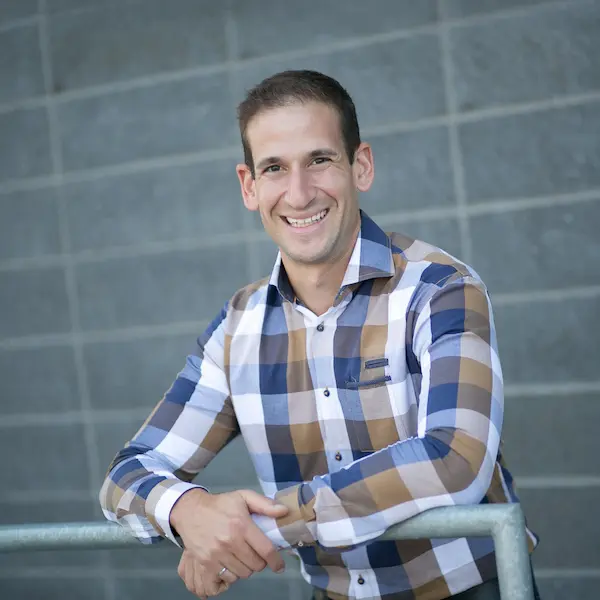
Futurist & Former Head of Innovation at Mattel | Author of The World After AI | AI Strategy Advisor to Fortune 500s | On AI, Foresight & the Future of Work


© 2026 Aurum Speakers Bureau. All Rights Reserved

| Basic Data Protection Information | |
|---|---|
| Data controller | AURUM SPEAKERS BUREAU S.L. |
| Address | Parc Audiovisual de Catalunya 1, Oficina S11, 08225 Terrassa, Spain |
| Purposes | We will use your data to respond to your requests and deliver our services to you. |
| Marketing | We will only send you marketing correspondence if you have given your prior consent, which you can do by ticking the box for that purpose. |
| Lawful basis | We will only process your data if you have given your prior consent, which you can do by ticking the box for that purpose. |
| Recipients | Generally, only our members of staff who have been duly authorised may access the data that you have provided. |
| Your Rights | You have the right to know what information we hold about you, to rectify it and to erase it, as explained in the additional information available on our website. |
| Additional Information | For more information, please see our "PRIVACY POLICY". |