
The instinct to book a sports speaker is usually right. The execution is where most event planners stumble.
A household name in sport does not automatically become a compelling voice in a conference room. Some of the most powerful speakers working the corporate circuit today are athletes and coaches whose names are less universally recognized but whose frameworks land with unusual precision for business audiences. Knowing how to tell the difference before you commit is what separates a memorable event from an expensive disappointment.
This guide covers what to look for, what to avoid, and how to match the right sports speaker to your specific event moment.
Why Sports Speakers Work, and When They Don’t

Widely regarded as one of the greatest managers in sporting history, Pep Guardiola shares insights on building high-performance cultures, aligning teams around shared values, and creating organizations capable of sustaining excellence year after year.
The appeal is intuitive. Elite athletes and coaches operate under conditions that most executives only face in diluted form: extreme pressure, public accountability, immediate feedback, and the requirement to perform on a fixed date regardless of preparation time. Their stories carry weight because the stakes were real.
The translation from sporting achievement to business relevance is not automatic, though. A speaker who recounts personal triumph without building a transferable framework leaves audiences inspired for about 48 hours. A speaker who connects their experience to the specific pressures your audience faces right now leaves them with something they can actually use.
The question to ask before booking any sports speaker is not “what did they achieve?” It is: “what do they teach, and is that what my audience needs?”
The Four Types of Sports Speaker
Understanding which profile you are looking for narrows the field considerably. Most sports speakers fall into one of four categories, each suited to different event contexts.
The Performance Expert
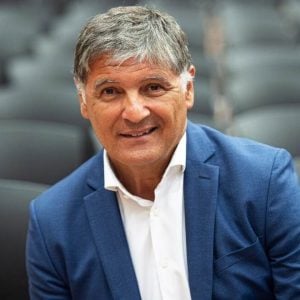
This speaker led or coached at the elite level and has systematized what they learned. Their keynote is built around a methodology derived from high-performance environments, not a personal story. Toni Nadal, the coach behind 22 Grand Slam titles, belongs here. His central argument is that excellence is a product of habits, not talent. That framework applies directly to how organizations train, develop, and hold people accountable.
Performance experts work best at leadership summits, talent development conferences, and executive retreats where the audience is responsible for building high-performance cultures rather than simply participating in them.
The Resilience Story
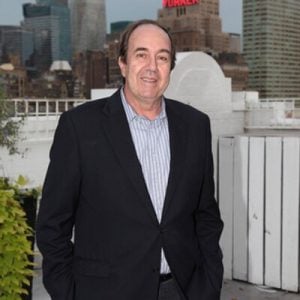
This speaker survived or overcame something genuinely extraordinary, and their experience functions as a lens through which audiences re-examine their assumptions about adversity, limits, and what is actually possible. Nando Parrado, who led 16 survivors out of the Andes after 72 days, is the archetype. His story is not a metaphor. It is a documented case study in leadership when institutional structures have completely collapsed.
Resilience speakers are particularly effective at transformation moments: company pivots, post-merger integration, organizational restructuring, or any context where the audience is being asked to sustain performance through uncertainty.
The Decision-Making Authority
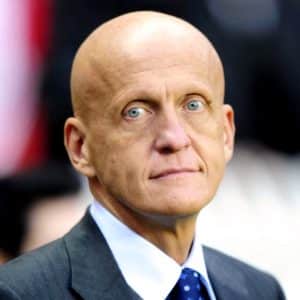 This speaker operated in environments where decisions had to be correct, immediate, and irreversible. In front of massive audiences, with no room for consultation. Pierluigi Collina, named the world’s best referee by FIFA for six consecutive years, is the clearest example on the circuit. His presentations are not about football. They address the architecture of clear judgment under extreme scrutiny: how to earn authority, how to communicate difficult decisions under pressure, and how to maintain composure when every stakeholder in the room disagrees with you.
This profile works exceptionally well for audiences in senior leadership, risk management, financial services, or any field where high-stakes decisions must be made quickly and defended confidently.
The Culture Builder

This speaker built or captained a team that sustained excellence across multiple years, and their insight is organizational rather than individual. Carles Puyol, who captained FC Barcelona through their most dominant era, brings a perspective on what makes elite cultures durable: the values, the internal standards, the relationship between individual sacrifice and collective achievement. Pep Guardiola occupies similar territory, with keynotes that address high-performing team architecture, the role of psychological safety alongside demanding standards, and how to build organizations that generate excellence consistently.
Culture builders are most valuable for HR conferences, corporate offsites focused on teamwork and values, and leadership programs where the goal is organizational alignment rather than individual motivation.
Five Questions to Ask Before You Book
1. What is the real goal of this keynote?
Inspiration and education are different outcomes. If your audience needs to feel energized and reconnected to a shared purpose, a compelling personal story may be exactly right. If they need to leave with tools they will apply in the next quarter, look for a speaker whose presentation is built around a transferable framework rather than a narrative arc.
2. Who is in the room?
A CEO audience and a middle-management audience are not the same. Senior leaders tend to respond better to strategic frameworks. They have heard enough motivation already. Frontline or mid-level teams often respond more powerfully to human stories of adversity and recovery. The speaker you choose should be calibrated to the level and mindset of the people actually sitting in the chairs.
3. Does the sport map to the message?
The connection between the sporting context and the business message matters more than most planners realize. An athlete from an individual sport (sprinting, tennis) carries different implicit lessons than one from a team sport (football, rugby). Individual-sport speakers tend to emphasize personal discipline, self-accountability, and the inner psychology of performance. Team-sport speakers tend to speak more naturally to culture, collective standards, and the dynamics of high-stakes collaboration. Neither is superior. They serve different event needs.
4. Can they customize?
The difference between a good sports speaker and a great one is often the degree to which they can anchor their experience to your industry, your moment, and your audience’s specific challenges. Ask whether the speaker does pre-event calls, whether they adjust their content based on context, and whether they have spoken to audiences similar to yours. A speaker who delivers the same talk every time is a risk at a premium event.
5. What is the format, and does the speaker fit it?
A keynote is not a fireside chat, and a fireside chat is not a workshop. Some sports speakers perform extraordinarily well in structured keynotes but lose their authority in open Q&A. Others are at their most compelling in conversation. Clarify the format before you shortlist, and confirm with the bureau that your preferred speaker has a strong track record in that specific format.
A Note on Timing
The best sports speakers for corporate events are not booked at the last minute. Speakers whose stories intersect with current events (a World Cup cycle, an Olympic year, a major championship) see their availability window close quickly. If a speaker’s story has cultural resonance in the next twelve months, the conversation about securing them should begin now.
Contact Aurum Speakers Bureau to discuss which sports speaker fits your event goals, audience profile, and format.
Frequently Asked Questions
Why should organizations book a sports keynote speaker?
Sports speakers bring something most business speakers cannot: the experience of performing under real stakes, with real consequences, in front of real audiences. Often in defining moments watched by millions. The lessons are not theoretical. For organizations navigating high-pressure periods, that firsthand authority is difficult to replicate from any other source. Aurum Speakers Bureau can help identify which speaker’s specific experience maps most closely to your organizational challenge.
What types of corporate events are best suited for sports speakers?
Leadership summits, annual company conferences, sales kickoffs, and executive retreats all work well. Sports speakers tend to generate particularly strong results when the event theme connects to performance, resilience, culture, or change. These are contexts where the gap between what an organization knows it should do and what it actually does under pressure is exactly what needs to be addressed.
How do I know if a sports speaker will be relevant to a non-sports audience?
The test is not whether the audience follows sport, but whether the speaker’s framework translates independently of the sporting context. A session built on universal principles (decision-making, accountability, building trust) will land regardless of whether anyone in the room watches football or track and field. Ask to see a video of the speaker presenting to a business audience before committing.
How far in advance should I book a sports speaker?
For speakers with significant name recognition or those aligned with major upcoming sporting events, four to six months is a realistic minimum. In periods of high seasonal demand (around major tournaments, Olympic cycles, or peak conference season) the most sought-after voices are committed further out. Working with a bureau early gives you the broadest range of options and the best chance of securing your preferred speaker at your event date.