
Most organizations approach employee well-being as a cost to manage. The science of positive psychology suggests they have the logic backwards.
Tal Ben-Shahar has spent more than two decades making that argument, first in Harvard lecture halls, then in board rooms and on conference stages around the world. His central claim is not that happiness is a reward for achievement. It is that happiness is the precondition for it.
What Positive Psychology Actually Teaches About Performance
Positive psychology is not motivational speaking dressed up in academic language. It is a rigorous field that studies what enables human beings to function at their best. It consistently finds that emotional well-being drives measurable outcomes in productivity, creativity, decision-making, and retention.
Ben-Shahar translates that body of research into frameworks organizations can actually use. His SPIRE model (Spiritual, Physical, Intellectual, Relational, and Emotional well-being) gives leaders a structured way to assess and develop the conditions under which people genuinely thrive. It moves the conversation out of the abstract and into policy, culture, and habit design.
This is why his work resonates with audiences well beyond HR departments. Senior leaders, strategy teams, and operations managers find that his framework connects directly to the performance metrics they care about most. When people are happier at work, they are more creative, more collaborative, and more resilient under pressure. Ben-Shahar has the research to back that claim, and the talent to make it land in a room of skeptics.
The Harvard Years and What They Revealed
 The numbers from Ben-Shahar’s time at Harvard are worth pausing on. His Positive Psychology course and his Psychology of Leadership course were two of the largest in the university’s history by enrollment. Not because happiness is a soft elective topic, but because students recognized that what he was teaching connected to every dimension of professional and personal life.
What that experience also taught him was the gap between knowing and doing. Students could absorb the research and still struggle to change habits or sustain well-being under pressure. That insight has shaped everything he has built since: practical tools that bridge the distance between intellectual understanding and actual behavior change.
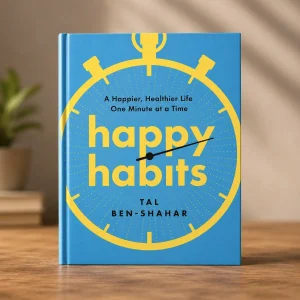
His most recent book, Happy Habits (Penguin Random House, 2025), addresses that gap directly. Building on positive psychology and the neuroscience of habit formation, it introduces a three-step process built around Minimum Viable Interventions: small, consistent actions that create measurable shifts in well-being without requiring wholesale life overhaul. Published to strong reviews from outlets including Publishers Weekly and Foreword Reviews, it gives keynote audiences a concrete companion to the ideas he develops on stage.
Building a Field, Not Just a Career
What distinguishes keynote speaker Tal Ben-Shahar from most voices in the

well-being space is the institutional weight behindhis work. He co-founded the Happiness Studies Academy and, in 2022, launched the world’s first master’s degree in Happiness Studies at Centenary University in New Jersey. A PhD program followed. In May 2026, the Academy announced a ten-year initiative to create one million careers in happiness-related fields, explicitly framed as a response to AI’s displacement of traditional roles.
That trajectory tells a specific story to event organizers: this is not a speaker leveraging one good book into a speaking career. He is building the academic infrastructure for an entire discipline, and bringing that seriousness of purpose to every room he walks into.
For organizations booking leadership speakers or designing future-of-work programs, that distinction matters. Audiences pick up on it immediately.
If you want to go deeper into how this initiative responds to AI’s reshaping of the workforce, read our analysis in Happiness Jobs: Tal Ben-Shahar’s Answer to the AI Economy.
What Event Organizers Should Know
Ben-Shahar works well across a wide range of formats and audiences. Corporate leadership summits, HR and talent conferences, executive retreats, and large-scale employee engagement events are all natural fits. He adapts his material to sector and audience, moving comfortably between the neuroscience and the practical application depending on what a room needs.
His keynotes consistently draw on real research, avoid the generic inspirational register that audiences tune out, and leave people with tools they can use the following Monday. For events focused on performance culture, organizational change, or the human dimensions of technology adoption, he brings a perspective that is both rigorous and immediately applicable. He also features among our recommended wellbeing and mental health speakers for organizations weighing which voice fits their moment.
Contact Aurum Speakers Bureau to check availability and discuss how Ben-Shahar’s keynote can be shaped to your event’s specific goals.
FAQ
Why should organizations book Tal Ben-Shahar?
Few speakers combine the academic credentials, practical frameworks, and stage presence that Ben-Shahar brings to the well-being conversation. His work is grounded in decades of peer-reviewed research and built into institutional programs that now train professionals at master’s and doctoral level. For organizations that want more than an inspiring hour, audiences that leave with tools they will actually use, he is one of the most credible choices among happiness speakers working today. To discuss booking, reach out to Aurum Speakers Bureau directly.
What is Tal Ben-Shahar’s SPIRE model?
SPIRE stands for Spiritual, Physical, Intellectual, Relational, and Emotional well-being. It is a framework Ben-Shahar developed to give leaders and organizations a structured way to assess and cultivate the conditions under which people thrive. Rather than treating well-being as a single dimension, SPIRE recognizes that lasting happiness requires attention across all five areas simultaneously.
What is Ben-Shahar’s most recent book?
His latest book is Happy Habits: A Happier, Healthier Life One Minute at a Time (Penguin Random House, 2025). It applies positive psychology and habit formation research to the practical challenge of sustained behavioral change, introducing Minimum Viable Interventions: small, evidence-based actions that improve well-being without requiring dramatic disruption to daily life.
What makes Tal Ben-Shahar different from other well-being speakers?
The depth of his academic and institutional work sets him apart. He taught two of the largest courses in Harvard’s history, co-founded the Happiness Studies Academy, and built the world’s first academic pathway in Happiness Studies from certificate through to PhD. His on-stage material reflects that rigor: research-backed, practically structured, and free of the generic positivity that characterizes much of the well-being speaking circuit.