

When Nick Vujicic was born without arms and legs, doctors offered his parents little hope. When he was eight years old, he attempted suicide. Today, he has spoken to more than 10 million people across 73 countries in a Nick Vujicic resilience movement kind of way. He has built a global nonprofit reaching millions and become one of the most sought-after motivational speakers in the corporate world. His transformation from survival to significance offers more than inspiration – it provides a replicable framework for resilience that organizations desperately need in 2026.
The question is not whether Vujicic’s story is remarkable. The question is why his message resonates so powerfully with Fortune 500 companies, healthcare systems, and educational institutions facing unprecedented change.
The Resilience Framework Corporate Leaders Actually Use
Vujicic’s keynote presentations do not rely on platitudes about positive thinking. His framework emerged from necessity – a lifetime of solving problems that seemed impossible. Born with tetra-amelia syndrome, a rare disorder that left him without limbs, he developed adaptive strategies that translate directly to organizational challenges.
His methodology centers on what he calls “ridiculously good resilience” – the capacity to move forward when conventional solutions fail. For corporate audiences, this translates into three practical applications. First, reframing constraints as catalysts. Vujicic learned to type 43 words per minute using two toes, earned dual university degrees, and became a certified accountant. Organizations facing resource limitations or market disruptions apply this same principle to find unconventional solutions.

Nick Vujicic with his wife Kanae and their children, whose support and perspective shape the personal resilience behind his global message.
Second, building psychological safety through vulnerability. When Vujicic shares his suicide attempt at age eight, he creates permission for audiences to acknowledge their own struggles. In workplace cultures where burnout and mental health challenges have become critical concerns, this approach to leadership proves transformative. Companies report measurable improvements in employee engagement and retention following his presentations.
Third, translating personal mission into organizational purpose. Through Life Without Limbs, the nonprofit he founded in 2005, Vujicic has reached audiences in 73 countries with suicide prevention and mental health resources. His ability to scale impact from individual transformation to global movement provides a model for leaders building mission-driven cultures.
From Survival Story to Global Platform
The scope of impact of the Nick Vujicic resilience movement extends far beyond corporate keynotes. Life Without Limbs operates as a multifaceted organization addressing mental health, disability advocacy, and faith-based outreach. The nonprofit’s reach has expanded significantly in recent years, with programs active across six continents.
His influence appears in unexpected places. In 2026, he continues traveling extensively despite the physical demands – a testament to both his commitment and the logistical adaptations that make it possible. His presentations adapt to diverse contexts, from Silicon Valley tech companies to Middle Eastern educational summits to Latin American healthcare conferences.
The consistency across these varied audiences lies in his refusal to position himself as superhuman. He openly discusses ongoing challenges – the physical pain of living without limbs, the emotional toll of public vulnerability, the complexity of marriage and fatherhood. This honesty differentiates his message from conventional motivational content. Event organizers consistently note that attendees remember specific frameworks and commitments rather than just feeling momentarily inspired.
His published work amplifies this practical approach. Books like Life Without Limits and Limitless have sold millions of copies worldwide and been translated into dozens of languages. His children’s book The Crayon’s Message (2024) extends his framework to younger audiences, addressing bullying and self-worth with the same directness he brings to corporate stages.
Why Organizations Book Nick Vujicic in 2026
The booking demand for keynote speaker Nick Vujicic reflects several converging workplace trends. Mental health has moved from HR initiative to business imperative. The World Health Organization estimates that depression and anxiety cost the global economy $1 trillion annually in lost productivity. Organizations need speakers who can address these challenges without making audiences feel lectured or medicalized.
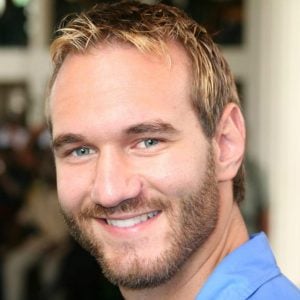
Nick Vujicic, international motivational keynote speaker and founder of Life Without Limbs, has inspired more than 10 million people across 73 countries with his message of resilience and purpose.
Vujicic’s presentation style accomplishes this balance. He shares clinical realities – the suicide attempt, the depression, the ongoing physical pain – while offering concrete strategies audiences can implement immediately. His content aligns with what research shows about effective resilience training: it must be specific, credible, and tied to real stakes.
His expertise extends to topics that might seem distant from disability advocacy. He addresses corporate culture transformation, discussing how organizations build environments where people bring their full selves to work. He speaks to sales teams about persistence in the face of rejection. He works with educational institutions on anti-bullying initiatives and student mental health.
The diversity of his client base – from multinational corporations to faith-based organizations to government agencies – demonstrates his ability to customize content while maintaining message integrity. Event organizers appreciate his professionalism and the measurable impact his presentations generate. Post-event surveys consistently show high recall of specific frameworks and commitments to behavioral change.
For organizations considering speakers who can drive culture change rather than deliver momentary motivation, Vujicic represents a proven choice. His three-decade track record, combined with ongoing global relevance, positions him as a strategic investment rather than an event expense.
Frequently Asked Questions
Why should organizations book Nick Vujicic?
Organizations book Nick Vujicic when they need to address resilience, mental health, and culture transformation with credibility and depth. His presentations move beyond inspiration to provide frameworks that audiences can implement immediately. Companies facing change management challenges, employee burnout, or culture-building initiatives find his message particularly relevant. His ability to create psychological safety while delivering practical content makes him effective for audiences ranging from frontline employees to C-suite executives. Contact Aurum Speakers Bureau to discuss how his keynote can support your organization’s specific goals.
What topics does Nick Vujicic cover in his keynotes?
His core topics include resilience and overcoming adversity, mental health and suicide prevention, disability awareness and inclusion, purpose-driven leadership, and workplace culture transformation. He customizes presentations based on organizational needs – sales teams receive content focused on persistence and rejection, while leadership audiences explore vulnerability and psychological safety. His faith-based content can be included or excluded depending on the event context. All presentations incorporate his personal story as framework rather than focal point.
Has Nick Vujicic written any books?
Yes, he has authored multiple bestselling books including Life Without Limits: Inspiration for a Ridiculously Good Life, Unstoppable: The Incredible Power of Faith in Action, Stand Strong, Limitless, and Be the Hands and Feet. His books have been translated into more than 30 languages and sold millions of copies globally.
What makes Nick Vujicic different from other motivational speakers?
His message is built on lived experience rather than research or theory. The challenges he discusses – physical limitation, depression, suicidal ideation – are not metaphorical but actual obstacles he navigates daily. This creates a level of credibility that theoretical frameworks cannot match. Additionally, his content focuses on transferable frameworks rather than his unique circumstances. Audiences leave with specific strategies for building resilience in their own contexts, whether personal or organizational. His global reach – 73 countries and counting – demonstrates cross-cultural resonance that few speakers achieve.